Stanley Matthews Biography: Age, Wife, Family, Career, Stats, Records and Net Worth
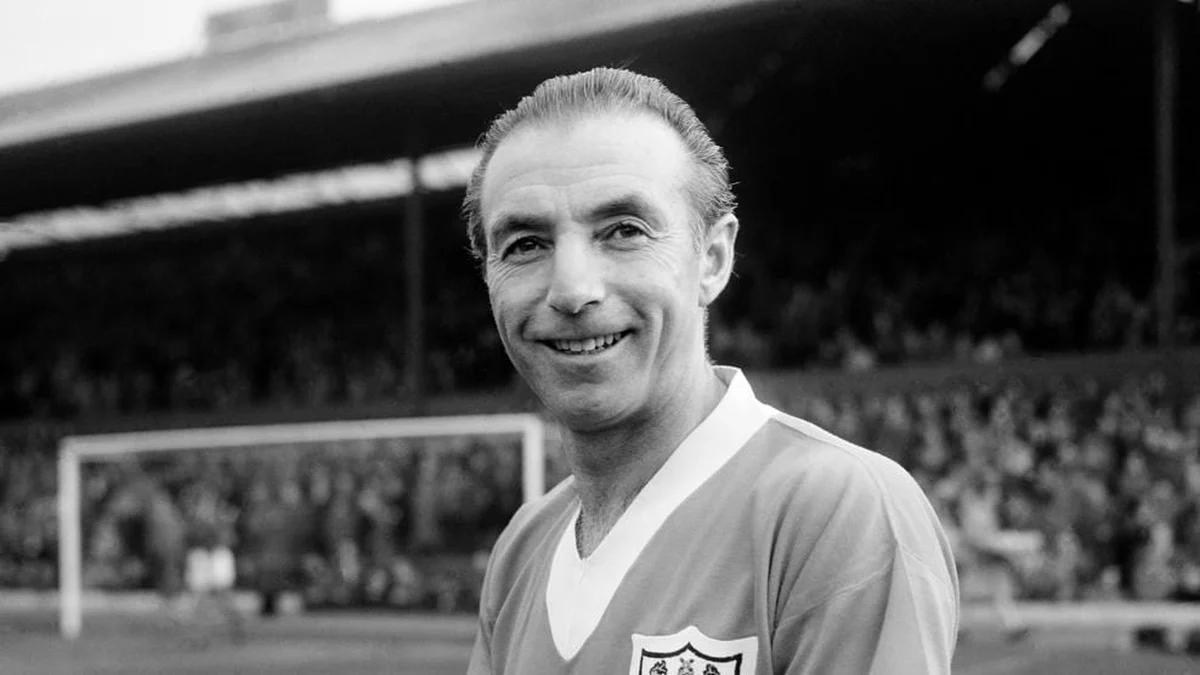
Stanley Matthews played top-flight football until the age of 50, won the first Ballon d’Or in 1956, and was the only footballer ever knighted while still playing. He won 54 caps for England across a career that spanned nearly 23 years, and he became famous as the Wizard of the Dribble for wing play that defenders could not stop. He was never booked in more than 800 competitive games, and he remains one of the most respected figures in the history of English football.
This Stanley Matthews biography covers his age, wife, family, career, stats, records and net worth, from a youth player at Stoke City to the Matthews Final of 1953, the first Ballon d’Or, a return to Stoke at 46, and a later life spent coaching and promoting the game around the world.
Quick Facts
| Detail | Fact |
|---|---|
| Full name | Sir Stanley Matthews |
| Date of birth | 1 February 1915 |
| Place of birth | Hanley, Stoke-on-Trent, England |
| Date of death | 23 February 2000, aged 85 |
| Place of death | Staffordshire, England |
| Height | 1.75 m (5 ft 9 in) |
| Position | Outside right |
| Clubs | Stoke City, Blackpool, Toronto City (loan) |
| England | 54 caps, 11 goals |
| Honours | CBE, Knight Bachelor, Ballon d’Or 1956 |
Early Life and Education
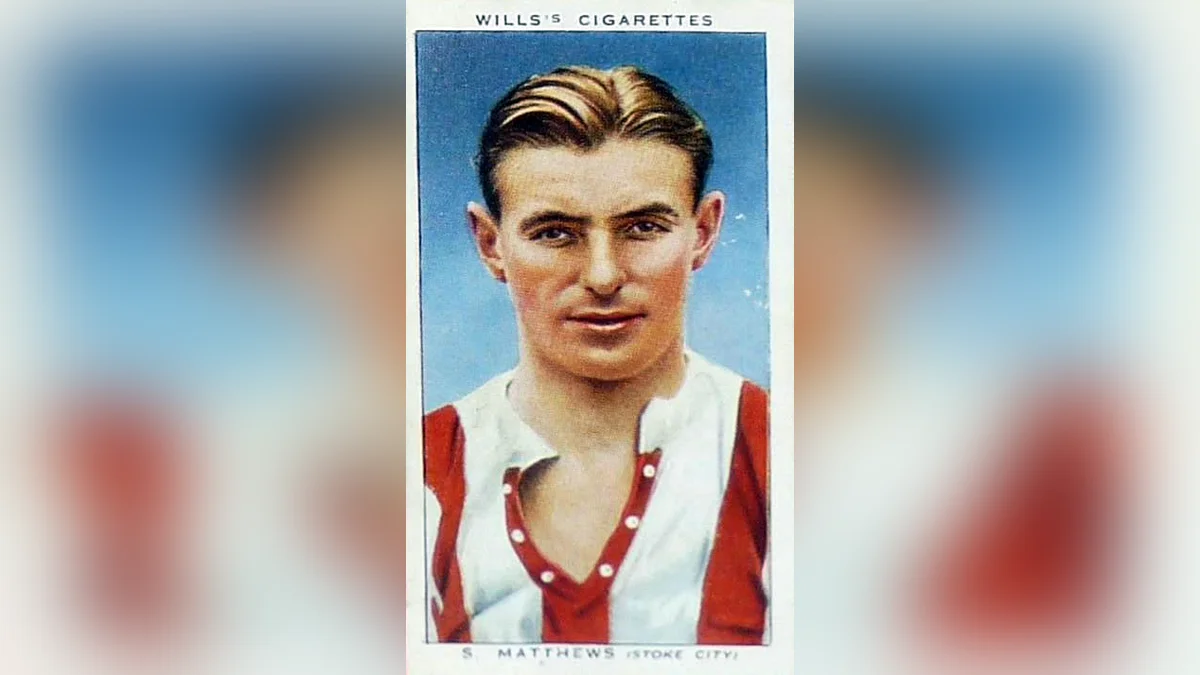
Stanley Matthews was born on 1 February 1915 in Hanley, in Stoke-on-Trent, Staffordshire. He grew up in a working-class family in the Potteries, the centre of the English pottery industry, and he showed a talent for football from an early age. He joined Stoke City as an office boy at the Victoria Ground on his 15th birthday in 1930, and he signed professional terms with the club in 1932.
His early years at Stoke were slow. He broke into the first team in the 1931-32 season and spent his first seasons learning the outside-right role. The 1933-34 season brought his breakthrough, with 11 league goals in 29 appearances, and he soon became the most exciting young winger in the country. By the middle of the 1930s he was a regular for club and country, and his dribbling made him a crowd favourite wherever Stoke played.
Matthews played for England Schoolboys in 1929, before he joined Stoke as an office boy, and the step up to senior football came fast. He learned his trade against hardened defenders in the Second Division, and the experience shaped a player who could take a kick and keep going. Stoke won promotion to the First Division in the 1932-33 season, and the young winger soon faced the best full-backs in the country. His pace and balance made him hard to stop even then, and his crossing gave Stoke a weapon that few clubs could match.
Family
Matthews married Betty Vallance, the daughter of Stoke City trainer Jimmy Vallance, whom he first met on his first day as office boy at the Victoria Ground. The couple had two children together: Jean, born in 1939, and Stanley Jr., born in 1945. Stanley Jr. became a tennis player and won the Wimbledon Boys title in 1962. Jean married Robert Gough, whom she met at a tennis club.
The marriage to Betty ended in divorce. In 1967, while on a tour of Czechoslovakia with Port Vale, Matthews met Mila, the interpreter for the group. He later married Mila in Malta, and the couple lived at various times in Malta, South Africa and Canada, as the coaching work and guest appearances of Matthews dictated. Mila died on 5 May 1999 at the age of 76, and Matthews died less than a year later.
Club Career
Stoke City, first spell
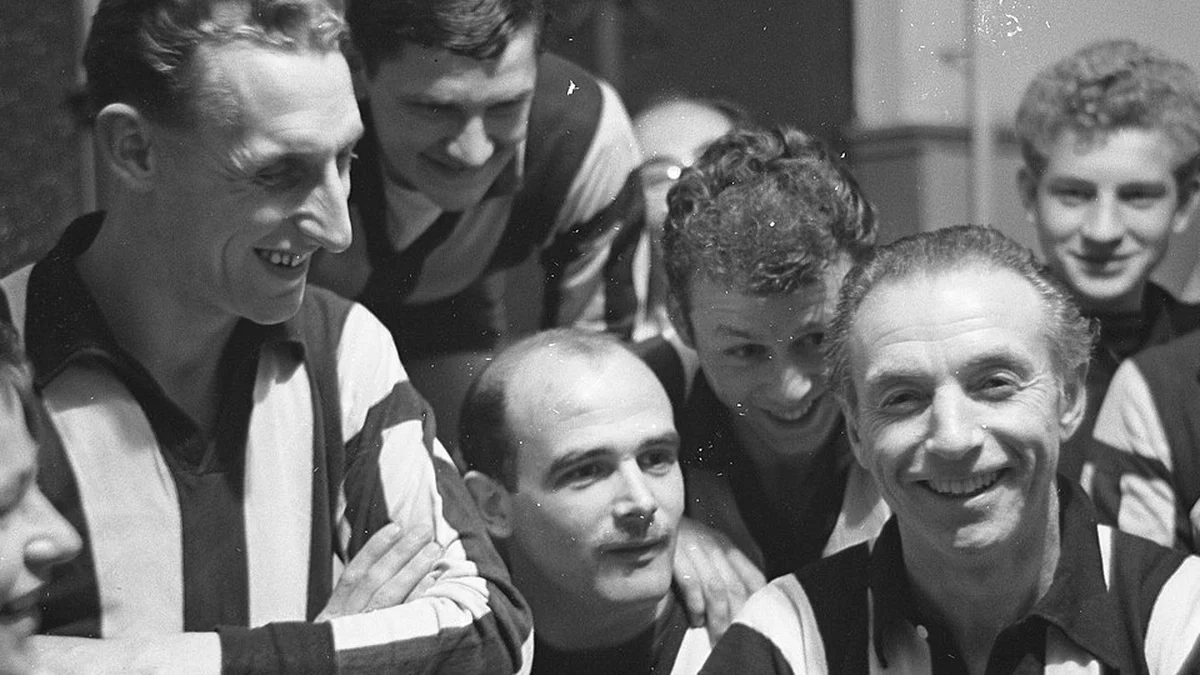
Matthews spent 15 seasons in the Stoke City first team in his first spell, from 1932 to 1947, and made 289 appearances in all competitions, scoring 57 goals. He helped Stoke win promotion to the First Division in the 1932-33 season, and he became the star of a side that played attacking football. His dribbling drew crowds, and his ability to beat a defender and deliver a cross made him the most dangerous winger in the league.
The Second World War interrupted his career. He served in the Royal Air Force during the war and played as a guest for several clubs, while still turning out for Stoke when service duties allowed. After the war he fell out with the Stoke management, and in 1947 he joined Blackpool, where he spent the next 14 years.
Blackpool
Matthews spent 14 seasons at Blackpool, from 1947 to 1961, and made 428 appearances in all competitions, scoring 18 goals. His partnership with Stan Mortensen gave Blackpool one of the most feared attacks in the country. Blackpool reached the FA Cup final three times in six years, losing in 1948 and 1951 before winning in 1953.
The 1953 FA Cup final against Bolton Wanderers became known as the Matthews Final. Blackpool trailed 3-1 with around 35 minutes to play, but Matthews produced a famous display of wing play and Blackpool won 4-3, with Mortensen scoring a hat-trick. Matthews always credited the team, and Mortensen in particular, for the win, and he never accepted the nickname of the final. The medal ended years of heartache in the competition, and the final remains one of the most celebrated matches in the history of Wembley.
The two earlier finals had both ended in defeat. In 1948 Blackpool lost the final, and in 1951 the club lost to Newcastle United, with Jackie Milburn scoring twice against Blackpool. Matthews carried those defeats with him into the 1953 final, and the win mattered all the more because of them. The final was also the first FA Cup final to be televised live, which meant that millions of viewers at home watched his performance, and the match fixed his name in the memory of a whole generation.
Blackpool finished second in the First Division in the 1955-56 season, with Matthews playing a central role. He won the first Ballon d’Or in 1956 at the age of 41. He left Blackpool in 1961 and played two loan spells with Toronto City in Canada before returning to Stoke.
Return to Stoke City
Matthews rejoined Stoke City in 1961 at the age of 46, and he stayed until 1965. He made 66 appearances in all competitions in his second spell, scoring 5 goals. Stoke won promotion back to the First Division in 1963, and Matthews was voted Footballer of the Year for a second time that year, 15 years after his first win of the award.
His final game came on 6 February 1965, just after his 50th birthday, when he played for the first time in 12 months because of a knee injury and set up the equaliser for his team. At 50 years and 5 days, he remains the oldest player ever to play in the top division of English football. He was knighted in 1965, while still a player, for services to football.
Toronto City loans
Matthews played two loan spells with Toronto City in the Eastern Canada Professional Soccer League, in 1961 and 1965. He made 20 appearances in total for the club without scoring. The spells kept him fit between his time at Blackpool and his return to Stoke, and they showed the global reach of his fame.
| Club | Appearances | Goals |
|---|---|---|
| Stoke City (two spells) | 355 | 62 |
| Blackpool | 428 | 18 |
| Toronto City (loan) | 20 | 0 |
| Total | 803 | 80 |
| Club | League appearances | League goals |
|---|---|---|
| Stoke City (two spells) | 318 | 54 |
| Blackpool | 379 | 17 |
| Toronto City (loan) | 20 | 0 |
| Total | 717 | 71 |
International Career
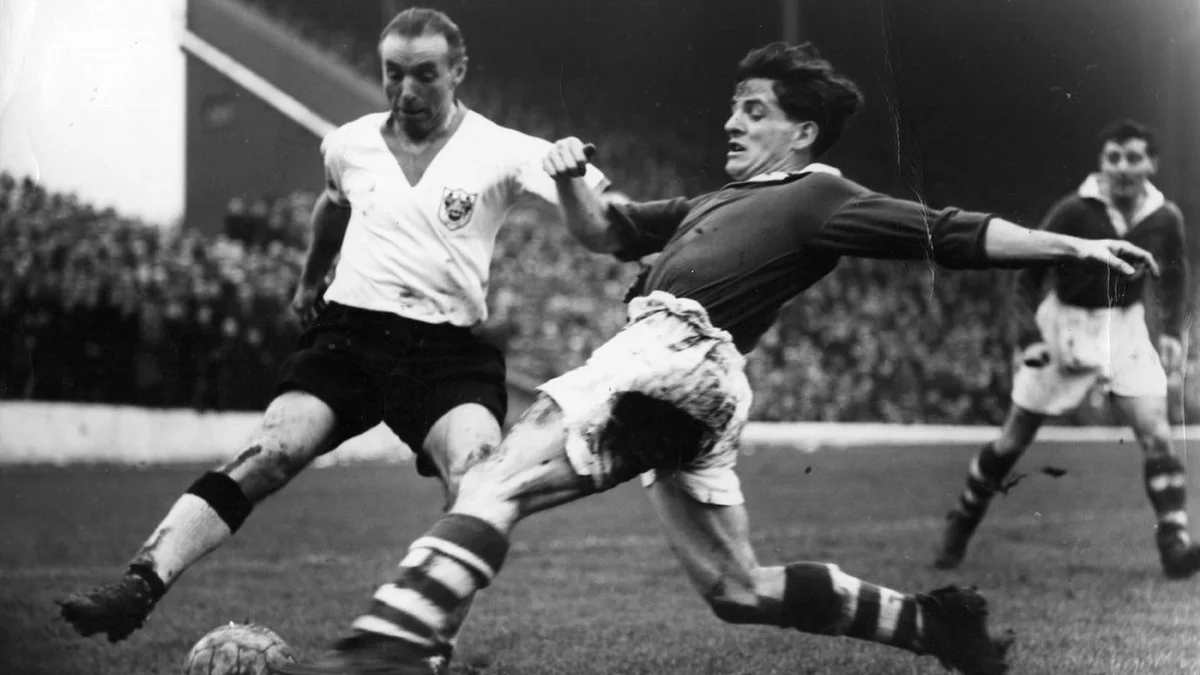
Matthews made his England debut on 29 September 1934 against Wales at Ninian Park in Cardiff, scoring in a 4-0 win at the age of 19. He built a run of 54 caps and 11 goals between 1934 and 1957, an England career of 22 years and 228 days, the longest in the history of the national team. His last cap came on 15 May 1957 against Denmark in a World Cup qualifier, at the age of 42 years and 104 days, which makes him the oldest player ever to represent England.
His international career lost six years to the Second World War, and England missed the World Cups of 1934 and 1938 after withdrawing from FIFA. He played at the World Cup in 1950 in Brazil, appearing once, in the 1-0 defeat to Spain at the Maracana. He played at the World Cup in 1954 in Switzerland, helping England to a 4-4 draw with Belgium before England lost 4-2 to Uruguay in the quarter-final. In all, he played just three World Cup games, with no goals.
He played in the famous 6-3 defeat to Hungary at Wembley on 25 November 1953, in the match known as the Match of the Century. Hungary became the first team from outside the British Isles to beat England at home, and the result forced English football to rethink its approach to the game. His most prolific year for England came in 1937, when he scored four goals in three appearances, including a goal in the 5-4 friendly win over Czechoslovakia at White Hart Lane.
His return to the England side after the war was one of the great comebacks of his career. He had been left out of the team for much of the 1946-47 season in favour of Tom Finney, but he returned in style as England beat Portugal 10-0 in Lisbon in May 1947, with Matthews scoring once. A year later he ran the Italian defence ragged as England won 4-0 in Turin. The two performances showed that the war had taken none of his pace or skill, and they secured his place in the side for years to come.
| Year | England appearances | England goals |
|---|---|---|
| 1934 | 2 | 1 |
| 1935 | 1 | 0 |
| 1937 | 3 | 4 |
| 1938 | 8 | 3 |
| 1939 | 3 | 0 |
| 1947 | 6 | 1 |
| 1948 | 6 | 1 |
| 1949 | 1 | 0 |
| 1950 | 2 | 0 |
| 1951 | 1 | 0 |
| 1953 | 3 | 0 |
| 1954 | 5 | 0 |
| 1955 | 5 | 0 |
| 1956 | 5 | 1 |
| 1957 | 3 | 0 |
| Total | 54 | 11 |
Managerial Career
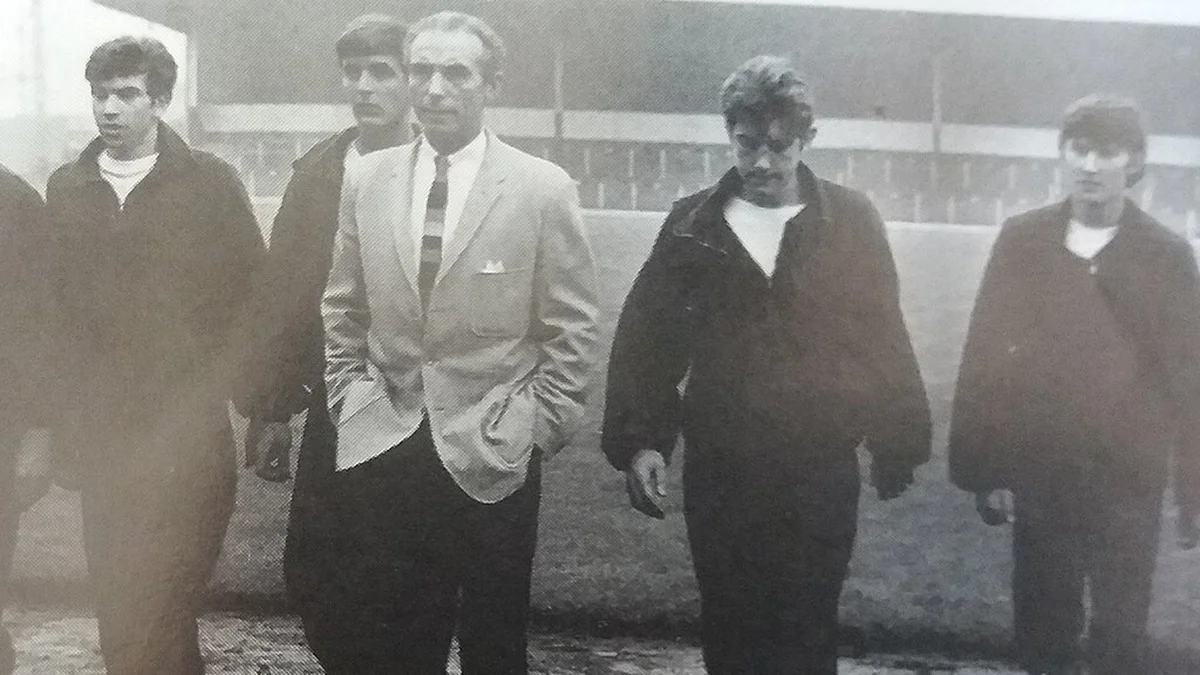
Matthews served as general manager of Port Vale from 1965 to 1968. The spell was unsuccessful, and he left the club after three years. He then travelled the world coaching enthusiastic amateurs, a role that suited his love of teaching the game far better than club management.
He coached Hibernians in Malta in the 1970-71 season, and he also played for the club. In 1975 he established an all-black team in Soweto, South Africa, despite the harsh apartheid laws of the time. He later coached in Canada and in South Africa, and he played in charity and exhibition matches into his 60s.
Playing Style
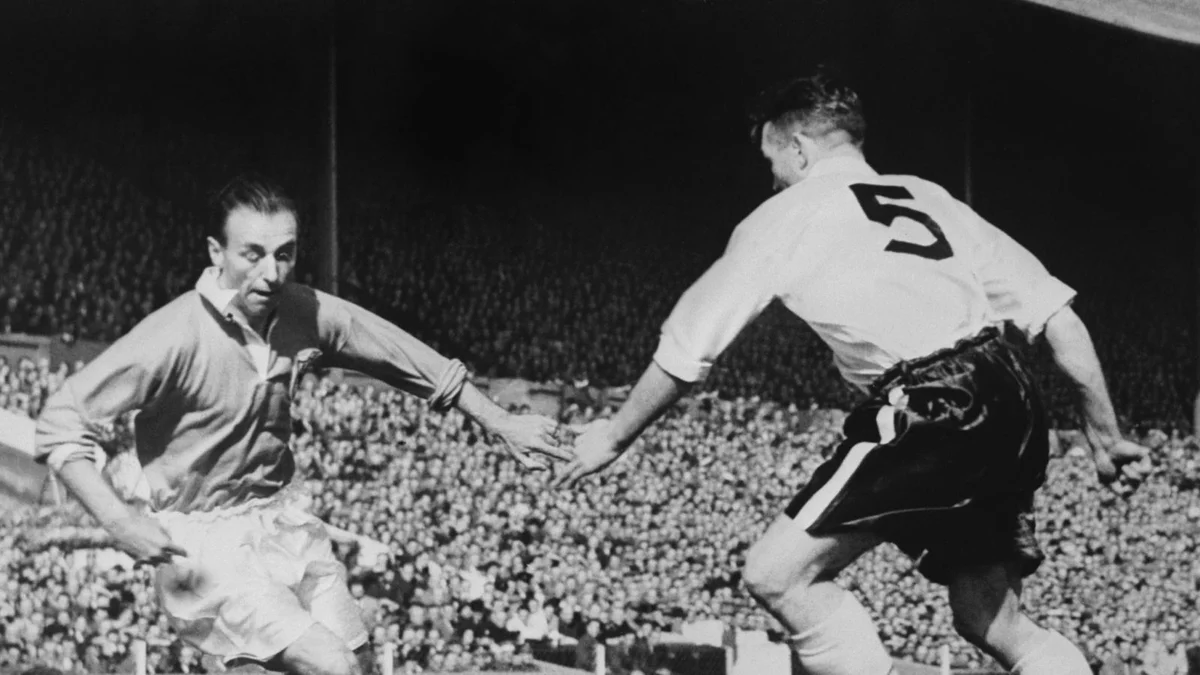
Matthews was a winger who beat defenders with dribbling, balance and change of pace. He combined close control with superb body swerve, and he could glide past a full-back on the outside before delivering a cross with accuracy. He rarely wasted a touch, and his final ball created goals for team-mates season after season.
His fitness set him apart from every other player of his era. He followed a strict training regime, ran on the beach to build stamina, and cut red meat from his diet to begin a near-vegetarian way of eating after an ankle injury in 1951. He did not drink alcohol, apart from a sip of champagne in the dressing room after the 1953 FA Cup final, and he never smoked. His discipline allowed him to play at the top level until the age of 50, long after most players of his generation had retired.
He was also a model of sportsmanship. He was never booked in more than 800 competitive games, and opposing fans and players often applauded his displays. Pele later described him as the man who taught the world the way football should be played, a tribute that captured the respect Matthews earned across the game.
His crossing was as important as his dribbling. He beat a full-back to reach the byline, then delivered a ball that a centre-forward could attack with confidence. The partnership with Stan Mortensen at Blackpool showed this at its best: Matthews created the chances, and Mortensen finished them. Defenders knew what Matthews planned to do and still could not stop it, because his first touch took the ball past the challenge and his change of pace left the defender behind.
Records
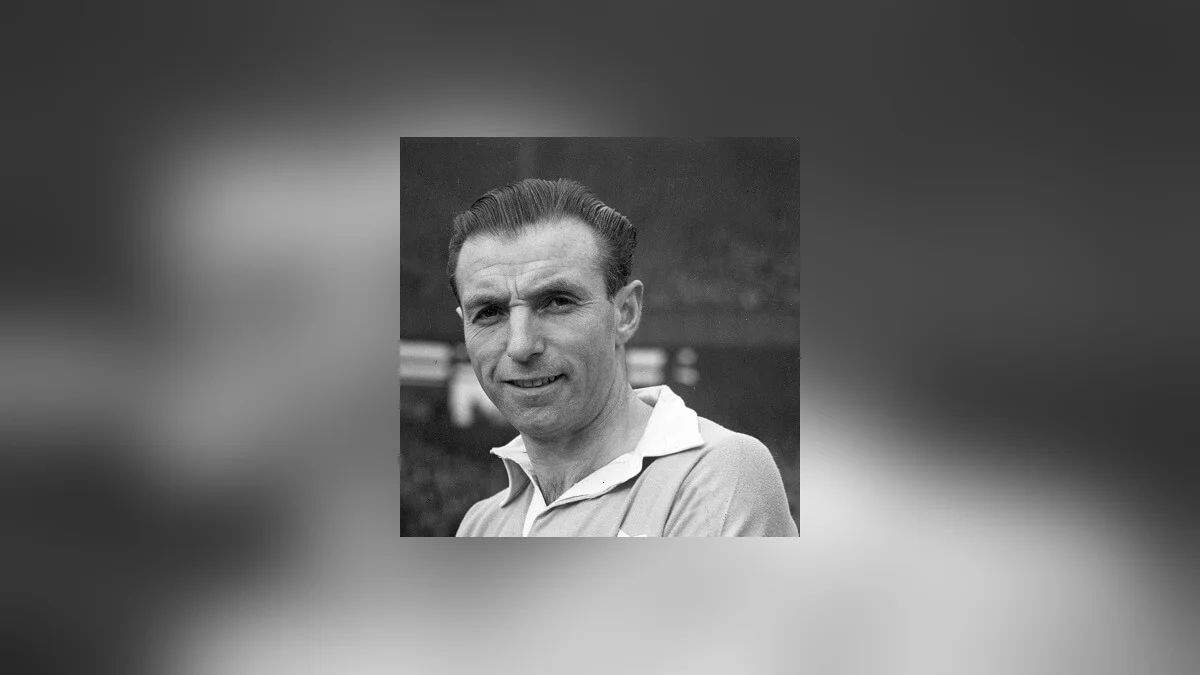
Matthews holds the record as the oldest player ever to play in the top division of English football, at 50 years and 5 days, and as the oldest player ever to represent England, at 42 years and 104 days. His England career of 22 years and 228 days remains the longest in the history of the national team.
He was the first winner of the Ballon d’Or in 1956, and the first winner of the Football Writers Association Footballer of the Year award in 1948, which he won again in 1963. He remains the only footballer ever knighted while still playing. He was never booked in more than 800 competitive games, a record of sportsmanship that no other great player of his era matched.
His 54 England caps came despite the loss of six years to the Second World War, and he played 29 unofficial wartime internationals in addition to his official caps. His 803 competitive club appearances and 80 goals cover a club career that ran from 1932 to 1965, with 717 league appearances and 71 league goals.
Awards and Honours
With Blackpool, Matthews won the FA Cup in 1953. With Stoke City, he played in the side that won promotion to the First Division in 1933 and again in 1963. With England, he helped the team win multiple British Home Championship titles across the 1930s, 1940s and 1950s.
As an individual, he won the Football Writers Association Footballer of the Year award in 1948 and 1963. He won the Ballon d’Or in 1956 as the first winner of the award. He was appointed a Commander of the Order of the British Empire (CBE), and he was knighted in 1965 for services to football. He entered the English Football Hall of Fame in 2002 as an inaugural inductee.
Net Worth
No reliable figure exists for the net worth of Matthews at the time of his death. Published estimates come from low-quality celebrity wealth sites rather than from verified financial records, and they vary widely. This article states no figure as fact, because no figure has been confirmed by a reliable source.
What is known is that Matthews earned far less from football than modern players earn. He played in the era of the maximum wage, and his later income came from coaching, guest appearances, public speaking, and his autobiography. His lifestyle remained modest, in keeping with a man known more for humility than for extravagance.
Later Life and Legacy
After leaving club management, Matthews travelled the world as a coach and ambassador for the game. He worked in Malta, South Africa and Canada, and he coached an all-black team in Soweto in 1975. He played in charity and exhibition matches into his 60s, and he remained a revered figure at Stoke City.
His later years brought declining health after the death of his wife Mila in May 1999. He died on 23 February 2000, aged 85, and tributes came from across football, including from former team-mates, opponents and managers who had watched him play.
His legacy rests on dribbling, longevity and sportsmanship. He won the first Ballon d’Or, played top-flight football at 50, and was never booked in a career of more than 800 games. For supporters who saw him play, and for the generations who know him only through the Matthews Final, he remains the standard of wing play and the gentleman of English football.
Conclusion
Stanley Matthews rose from an office boy at Stoke City to the first winner of the Ballon d’Or, and he did it with dribbling that no defender could stop and discipline that no other player of his era could match. From the Matthews Final of 1953 to a knighthood while still playing, from a return to Stoke at 46 to coaching in Soweto, his life joined rare skill with rare character. The records of oldest top-flight player and longest England career still stand, and the name of Matthews remains a byword for the way football should be played.
FAQs
How old was Stanley Matthews when he died?
Stanley Matthews was born on 1 February 1915 and died on 23 February 2000, aged 85.
Why is the 1953 FA Cup final called the Matthews Final?
The 1953 FA Cup final is called the Matthews Final because of the famous display of wing play by Stanley Matthews as Blackpool came from 3-1 down to beat Bolton Wanderers 4-3. Stan Mortensen scored a hat-trick in the same game, and Matthews always credited the team, and Mortensen in particular, for the win.
Did Stanley Matthews win the Ballon d’Or?
Stanley Matthews won the first Ballon d’Or in 1956 at the age of 41, while playing for Blackpool. He remains the first winner of the award and one of the oldest winners in its history.
How many caps did Stanley Matthews win for England?
Stanley Matthews won 54 caps for England between 1934 and 1957, scoring 11 goals. His England career of 22 years and 228 days remains the longest in the history of the national team.
Was Stanley Matthews ever booked?
Stanley Matthews was never booked in more than 800 competitive games. His record of sportsmanship remains one of the most remarkable facts of his career.
Who was the wife of Stanley Matthews?
The wife of Stanley Matthews was Betty Vallance, the daughter of Stoke City trainer Jimmy Vallance. The couple had two children: Jean and Stanley Jr. The marriage ended in divorce, and Matthews later married Mila, who died in May 1999.