Rio Ferdinand Biography: Age, Wife, Family, Career, Stats, Records and Net Worth
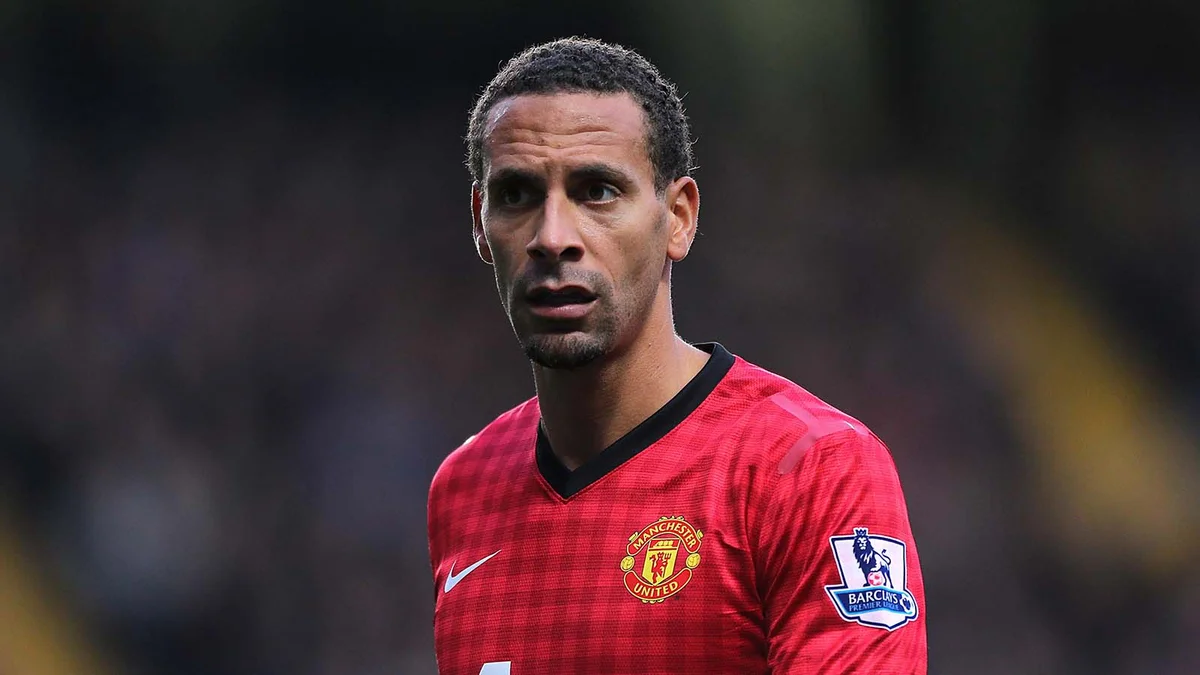
Rio Gavin Ferdinand is an English former footballer who played as a centre-back and is regarded as one of the finest defenders in the history of the Premier League. Born on 7 November 1978, Ferdinand won 81 caps for England, played 455 games for Manchester United, and won six Premier League titles, the Champions League in 2008, and the FIFA Club World Cup in 2008. He was twice the most expensive defender in the world, and he captained both Manchester United and England.
This biography covers the full story: his early life in Peckham, his rise at West Ham United, the record moves to Leeds United and Manchester United, his England career, the eight-month ban that cost him Euro 2004, his family life, and what he does now.
Quick Facts
| Detail | Fact |
|---|---|
| Full name | Rio Gavin Ferdinand |
| Date of birth | 7 November 1978 |
| Age | 47, turns 48 on 7 November 2026 |
| Place of birth | South London, England |
| Height | 1.89 m (6 ft 2 in) |
| Position | Centre-back |
| Clubs | West Ham United, Bournemouth (loan), Leeds United, Manchester United, Queens Park Rangers |
| Manchester United appearances | 455 in all competitions, 8 goals |
| England caps | 81 caps, 3 goals, 1997 to 2011 |
| Premier League titles | 6 |
| Retired | 30 May 2015 |
| Honour | OBE, awarded in the 2022 Birthday Honours |
Early Life
Ferdinand grew up on the Friary council estate in Peckham, south London. He joined the West Ham United academy at the age of 13, after training with several other clubs as a schoolboy. He was scouted by Frank Lampard Senior, the father of his future West Ham and England team-mate Frank Lampard. Alongside football, Ferdinand attended ballet school for several years as a boy, training that later helped his balance and flexibility on the pitch.
In the spring of 1996, Ferdinand led West Ham to the FA Youth Cup final, where the young Hammers lost to a Liverpool side that included Jamie Carragher and Michael Owen. Weeks later, in May 1996, he made his first-team debut in a Premier League fixture against Sheffield Wednesday at the age of 17. He spent a short loan spell at Bournemouth in the 1996-97 season, playing 10 league games, before returning to West Ham to become a regular in the side of manager Harry Redknapp.
The 1997-98 season made his name. No West Ham player made more appearances than Ferdinand that season, and his displays earned him the Hammer of the Year award. In 1999 he played six times as West Ham won the UEFA Intertoto Cup. By then he was already an England international, and bigger clubs were watching closely.
Club Career
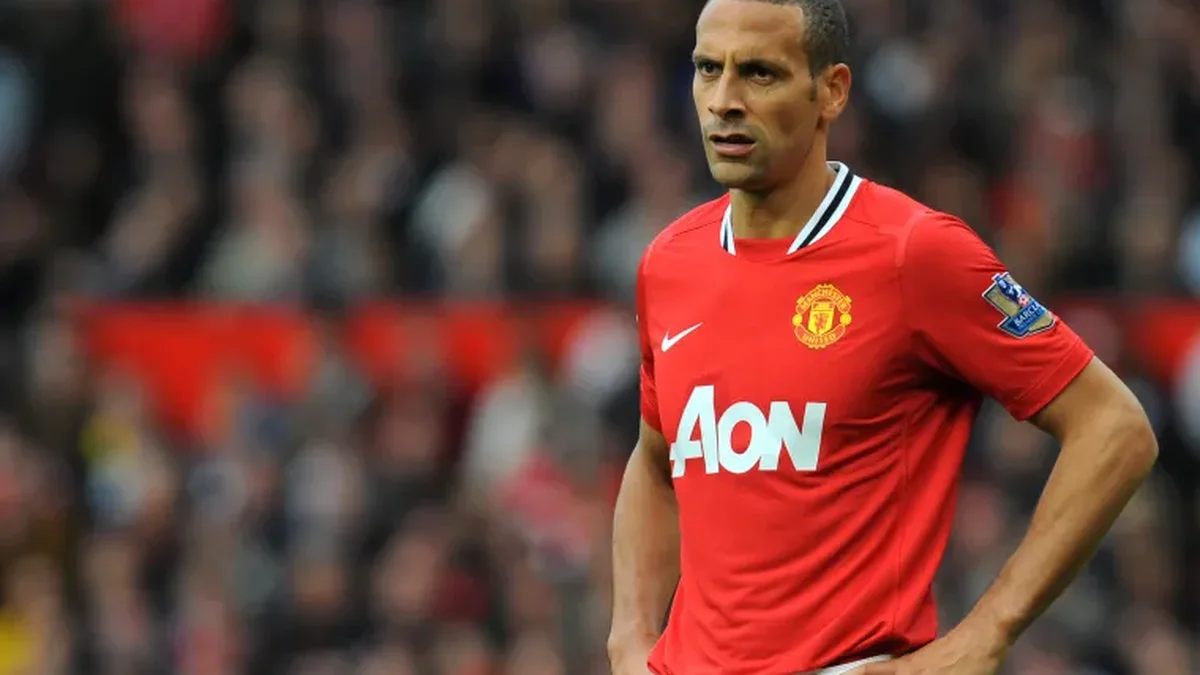
West Ham United (1995-2000)
Ferdinand turned professional with West Ham in 1995 and played 127 league games for the club, scoring 2 goals, and 158 games in all competitions. He scored his first West Ham goal in February 1997 in a defeat at Blackburn. He played alongside Frank Lampard, Joe Cole, and Michael Carrick in a famous group of academy graduates, and he grew into one of the most composed young defenders in English football.
Leeds United (2000-2002)
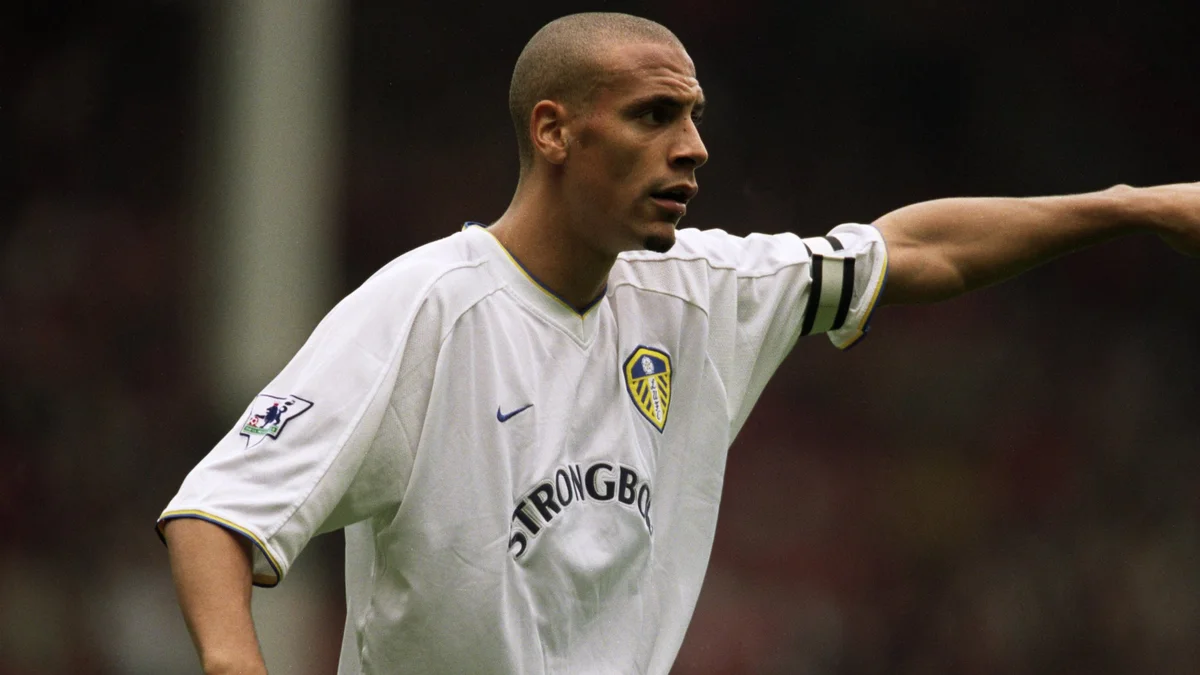
In November 2000, Leeds United signed Ferdinand for 18 million pounds, a British record transfer fee and a world record fee for a defender. He became a central figure at Elland Road, and he played in the run to the semi-finals of the Champions League in the 2000-01 season. He became club captain in 2001. He played 54 league games and 73 games in all competitions for Leeds, scoring 3 goals. Financial problems at Leeds then forced the sale of their best players, and Ferdinand moved on after two seasons.
Manchester United (2002-2014)
On 21 July 2002, Leeds agreed to sell Ferdinand to Manchester United for around 30 million pounds, reported at the time as 29.1 million pounds. The fee broke the British transfer record once again and made him the most expensive defender in the world for a second time. He spent 12 seasons at Old Trafford, playing 455 games and scoring 8 goals, and he served as United vice-captain.
He won his first Premier League title in his first season, 2002-03. After the ban described below, he returned to become the defensive leader of the most successful United side of the era. He scored his first United goal on 14 December 2005 in a 4-0 win over Wigan Athletic. He formed a celebrated central defensive partnership with Nemanja Vidic, and United won three Premier League titles in a row from 2006-07 to 2008-09.
The peak came in Moscow on 21 May 2008, when Ferdinand captained United to victory over Chelsea in the Champions League final, decided by a penalty shoot-out. United then won the FIFA Club World Cup in December 2008. He added further Premier League titles in 2010-11 and 2012-13, the last of those in the final season of manager Sir Alex Ferguson. His United honours also include two League Cups, in 2005-06 and 2008-09, and four FA Community Shields, in 2003, 2007, 2008, and 2011. United also finished as FA Cup runners-up in 2005 and 2007.
In September 2003, Ferdinand failed to attend a drug test scheduled at the United training ground at Carrington. He had left after training to go shopping and remembered too late to return in time. He took a test two days later and passed, and he offered to take a hair follicle test, but the FA turned down the offer. The FA disciplinary committee imposed an eight-month ban from January 2004 and a fine of 50,000 pounds. The ban cost him the rest of the 2003-04 season, the start of the next season, and a place at Euro 2004. United appealed, but the verdict stood.
Queens Park Rangers (2014-2015)
Ferdinand left United in the summer of 2014 after his contract expired, and he signed a one-year deal with Queens Park Rangers. He played 11 league games and 12 games in all competitions for QPR in a difficult season that ended in relegation. His final appearance came on 7 March 2015 in a 2-1 defeat at Tottenham. After his release by QPR, he announced his retirement from professional football on 30 May 2015, at the age of 36, on BT Sport.
Club Career Stats
| Club | League | FA Cup | League Cup | Europe | Other | Total Apps | Total Goals |
|---|---|---|---|---|---|---|---|
| West Ham United | 127 (2) | 9 | 13 | 3 | 6 | 158 | 2 |
| Bournemouth (loan) | 10 (0) | 0 | 0 | 0 | 1 | 11 | 0 |
| Leeds United | 54 (2) | 3 | 2 | 14 | 0 | 73 | 3 |
| Manchester United | 312 (7) | 30 | 14 | 91 | 8 | 455 | 8 |
| Queens Park Rangers | 11 (0) | 1 | 0 | 0 | 0 | 12 | 0 |
| Career Total | 514 (11) | 43 | 29 | 108 | 15 | 709 | 13 |
League column shows appearances, with league goals in brackets. Other columns show appearances.
International Career
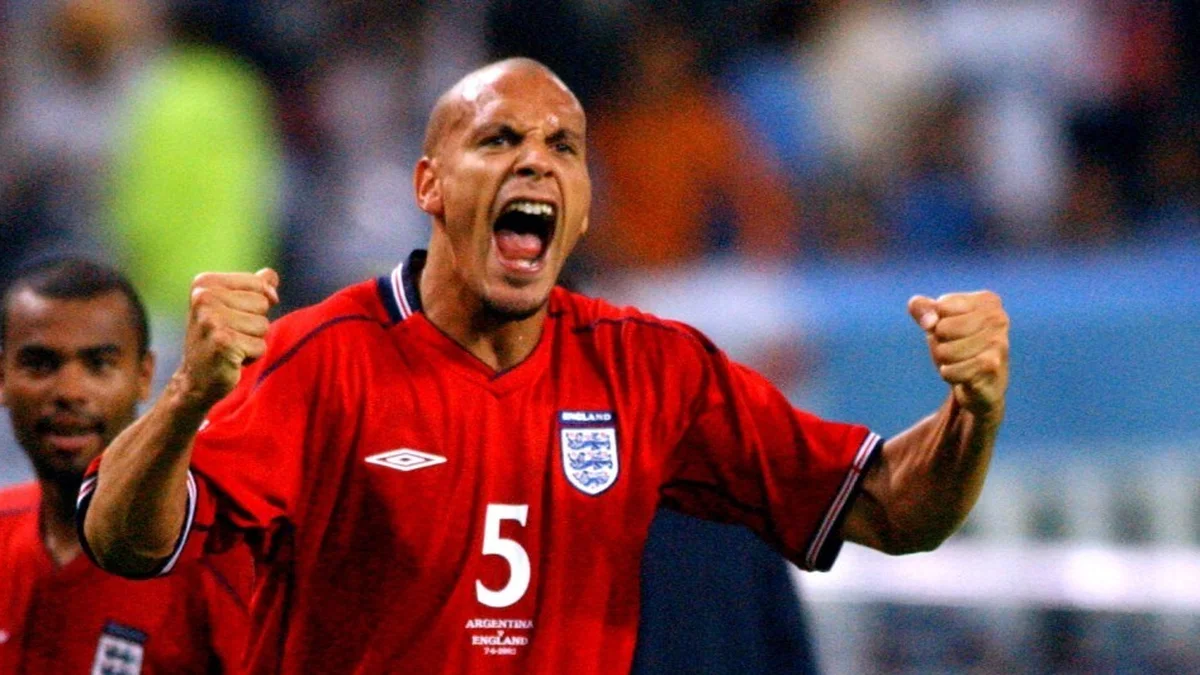
Ferdinand made his senior England debut on 15 November 1997 against Cameroon at Wembley, at the age of 19 years and eight days, making him the youngest defender to play for England at the time. He was named in the squad for the 1998 World Cup in France but did not play at the tournament. He was left out of the England squad for Euro 2000 by manager Kevin Keegan.
The 2002 World Cup in Korea and Japan was his breakthrough on the world stage. He scored his first England goal in the 3-0 second-round win over Denmark on 15 June 2002 at Niigata, and he was named in the FIFA team of the tournament. He then missed Euro 2004 because of the eight-month ban. He played at the 2006 World Cup in Germany. England failed to qualify for Euro 2008, a campaign in which Ferdinand missed the decisive 3-2 home defeat by Croatia in November 2007 through injury.
He first captained England on 26 March 2008 in a 1-0 defeat in France, winning his 65th cap that night. On 5 February 2010, manager Fabio Capello named Ferdinand as permanent England captain, replacing John Terry. He led the side in the pre-tournament friendlies against Mexico and Japan, but on 4 June 2010, during the first training session in South Africa, he damaged ligaments in his left knee in a challenge with Emile Heskey. He was ruled out of the World Cup for four to six weeks, and Steven Gerrard captained England at the tournament in his place. Michael Dawson flew out as his replacement in the squad.
On 19 March 2011, Capello restored Terry as permanent England captain, and Ferdinand returned to the role of vice-captain. Ferdinand won his last cap in 2011. He was left out of the England squad for Euro 2012 by manager Roy Hodgson, a decision that caused wide debate. He was recalled to the squad in March 2013 for World Cup qualifiers against San Marino and Montenegro, but he withdrew from the squad, citing fitness and a need to manage his back problem. He announced his retirement from international football in May 2013. His England career closed at 81 caps and 3 goals.
His three England goals came against Denmark at the 2002 World Cup, against Russia in a Euro 2008 qualifier on 12 September 2007 at Wembley, and against Kazakhstan in a 2010 World Cup qualifier on 11 October 2008 at Wembley.
England Appearances by Year
| Year | Appearances | Goals |
|---|---|---|
| 1997 | 1 | 0 |
| 1998 | 4 | 0 |
| 1999 | 3 | 0 |
| 2000 | 2 | 0 |
| 2001 | 9 | 0 |
| 2002 | 9 | 1 |
| 2003 | 5 | 0 |
| 2004 | 3 | 0 |
| 2005 | 8 | 0 |
| 2006 | 12 | 0 |
| 2007 | 8 | 1 |
| 2008 | 8 | 1 |
| 2009 | 4 | 0 |
| 2010 | 4 | 0 |
| 2011 | 1 | 0 |
| Total | 81 | 3 |
Playing Style
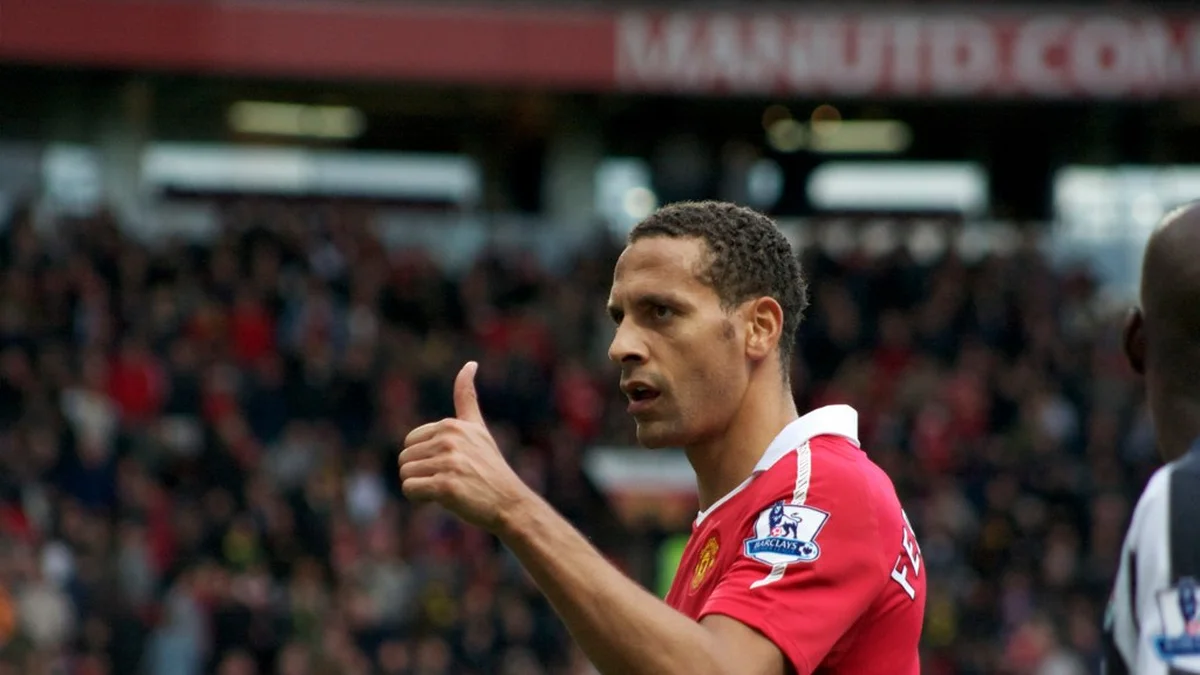
Ferdinand was a ball-playing centre-back, a defender who treated possession as a weapon rather than a risk. He read the game early, stepped out of defence with the ball, and passed cleanly into midfield. His pace allowed him to recover when a striker ran in behind, and his composure in possession set him apart from most English centre-backs of his era. Former team-mate Paul Scholes called him the best centre-half he ever played with, and former Barcelona defender Gerard Pique said Ferdinand changed how English football understood the centre-back position.
His partnership with Nemanja Vidic at Manchester United worked because the two men offered opposite strengths. Vidic attacked the ball, headed everything, and fought for every duel. Ferdinand covered behind him, swept up danger, and started attacks with calm passes. Together they formed one of the strongest central defensive pairings in Premier League history, and United conceded few goals in the seasons when both men stayed fit.
Records and Achievements
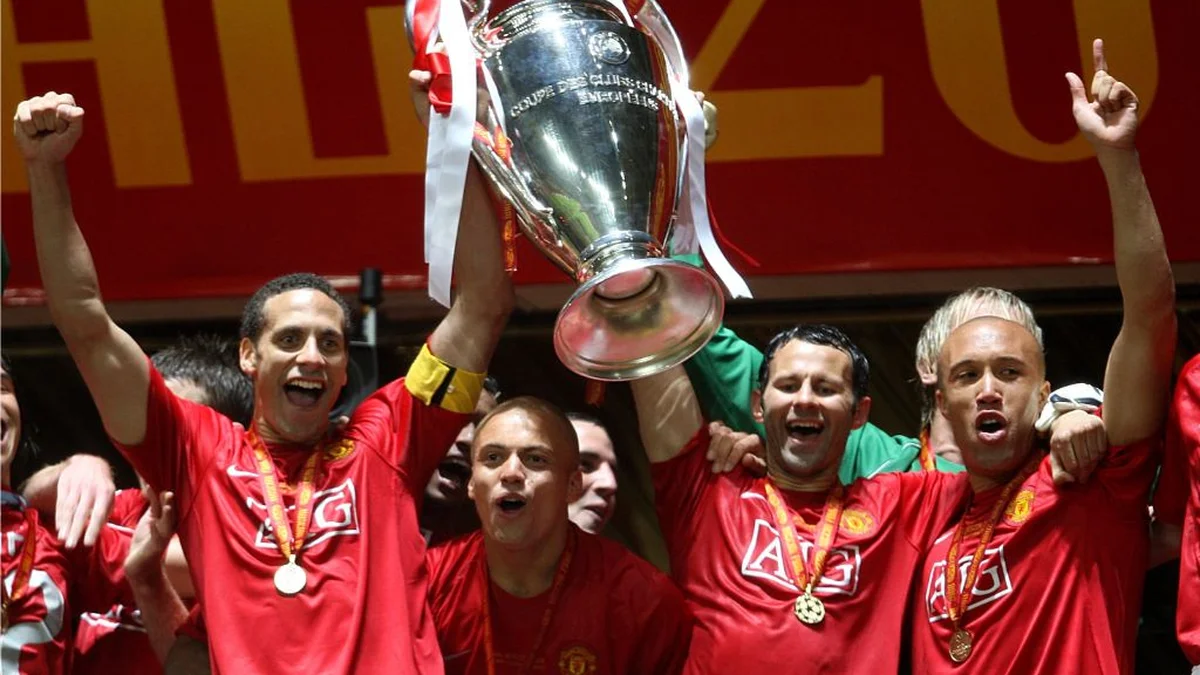
Ferdinand made 504 Premier League appearances, scored 11 Premier League goals, provided 8 assists, and kept 189 clean sheets in the league. He won six Premier League titles with Manchester United, in 2002-03, 2006-07, 2007-08, 2008-09, 2010-11, and 2012-13. He was twice the most expensive defender in the world, at Leeds in 2000 and at Manchester United in 2002. He was the youngest defender to play for England at the time of his debut in 1997, and he was named in the FIFA team of the tournament at the 2002 World Cup. He captained Manchester United in a Champions League final win and captained England at senior level.
Awards and Honours
| Honour | Team or Level | Years |
|---|---|---|
| Premier League | Manchester United | 2002-03, 2006-07, 2007-08, 2008-09, 2010-11, 2012-13 |
| UEFA Champions League | Manchester United | 2007-08 |
| FIFA Club World Cup | Manchester United | 2008 |
| Football League Cup | Manchester United | 2005-06, 2008-09 |
| FA Community Shield | Manchester United | 2003, 2007, 2008, 2011 |
| UEFA Intertoto Cup | West Ham United | 1999 |
| Hammer of the Year | West Ham United | 1997-98 |
| PFA Premier League Team of the Year | Individual | 2001-02, 2004-05, 2006-07, 2007-08, 2008-09, 2012-13 |
| Premier League Player of the Month | Individual | October 2001 |
| FIFPro World XI | Individual | 2007-08 |
| ESM Team of the Year | Individual | 2007-08 |
| English Football Hall of Fame | Individual | Inducted 2016 |
| Premier League Hall of Fame | Individual | Inducted 2023 |
| OBE | Individual | 2022 Birthday Honours, for services to football and to charity |
Net Worth
No reliable figure exists for the net worth of Rio Ferdinand. Published estimates on low-quality celebrity websites vary widely and conflict with each other, and none of them comes from a verified source. This article therefore gives no net worth figure. What is certain is that Ferdinand earned large wages across a 19-year professional career, including 12 seasons at Manchester United, and that he has built business and media interests since retiring.
Personal Life and Family
Ferdinand grew up in Peckham with his family. His brother Anton Ferdinand also played professional football as a defender, and his cousins include former England striker Les Ferdinand and footballer Kane Ferdinand. As a boy, Ferdinand grew up supporting Liverpool, even though he spent most of his career with Manchester United.
In 2006, his girlfriend Rebecca Ellison gave birth to their first son, Lorenz. The couple had two more children, a son Tate, born in 2008, and a daughter Tia. Ellison and Ferdinand married in 2009. Ellison died of breast cancer on 2 May 2015, aged 34. Ferdinand later wrote about her illness and his bereavement in the memoir Thinking Out Loud, published in October 2017.
On 27 September 2019, Ferdinand married for the second time, to Kate Wright. The couple have two children together, a son Cree, born on 18 December 2020, and a daughter Shae, born in 2022. His sons Lorenz and Tate both played for Brighton and Hove Albion at youth level, with Lorenz signing his first professional contract with Brighton.
Later Life and Legacy
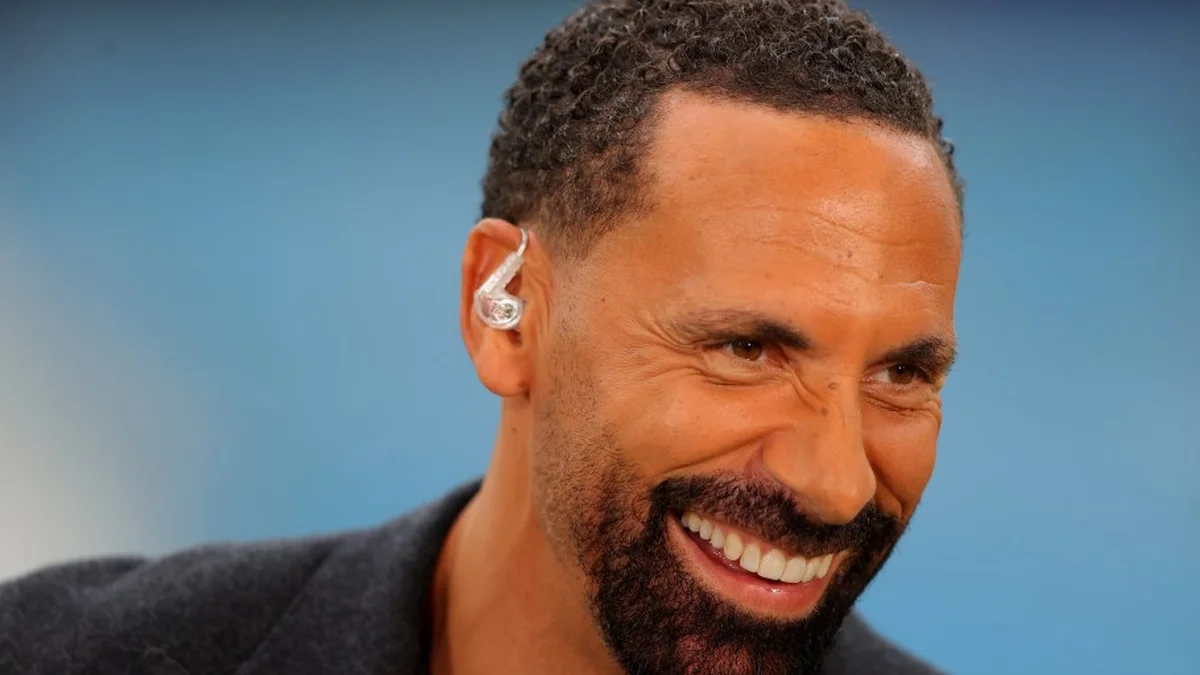
After retiring, Ferdinand worked as a television pundit, including for BT Sport and later TNT Sports, and for the BBC at the 2014 World Cup and Euro 2016. He set up a charity, the Live the Dream Foundation, in December 2009, to provide education and employment opportunities for young people. In October 2013, he and England manager Roy Hodgson were appointed to an FA commission to improve the state of the national game.
In September 2017, Ferdinand announced a bid to become a professional boxer, backed by a betting company, but the British Boxing Board of Control declined to grant him a licence, and he announced that he was hanging up his gloves. His BBC documentary Rio Ferdinand: Being Mum and Dad, about life after the death of his wife, won the BAFTA award for Best Single Documentary in 2018. He received an honorary doctorate from London South Bank University in March 2022, and he was appointed OBE in the 2022 Birthday Honours for services to football and to charity. He was inducted into the English Football Hall of Fame in 2016 and the Premier League Hall of Fame in 2023.
Ferdinand also wrote three autobiographical books: Rio: My Story in 2007, Rio: My Decade as a Red in 2013, and 2Sides: My Autobiography in 2014. His legacy rests on changing the role of the English centre-back. He showed that a defender could control a match with pace, reading of the game, and calm passing, and his partnership with Vidic set the standard for Premier League defending in the late 2000s.
Conclusion
Rio Ferdinand rose from the Friary estate in Peckham to become one of the most decorated English defenders of all time. He broke the British transfer record twice, won six Premier League titles and the Champions League at Manchester United, played 81 times for England, and captained club and country. His career carried setbacks, above all the eight-month ban that cost him Euro 2004 and the knee injury that cost him the 2010 World Cup, but his standing as a player never faded. As a pundit, charity founder, and author, he stayed a leading voice in English football long after his final match.
FAQs
How many Premier League titles did Rio Ferdinand win?
Ferdinand won six Premier League titles with Manchester United, in 2002-03, 2006-07, 2007-08, 2008-09, 2010-11, and 2012-13. He also won the Champions League in 2008, the FIFA Club World Cup in 2008, two League Cups, and four FA Community Shields.
How many times did Rio Ferdinand play for England?
Ferdinand played 81 times for England between 1997 and 2011, scoring 3 goals. His goals came against Denmark at the 2002 World Cup, Russia in a Euro 2008 qualifier in 2007, and Kazakhstan in a 2010 World Cup qualifier in 2008.
Why did Rio Ferdinand miss the 2010 World Cup?
Ferdinand missed the 2010 World Cup because he damaged ligaments in his left knee during the first England training session in South Africa on 4 June 2010, in a challenge with Emile Heskey. He was ruled out for four to six weeks, and Steven Gerrard captained England at the tournament in his place.
Why was Rio Ferdinand banned in 2004?
Ferdinand was banned for eight months from January 2004 and fined 50,000 pounds after he failed to attend a drug test at the Manchester United training ground in September 2003. He left after training to go shopping and remembered too late to return. He passed a test two days later, but the FA disciplinary committee still imposed the ban, which cost him a place at Euro 2004.
How much did Manchester United pay for Rio Ferdinand?
Manchester United paid around 30 million pounds, reported at the time as 29.1 million pounds, to sign Ferdinand from Leeds United in July 2002. The fee broke the British transfer record and made him the most expensive defender in the world for a second time, after his 18 million pound move from West Ham to Leeds in 2000.
What does Rio Ferdinand do now?
Ferdinand works as a television pundit, including for BT Sport and later TNT Sports, and he has written several autobiographical books. He set up the Live the Dream Foundation charity in 2009, and he received an OBE in 2022 for services to football and to charity. He was inducted into the Premier League Hall of Fame in 2023.