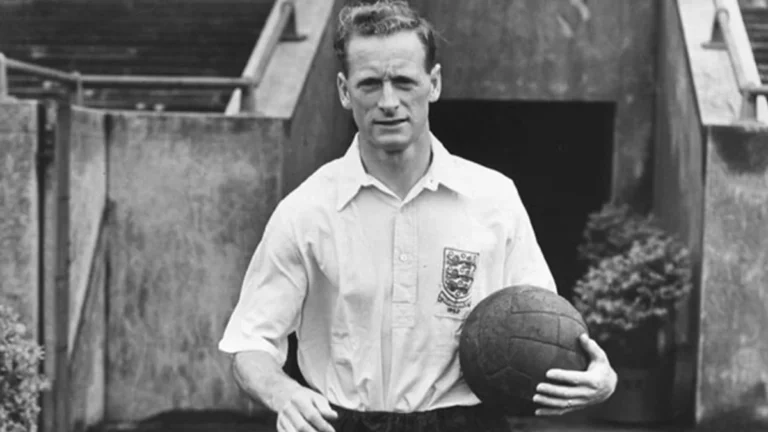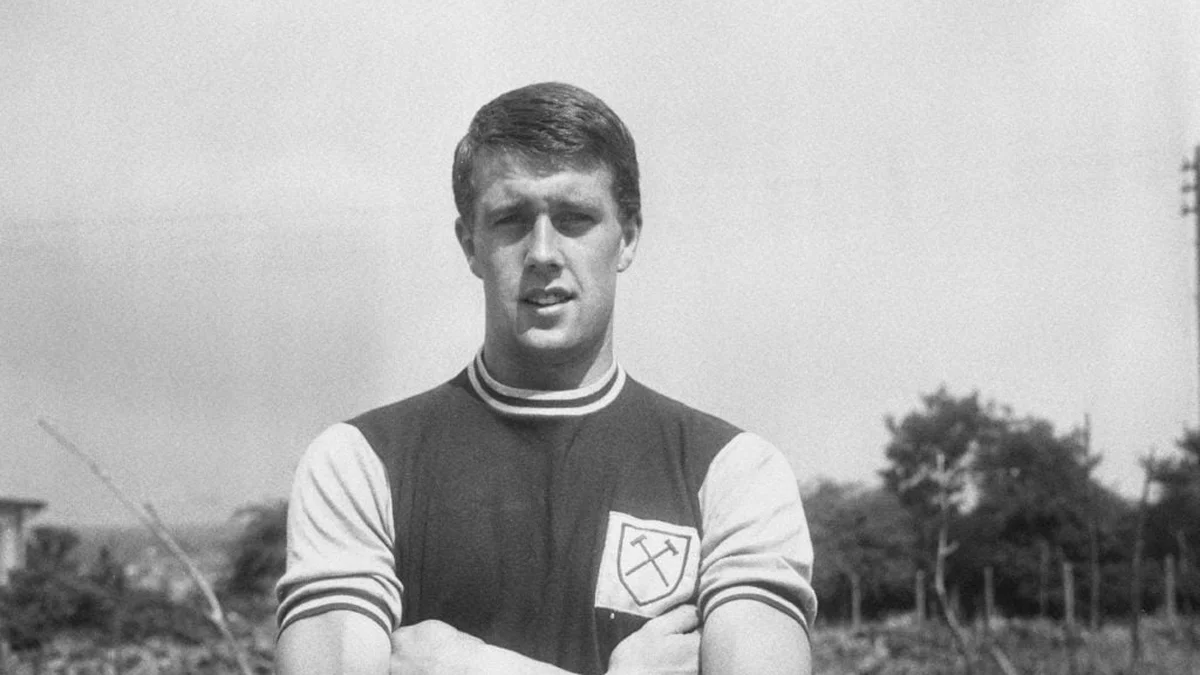
Geoff Hurst Biography: Age, Wife, Family, Career, Stats, Records and Net Worth
Geoff Hurst is the only player in history to score a hat-trick in a World Cup final. On 30 July 1966, at Wembley, he scored three goals as England beat West Germany 4-2 after extra time to win the World Cup. He won 49 caps and scored 24 goals for England, played more than 500 games for West Ham United, and later managed Chelsea. More than half a century after that final, he remains the only surviving player from the team that played in it.
This Geoff Hurst biography covers his age, wife, family, career, stats, records and net worth, from a youth player at West Ham to the most famous afternoon in English football, a long club career, a spell in management, and a later life spent as an ambassador for the game.
Quick Facts
| Detail | Fact |
|---|---|
| Full name | Sir Geoffrey Charles Hurst |
| Date of birth | 8 December 1941 |
| Place of birth | Ashton-under-Lyne, Lancashire, England |
| Age | 84 (turns 85 on 8 December 2026) |
| Height | 1.82 m (5 ft 11.5 in) |
| Position | Striker |
| Clubs | West Ham United, Stoke City, Cape Town City (loan), West Bromwich Albion, Cork Celtic, Seattle Sounders, Telford United |
| England | 49 caps, 24 goals |
| Honours | MBE, Knight Bachelor, World Cup winner 1966 |
Early Life and Education
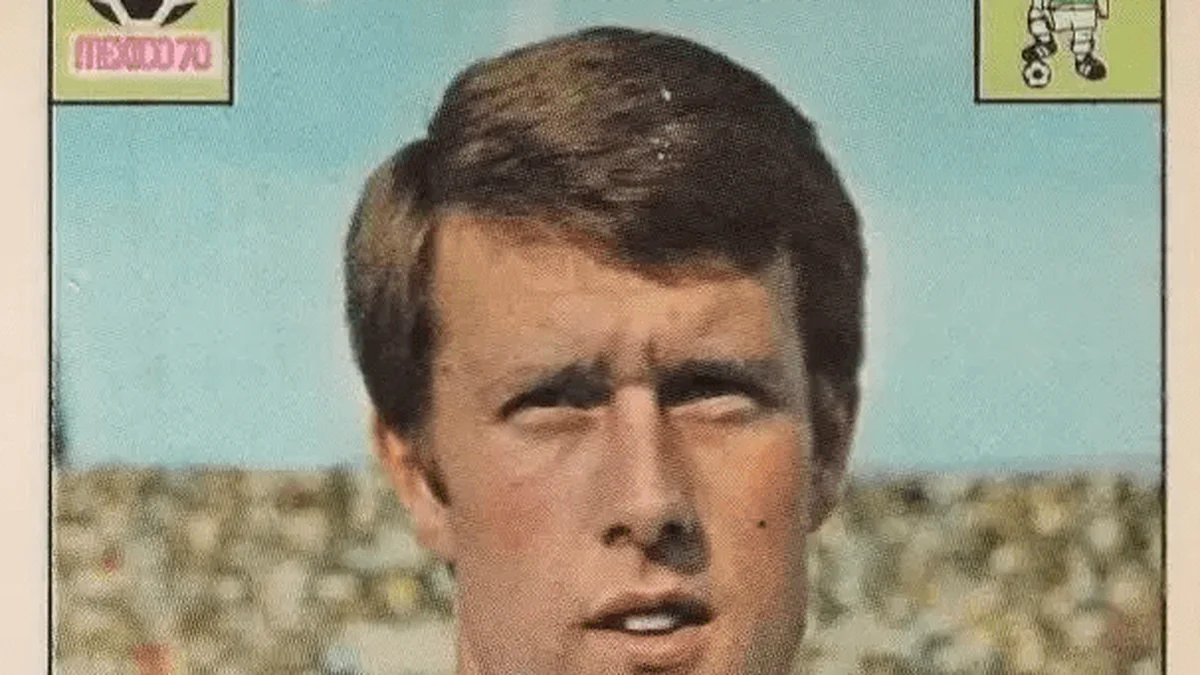
Geoffrey Charles Hurst was born on 8 December 1941 in Ashton-under-Lyne, Lancashire. His father, Charlie Hurst, was a professional footballer who played at centre-half for Bristol Rovers, Oldham Athletic and Rochdale. When Geoff was six years old, the family moved to Chelmsford in Essex.
As a teenager, Hurst was obsessed with football, and he was once fined one pound for disturbing the peace after persistently kicking a football into a neighbour garden. He joined West Ham United as a youth player in 1957. He trained as a wing-half at first, but West Ham manager Ron Greenwood spotted his talent as a striker and moved him forward. Hurst also played cricket as a young man, and he made one first-class appearance for Essex against Lancashire on 30 May 1962, as a wicket-keeper, scoring 0 not out in the first innings and 0 in the second innings.
His early years at West Ham were slow. He made his first-team debut in 1960 and spent three seasons on the edge of the side, learning the striker role. The 1962-63 season brought his first real breakthrough, with 15 goals in 29 appearances. The following season he scored 26 goals in 50 appearances, and the goals never stopped. By the middle of the decade he was one of the most feared strikers in the First Division, and his partnership with Bobby Moore and Martin Peters gave West Ham the core of the England team that won the World Cup.
Family
Hurst met his wife, Judith, at a youth centre in Chelmsford. The couple married on 13 October 1964, with Eddie Presland as best man. They had three daughters: Claire, Charlotte and Joanne. The family lived a quiet life away from the celebrity spotlight, and Hurst has often said that family mattered more to him than trophies or fame.
The family suffered a deep loss in 2010, when the eldest daughter, Claire, died at the age of 45 after a ten-year battle against a brain tumour. Hurst later became an ambassador for Sue Ryder, the charity whose nurses had cared for Claire in her final days. As of recent years, Hurst and Judith lived in Cheltenham, Gloucestershire. Hurst has said that Judith is a very private person, and that the couple brought up their children in a normal, quiet environment rather than under the celebrity spotlight.
Club Career
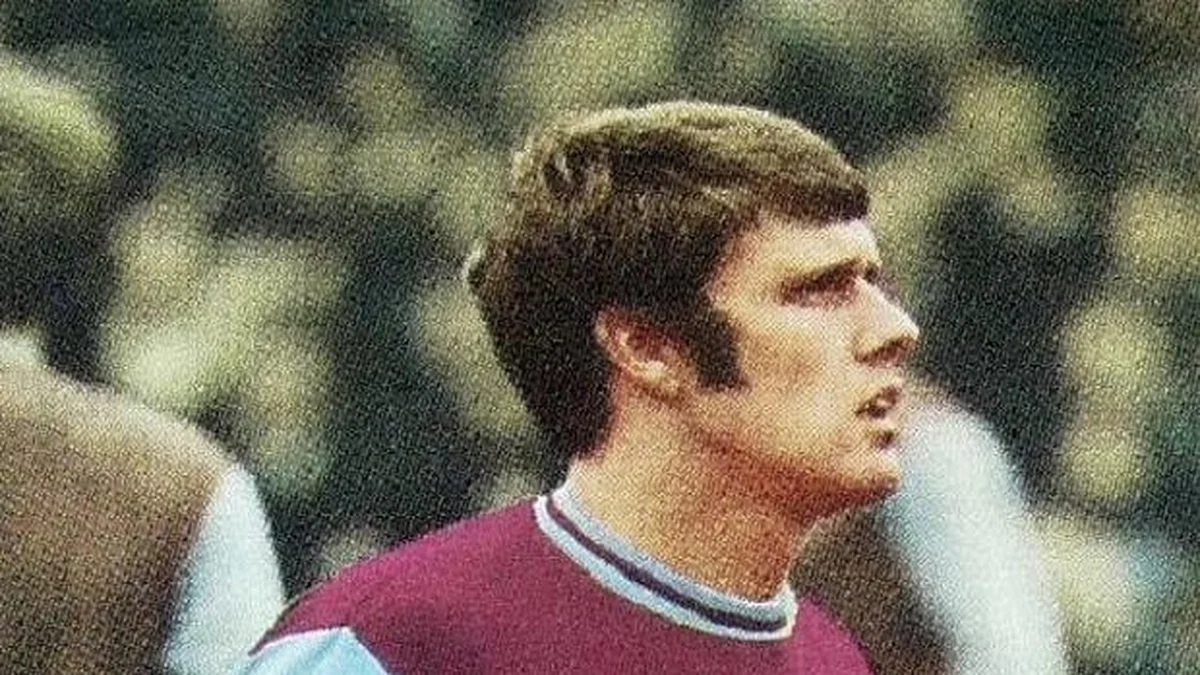
West Ham United
Hurst spent 13 seasons at West Ham United, from 1959 to 1972, and became one of the greatest players in the history of the club. He made 500 appearances in all competitions and scored 248 goals. His league record for the club was 411 appearances and 180 goals.
The golden period came in the mid-1960s. West Ham won the FA Cup in 1964, with Hurst scoring in the 3-2 final win over Preston North End at Wembley. The club then won the European Cup Winners Cup in 1965, beating 1860 Munich 2-0 at Wembley. West Ham lost the League Cup final to West Bromwich Albion in 1966. Hurst won the Hammer of the Year award three times, in the 1965-66, 1966-67 and 1968-69 seasons.
His most prolific season came in 1965-66, when he scored 40 goals in 59 appearances in all competitions. In 1966-67 he scored 41 goals in 49 appearances. After the 1966 World Cup, Manchester United manager Matt Busby made a record offer of 200,000 pounds for Hurst, but West Ham manager Ron Greenwood turned the offer down. Hurst stayed at Upton Park until 1972, when Stoke City signed him for a fee of 80,000 pounds.
Even after the World Cup, Hurst kept scoring at a high rate. In the 1968-69 season he scored 31 goals in 48 appearances, and in 1971-72, his final season at West Ham, he scored 16 goals in 48 appearances. West Ham never won the league title during his time at the club, and the team often struggled for consistency, but Hurst remained a first-choice striker for club and country until 1972. His 248 goals place him among the greatest scorers in the history of West Ham.
Stoke City
Hurst spent three seasons at Stoke City, from 1972 to 1975, and made 130 appearances in all competitions, scoring 39 goals. His league record for the club was 108 appearances and 30 goals. He played alongside his England team-mate Gordon Banks, the goalkeeper of Stoke. Stoke won the Watney Cup in 1973, and the club twice finished fifth in the First Division during the time of Hurst, which were his highest league placings with the club.
During the 1972-73 season, Hurst also played six games on loan for Cape Town City in South Africa, scoring five goals. His three full seasons at Stoke brought steady returns: 13 goals in 43 appearances in 1972-73, 15 goals in 45 appearances in 1973-74, and 8 goals in 38 appearances in 1974-75. He remained a reliable scorer even as his pace faded, and his experience helped a Stoke side that competed near the top of the First Division.
West Bromwich Albion, Cork Celtic and Seattle Sounders
Hurst finished his Football League career with West Bromwich Albion in the 1975-76 season, making 12 appearances in all competitions and scoring two goals. He then played three games for Cork Celtic in Ireland, scoring three goals, and 24 games for Seattle Sounders in the North American Soccer League in 1976, scoring nine goals, including one goal in one playoff appearance. He helped Seattle reach the playoffs for the first time. He then returned to England and moved into management with Telford United, where he served as player-manager.
International Career
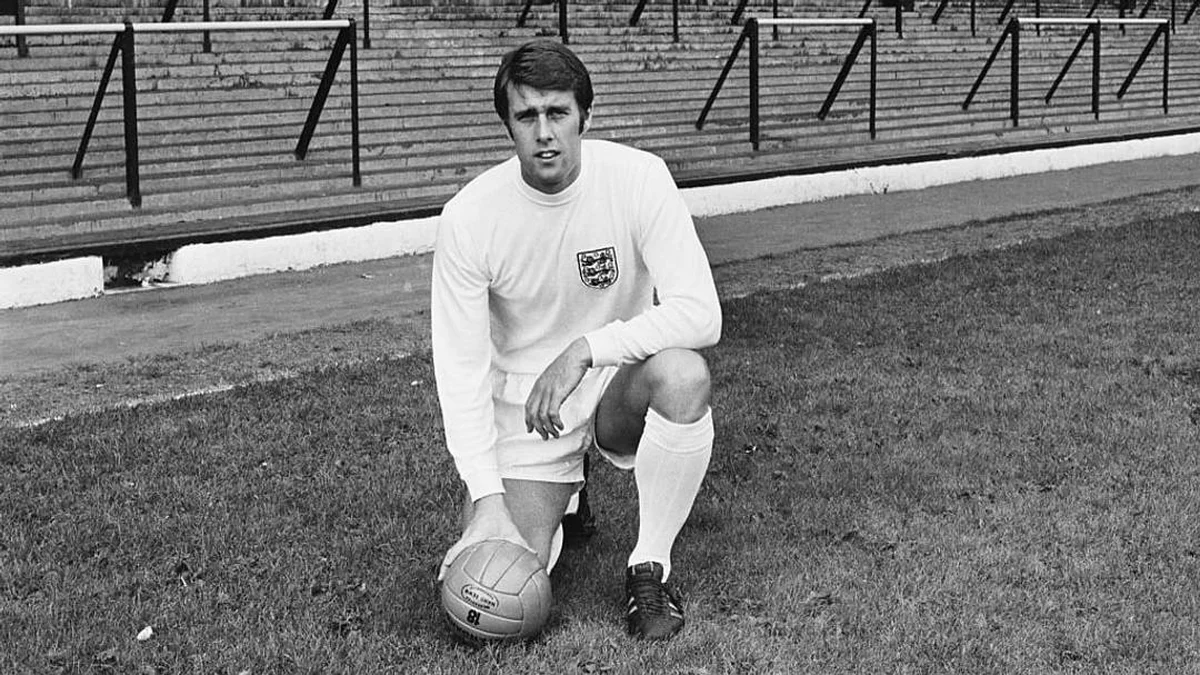
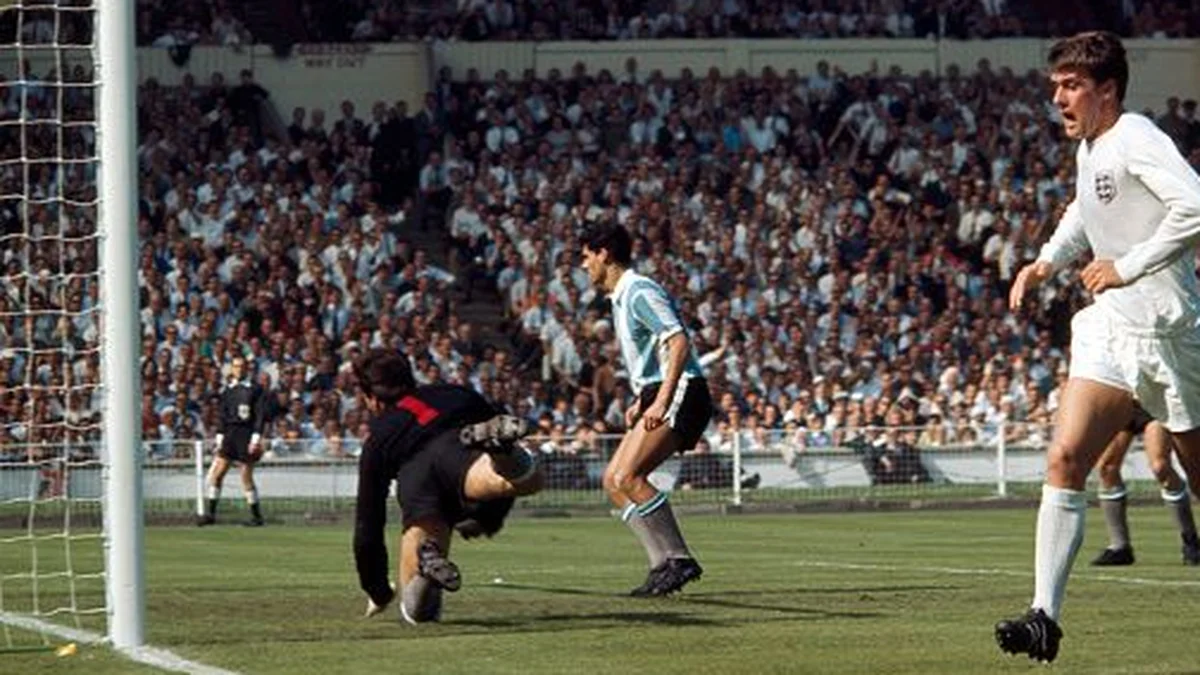
Hurst made his England debut in February 1966, in a 1-0 friendly win over West Germany. He had played only a handful of games for England before the 1966 World Cup, and he entered the tournament as a reserve behind Jimmy Greaves, the established striker. When Greaves suffered a leg injury in the group stage, England manager Alf Ramsey gave Hurst his chance in the quarter-final against Argentina. Hurst scored the only goal of the game with a header, and he kept his place for the rest of the tournament.
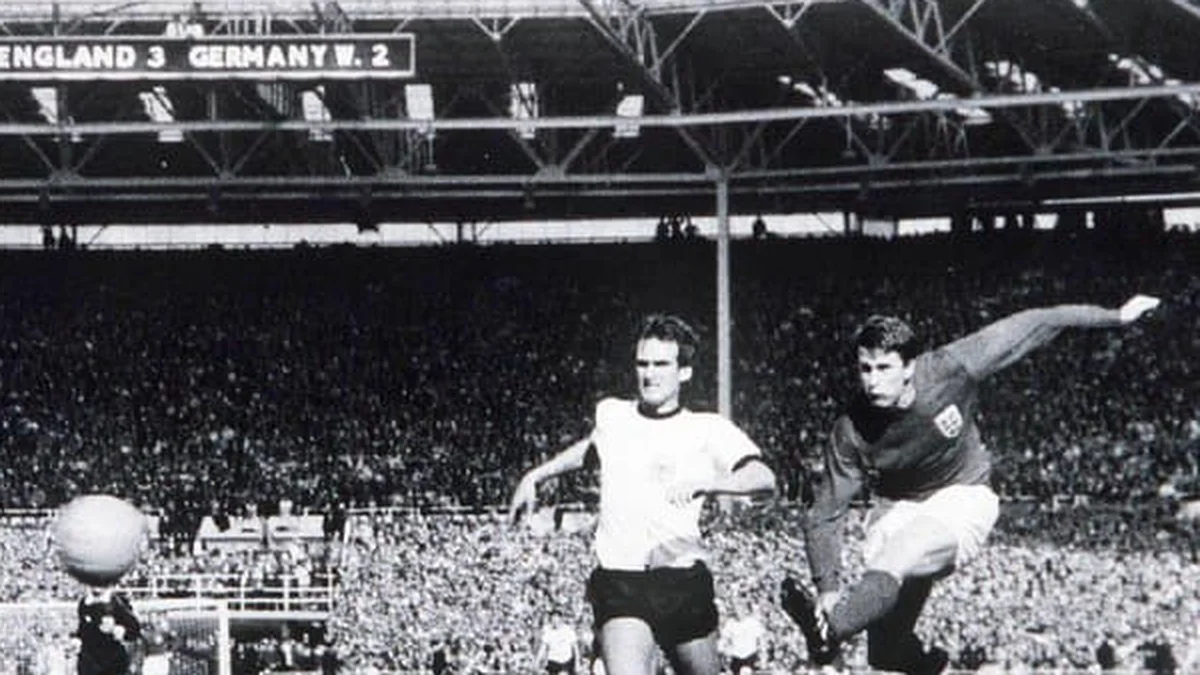
The final against West Germany on 30 July 1966 at Wembley became the defining game of his life. Hurst scored a header to level the score at 1-1, then put England ahead in extra time with a shot that struck the underside of the crossbar and bounced down. The goal was awarded, although doubt about whether the ball had fully crossed the line made it one of the most debated goals in World Cup history. Hurst has always maintained that it was a goal. In the final seconds of extra time, with England leading 3-2, he ran through and struck a left-footed shot into the roof of the net to complete the hat-trick and seal a 4-2 win. As he scored, BBC commentator Kenneth Wolstenholme said the most famous words in British sports broadcasting: “They think it is all over… it is now!”
After the World Cup, Hurst became the first-choice striker for England. He played at the European Championship in 1968, where England lost 0-1 to Yugoslavia in the semi-final and Hurst played only in the third-place play-off. His most prolific calendar year for England came in 1969, when he scored seven goals in eight appearances. He remained a central figure through the qualifying campaign for the 1970 World Cup, and he went to Mexico as the undisputed first-choice striker.
In 1970 he played three games and scored once, the only goal of the opening win over Romania. England lost 3-2 to West Germany in the quarter-final after leading 2-0. His last England appearance came in 1972, in a European Championship qualifier against West Germany. He finished with 49 caps and 24 goals.
Managerial Career
Hurst managed Telford United as player-manager from 1976 to 1979. He then worked in the England coaching set-up before becoming manager of Chelsea in September 1979. He managed Chelsea for 84 games, with 35 wins, 20 draws and 29 defeats. He could not win promotion for the club, and Chelsea finished 12th in the Second Division in the 1980-81 season. He was sacked in April 1981. He later managed Kuwait SC from 1982 to 1984, and then left football management to work in insurance and business.
Playing Style
Hurst was a powerful and intelligent centre-forward. He combined strength in the air with sharp movement, good balance, and a calm finish. He could hold the ball up, lay it off to team-mates, and drag defenders out of position to create space for others. His heading was a major weapon, and his work ethic made him a constant problem for defences.
He was not a flamboyant player. His value came from consistency, reliability, and an ability to deliver in the biggest moments. England manager Alf Ramsey trusted him because he did not get fazed by the occasion. He scored goals with either foot and with his head, and he rarely wasted a chance. His famous third goal in the 1966 final showed his nerve: with the game almost over, he struck the ball with power and precision instead of playing safe.
His heading deserves a special mention. The first goal of the 1966 final came from a header, and the winner against Argentina in the quarter-final was also a header. He timed his jumps well, attacked the ball with conviction, and directed his headers with accuracy. Combined with his strength and his ability to hold the ball up, his aerial power made him a complete centre-forward of his era.
Stats
The tables below cover his club career by club, his league record by club, his England record by year, and his record at major tournament finals.
| Club | Appearances | Goals |
|---|---|---|
| West Ham United | 500 | 248 |
| Stoke City | 130 | 39 |
| Cape Town City (loan) | 6 | 5 |
| West Bromwich Albion | 12 | 2 |
| Cork Celtic | 3 | 3 |
| Seattle Sounders | 24 | 9 |
| Total | 675 | 306 |
| Club | League appearances | League goals |
|---|---|---|
| West Ham United | 411 | 180 |
| Stoke City | 108 | 30 |
| Cape Town City (loan) | 6 | 5 |
| West Bromwich Albion | 10 | 2 |
| Cork Celtic | 3 | 3 |
| Seattle Sounders | 23 | 8 |
| Total | 561 | 228 |
| Year | England appearances | England goals |
|---|---|---|
| 1966 | 11 | 7 |
| 1967 | 6 | 2 |
| 1968 | 6 | 2 |
| 1969 | 8 | 7 |
| 1970 | 11 | 3 |
| 1971 | 6 | 3 |
| 1972 | 1 | 0 |
| Total | 49 | 24 |
| Tournament | Appearances | Goals |
|---|---|---|
| World Cup 1966 | 3 | 4 |
| Euro 1968 | 1 | 0 |
| World Cup 1970 | 3 | 1 |
| Total | 7 | 5 |
Records
Hurst remains the only player to score a hat-trick in a World Cup final. He was the first player to do it, in 1966, and no player has repeated the feat in any World Cup final since. His three goals in the final remain the most famous individual performance in the history of the tournament.
He scored four goals in three games at the 1966 World Cup, and five goals in seven games across major tournament finals. For West Ham, his 248 goals in 500 appearances place him among the highest scorers in the history of the club. His 24 goals in 49 games for England gave him a scoring rate of almost one goal in every two games.
He was also one of the few footballers to be knighted. His name appears in the English Football Hall of Fame, and he was named among the Football League 100 Legends. His status as the last surviving player from the team that played in the 1966 final gives his story a special place in English football, and his hat-trick remains the standard against which every World Cup final performance is measured.
Awards and Honours
With West Ham United, Hurst won the FA Cup in 1964, the European Cup Winners Cup in 1965, and the FA Charity Shield in 1964 (shared). West Ham finished as runners-up in the League Cup in 1966. With England, he won the World Cup in 1966 and finished third at the European Championship in 1968.
As an individual, he was named Hammer of the Year in 1965-66, 1966-67 and 1968-69. He was named in the World Soccer World XI in 1967, 1968 and 1969, and in the UEFA Euro Team of the Tournament in 1968. He was appointed a Member of the Order of the British Empire (MBE) and was knighted in 1998 for services to football. He was inducted into the English Football Hall of Fame in 2004 and was named among the Football League 100 Legends in 1998.
Net Worth
No reliable figure exists for the net worth of Hurst. Published estimates come from low-quality celebrity wealth sites rather than from verified financial records, and they vary widely. This article states no figure as fact, because no figure has been confirmed by a reliable source.
What is known is that Hurst earned far less from football than modern players earn. He played in the era of the maximum wage, and his later income came from management, insurance and business work, public speaking, endorsements, and royalties from his books and appearances. His lifestyle has remained modest, in keeping with a man known more for humility than for extravagance.
Later Life and Legacy
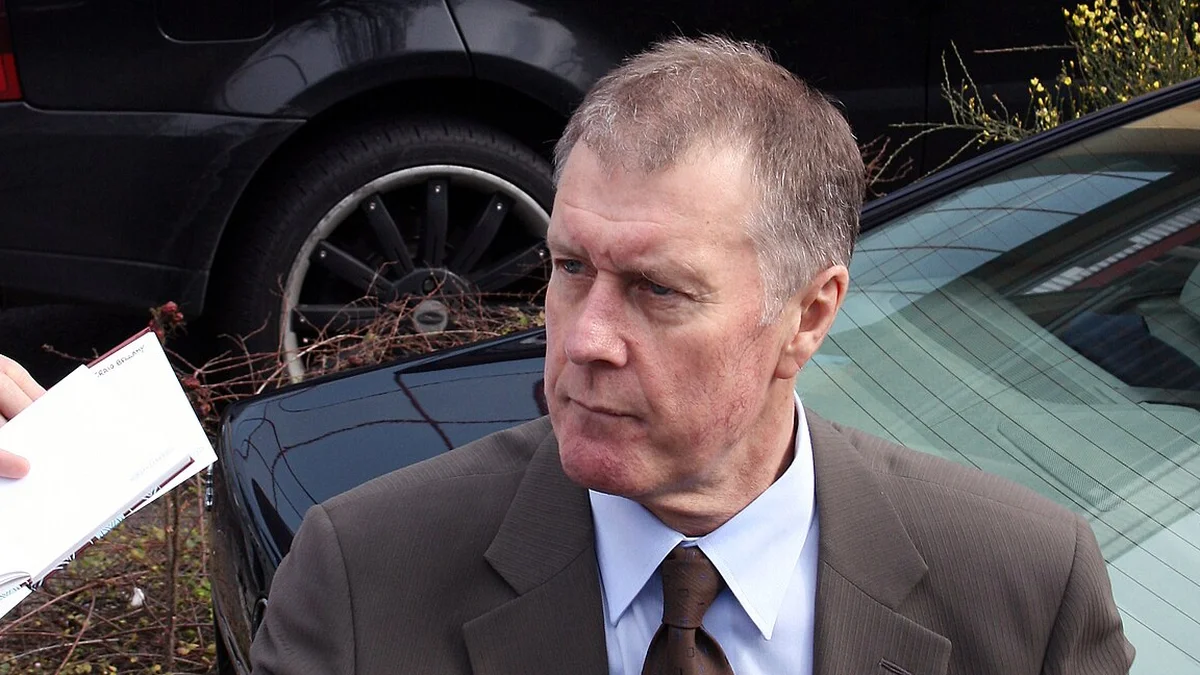
After leaving football management, Hurst worked in insurance and business, and he remained a respected public figure. He wrote his autobiography, 1966 and All That, with Michael Hart, published in 2002. He became a popular after-dinner speaker, and he took part in charity work, including his role as an ambassador for Sue Ryder.
In 2026, Hurst undertook a farewell speaking tour, billed as an evening with Sir Geoff Hurst, in which he talked about his West Ham and England career and answered questions from the audience. He is now the only living player from the team that played in the 1966 World Cup final, after the death of Sir Bobby Charlton in October 2023. His legacy rests on one afternoon at Wembley, but it also rests on a long career of consistent, unselfish, and reliable centre-forward play for club and country.
The 60th anniversary of the 1966 triumph in 2026 brought fresh attention to his story. Documentaries, interviews, and public events revisited the final, and Hurst remained the living link to the greatest day in English football. For supporters who saw him play, and for generations who know him only through that hat-trick, he stands as a symbol of a time when England ruled the world game, and as a reminder that one afternoon can make a player immortal.
Conclusion
Geoff Hurst rose from a youth player at West Ham to the most famous scorer in English football history. His hat-trick in the 1966 World Cup final made him a legend, but his career was far more than one game: 248 goals for West Ham, 24 goals for England, a European trophy, and a long life of service to the game. He remains the only player to score a hat-trick in a World Cup final, and that record alone secures his place among the greats of English football. For as long as the World Cup is played, the name of Geoff Hurst will belong to the final of 1966, and to the afternoon when one striker scored three goals and made a nation believe.
FAQs
How old is Geoff Hurst?
Geoff Hurst was born on 8 December 1941 in Ashton-under-Lyne, England. He is 84 years old and turns 85 on 8 December 2026.
How many goals did Geoff Hurst score in the 1966 World Cup final?
Geoff Hurst scored three goals in the 1966 World Cup final against West Germany, as England won 4-2 after extra time. He remains the only player to score a hat-trick in a World Cup final.
How many goals did Geoff Hurst score for England?
Geoff Hurst scored 24 goals in 49 appearances for England between 1966 and 1972. He scored four goals in three games at the 1966 World Cup and one goal in three games at the 1970 World Cup.
How many goals did Geoff Hurst score for West Ham United?
Geoff Hurst scored 248 goals in 500 appearances in all competitions for West Ham United. His league record for the club was 180 goals in 411 appearances.
Who is the wife of Geoff Hurst?
The wife of Geoff Hurst is Judith. The couple met at a youth centre in Chelmsford and married on 13 October 1964. They had three daughters: Claire, Charlotte and Joanne. Claire died in 2010 after a ten-year battle against a brain tumour.
What did Geoff Hurst do after football?
After football, Hurst managed Telford United, Chelsea and Kuwait SC, then worked in insurance and business. He wrote his autobiography, 1966 and All That, became a popular after-dinner speaker, and served as an ambassador for Sue Ryder. In 2026 he undertook a farewell speaking tour.