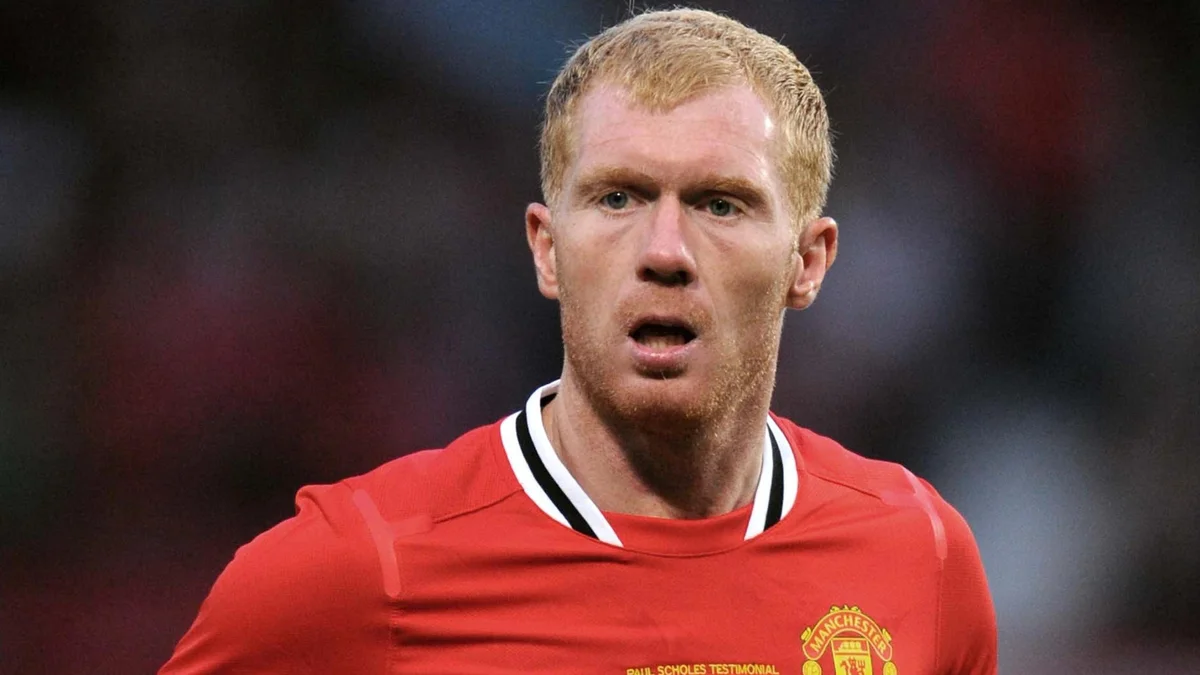
Paul Scholes Biography: Age, Wife, Family, Career, Stats, Records and Net Worth
Paul Scholes is an English former footballer who played his entire professional career for Manchester United and is regarded as one of the finest midfielders in the history of the Premier League. Born on 16 November 1974 in Salford, Scholes made 718 appearances for Manchester United, scored 155 goals, and won 11 Premier League titles, two Champions Leagues, and three FA Cups. He won 66 caps for England and retired from international football at the age of 29, before coming out of club retirement in 2012 for one final spell at Old Trafford.
This biography covers the full story: his early life in Salford, his rise with the Class of 92, the 1999 treble, his England career, his retirement and comeback, his short spell in management, his family life, and what he does now.
Quick Facts
| Detail | Fact |
|---|---|
| Full name | Paul Scholes |
| Date of birth | 16 November 1974 |
| Age | 51, turns 52 on 16 November 2026 |
| Place of birth | Salford, Greater Manchester, England |
| Height | 1.68 m (5 ft 6 in) |
| Position | Central midfielder |
| Club career | Manchester United only, 1994 to 2013 |
| Manchester United appearances | 718 in all competitions, 155 goals |
| England caps | 66 caps, 14 goals, 1997 to 2004 |
| Premier League titles | 11 |
| Retired | May 2011, comeback January 2012, retired again May 2013 |
| Honours | Premier League Hall of Fame 2022, English Football Hall of Fame 2008 |
Early Life
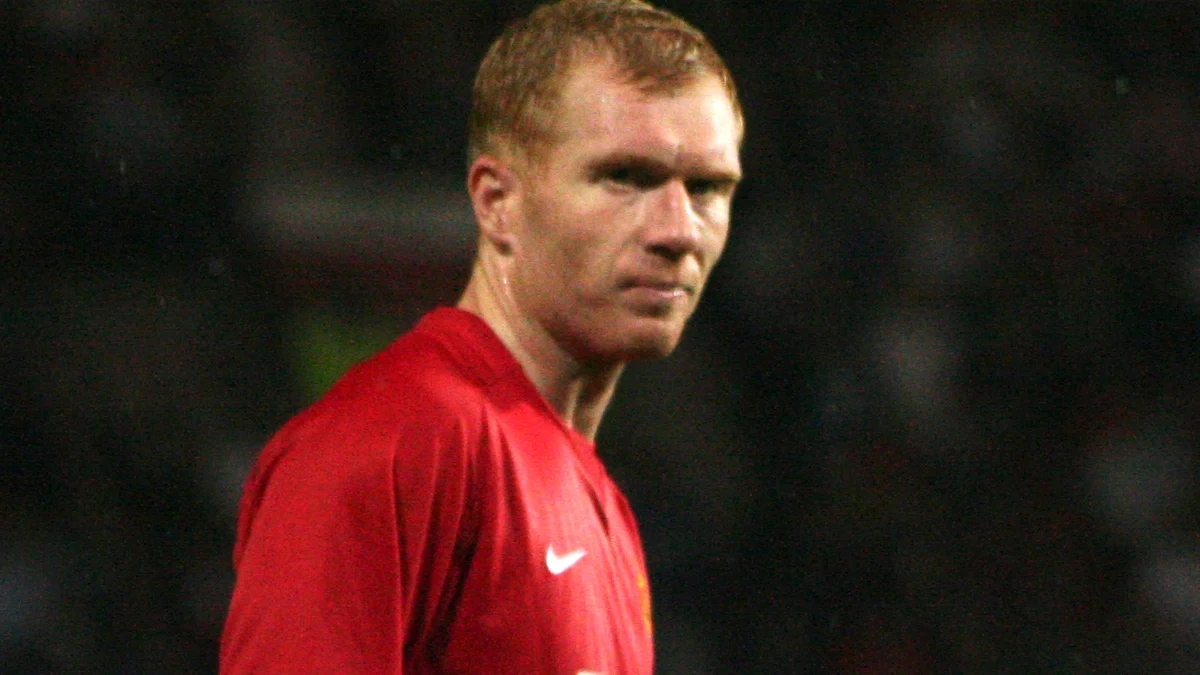
Scholes was born in Salford, Greater Manchester, on 16 November 1974. His family moved to Langley, in the Middleton area of Greater Manchester, when he was 18 months old. As a boy he played cricket as well as football, and he attended Langley Furrows, his first football team. At the age of 14 he began training with Manchester United, and after leaving school he joined the club as a trainee in the summer of 1991. He signed his first professional contract with United in 1993.
As a youngster Scholes carried two physical problems. He suffered from asthma, and he had Osgood-Schlatter disease, a knee condition that affects younger players. Scholes later said in interviews that he lived with both conditions and managed them with medication, using an inhaler before games when needed. There were also doubts at United about whether his small frame would cope with senior football. Sir Alex Ferguson later admitted that when he first watched Scholes play as a youth, he doubted that the boy would ever make it as a professional. Scholes proved every doubt wrong.
In 1993, Scholes played for the England Under-18 side that won the UEFA European Under-18 Championship. He was part of a famous group of young players coming through the United academy at the same time, including David Beckham, Ryan Giggs, Nicky Butt, and Gary and Phil Neville. The group became known as the Class of 92, after the youth team that won the FA Youth Cup in 1992.
Club Career
Breakthrough and the Class of 92 (1994-1998)
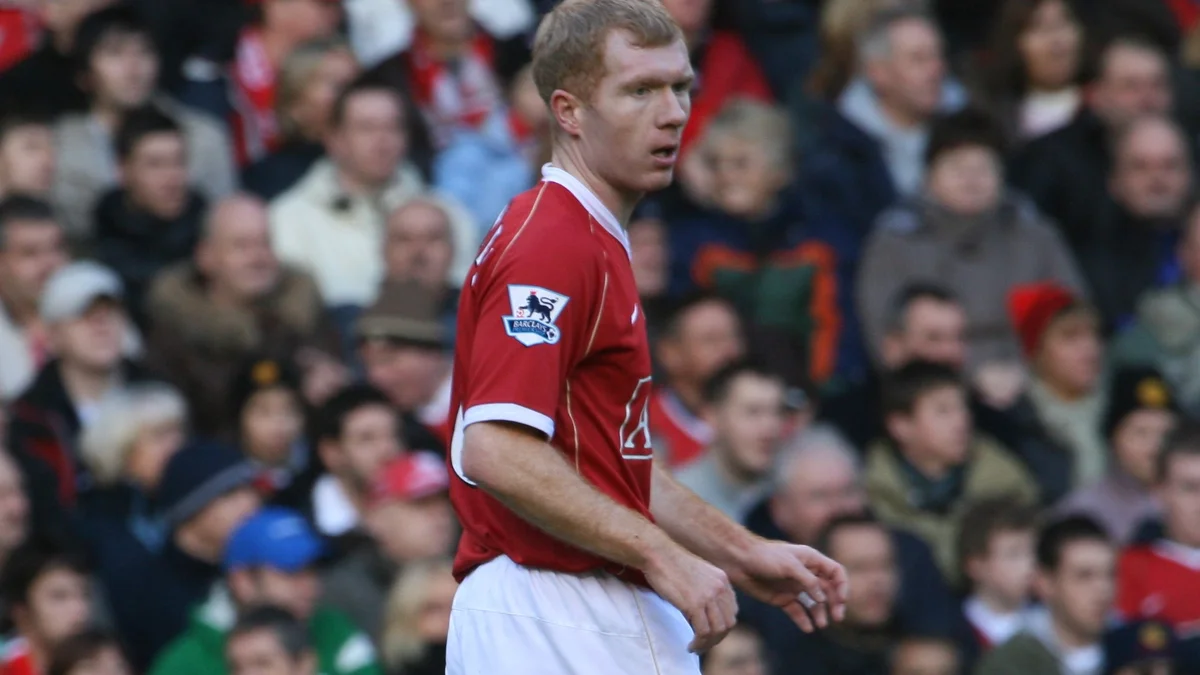
Scholes made his senior debut on 21 September 1994 in a League Cup tie against Port Vale, and he scored both goals in a 2-1 win. Days later he scored on his Premier League debut against Ipswich Town. In his first season he played 25 games and scored 7 goals. In 1995-96 he became a regular, often playing as a forward alongside Andy Cole, and he scored 10 league goals as United won the Premier League and FA Cup double. He then won a second league title in 1996-97.
By the 1997-98 season Scholes had settled into central midfield. Roy Keane suffered a serious knee injury early that season, and Scholes took on greater responsibility in the middle of the pitch. His passing range, his movement, and his powerful shooting from distance made him the link between the United defence and attack.
The Treble and the Late 1990s (1998-2001)
The 1998-99 season brought the treble: the Premier League, the FA Cup, and the Champions League. Scholes scored in the FA Cup final, a 2-0 win over Newcastle United. He missed the Champions League final against Bayern Munich through suspension, along with Roy Keane, and United won the game with two late goals. Scholes later said that he did not feel he had earned the European medal because he had not played in the final, a view that said much about his character. United also won the Intercontinental Cup in 1999.
Scholes won further league titles in 1999-2000 and 2000-01. On the international stage he scored a hat-trick for England against Poland in a Euro 2000 qualifier in March 1999. At club level he was now one of the first names on the team sheet, a midfielder who could control a game with passing and score from long range.
The 2000s (2001-2011)
The 2002-03 season was the most prolific of his career. Scholes scored 20 goals in all competitions, including a hat-trick in a 6-2 win at Newcastle United, as United won the league again. In 2003-04 he scored the winning goal in the FA Cup semi-final against Arsenal, and United beat Millwall in the final for his third FA Cup medal. In the 2005 FA Cup final against Arsenal, Scholes saw his penalty saved by Jens Lehmann as United lost the shoot-out.
The 2005-06 season brought a serious scare. Scholes was ruled out for the second half of the season with blurred vision, a problem whose cause was at first uncertain and raised fears that his career could be over. He recovered and returned for the final game of the season against Charlton Athletic. On 22 October 2006, in a 2-0 win over Liverpool, Scholes became only the ninth United player to reach 500 appearances for the club. He then enjoyed one of his finest seasons in 2006-07 and was named in the PFA Team of the Year.
In October 2007, Scholes suffered knee ligament damage in training and was out until the end of January 2008. He returned in time for the run-in, and on 23 April 2008 he made his 100th Champions League appearance in the semi-final first leg against Barcelona. In the second leg he scored the only goal, a fierce strike from distance, to send United into the final. United beat Chelsea on penalties in Moscow to win the Champions League, and then won the FIFA Club World Cup in December 2008. Scholes added further league titles in 2008-09 and 2010-11. He reached 100 Premier League goals on 6 March 2010 with the only goal in a 1-0 win at Wolverhampton Wanderers, and he scored his 150th goal for United in August 2010 against Fulham.
Scholes announced his retirement on 31 May 2011, three days after coming on as a substitute in the Champions League final defeat by Barcelona at Wembley. United held a testimonial match for him on 5 August 2011 against New York Cosmos, which United won 6-0, with Scholes opening the scoring. He joined the United coaching staff.
Comeback and Farewell (2012-2013)
Five months later, Scholes was back. After training with the reserve team and finding that his desire to play had returned, he approached Ferguson about coming out of retirement. United were short of midfielders through injury, and on 8 January 2012 Scholes made his comeback as a substitute in a 3-2 FA Cup win over Manchester City. In his first start, against Bolton Wanderers, he scored in a 3-0 win. He signed a one-year extension in May 2012 and marked his 700th United appearance with a goal in a 4-0 win over Wigan Athletic in September 2012. In the 2012-13 season he helped United win the league title, his 11th, and he confirmed in May 2013 that he would retire for a second time, this time for good.
Club Career Stats
| Competition | Appearances | Goals |
|---|---|---|
| Premier League | 499 | 107 |
| FA Cup | 49 | 13 |
| League Cup | 21 | 9 |
| Europe | 134 | 26 |
| Other | 15 | 0 |
| Career Total | 718 | 155 |
Other covers the FA Community Shield, the UEFA Super Cup, the Intercontinental Cup, and the FIFA Club World Cup. Europe covers the Champions League, the UEFA Cup, and the UEFA Europa League.
International Career
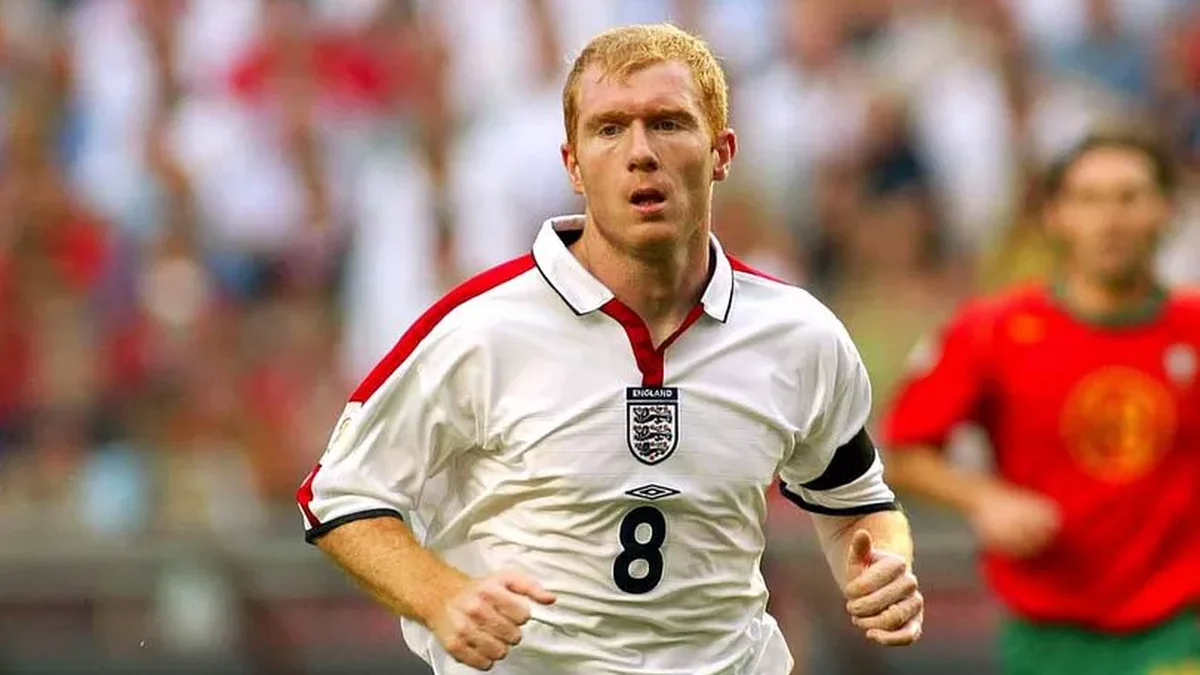
Scholes made his senior England debut on 24 May 1997 in a 2-1 friendly win over South Africa at Old Trafford. He scored his first England goal days later, on 4 June 1997, against Italy in the Tournoi de France in Nantes. At the 1998 World Cup in France he scored in the 2-0 group win over Tunisia. England went out to Argentina in the second round.
At Euro 2000 he scored the opening goal against Portugal, although England lost the game 3-2. At the 2002 World Cup in Korea and Japan he played in all five England games as the side reached the quarter-finals, where Brazil won 2-1. Scholes often played out of position for England, on the left side of midfield, to fit Steven Gerrard and Frank Lampard into the same side in central roles.
At Euro 2004 he scored his final England goal in the 4-2 group win over Croatia on 21 June 2004. England lost to Portugal in the quarter-finals, and that game was his 66th and last cap. In August 2004, at the age of 29, Scholes announced his retirement from international football. He said that he wanted to spend more time with his family and to prolong his club career. He turned down an approach to return for the 2010 World Cup. His England record closed at 66 caps and 14 goals.
England Appearances by Year
| Year | Appearances | Goals |
|---|---|---|
| 1997 | 5 | 3 |
| 1998 | 9 | 1 |
| 1999 | 6 | 5 |
| 2000 | 10 | 1 |
| 2001 | 10 | 3 |
| 2002 | 11 | 0 |
| 2003 | 8 | 0 |
| 2004 | 7 | 1 |
| Total | 66 | 14 |
Playing Style
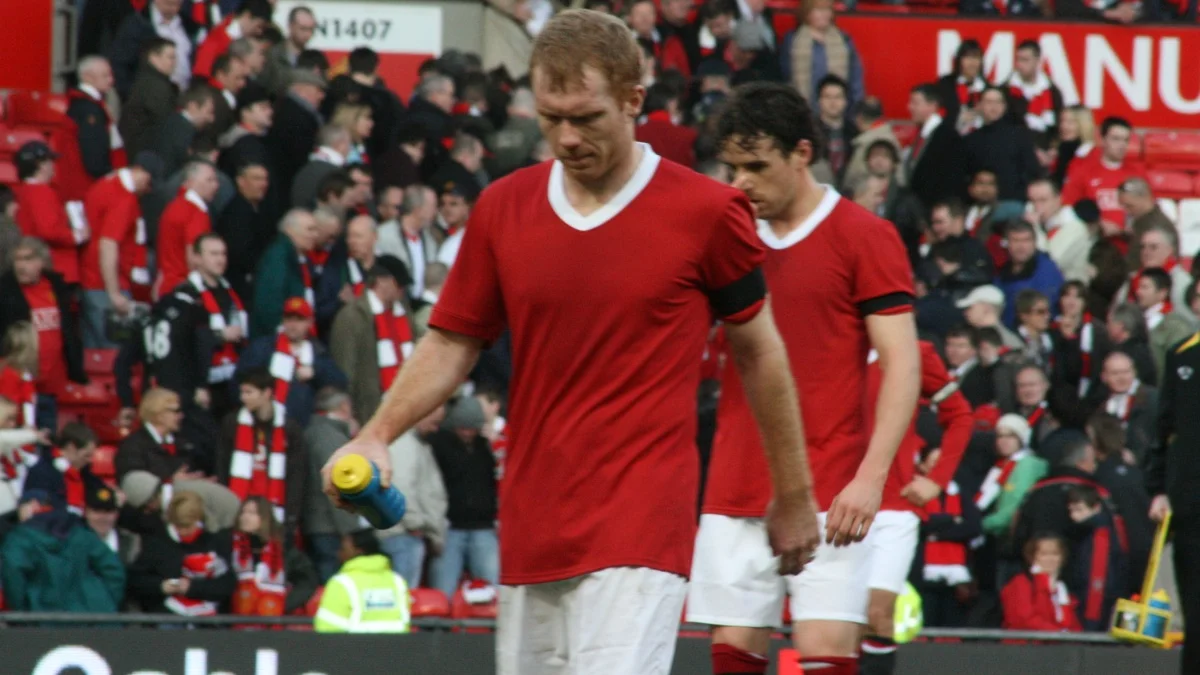
Scholes was a complete central midfielder. His first touch was clean, his passing range stretched from short one-touch exchanges to long cross-field balls, and his shooting from distance was feared across the league. He read the game a step ahead of opponents, arriving late in the penalty area to score goals that a forward would be proud of. He could dictate the pace of a match from deep, then burst forward to finish an attack himself.
His discipline record was the one flaw in his game. Scholes collected his share of bookings and red cards across his career, including dismissals against Liverpool and Roma in 2007, a deliberate handball that earned a red card in the 2008 UEFA Super Cup against Zenit Saint Petersburg, and a sending off for a high challenge in the 2011 FA Cup semi-final against Manchester City. The tackling was the weakest part of his game, and he knew it. Everything else about his play drew praise from the best players of his era. Zinedine Zidane called Scholes the best midfielder of his generation, and Xavi described him as the best central midfielder he had seen in 15 to 20 years. Sir Alex Ferguson named Scholes as one of only four genuine world-class players he managed at United.
Records and Achievements
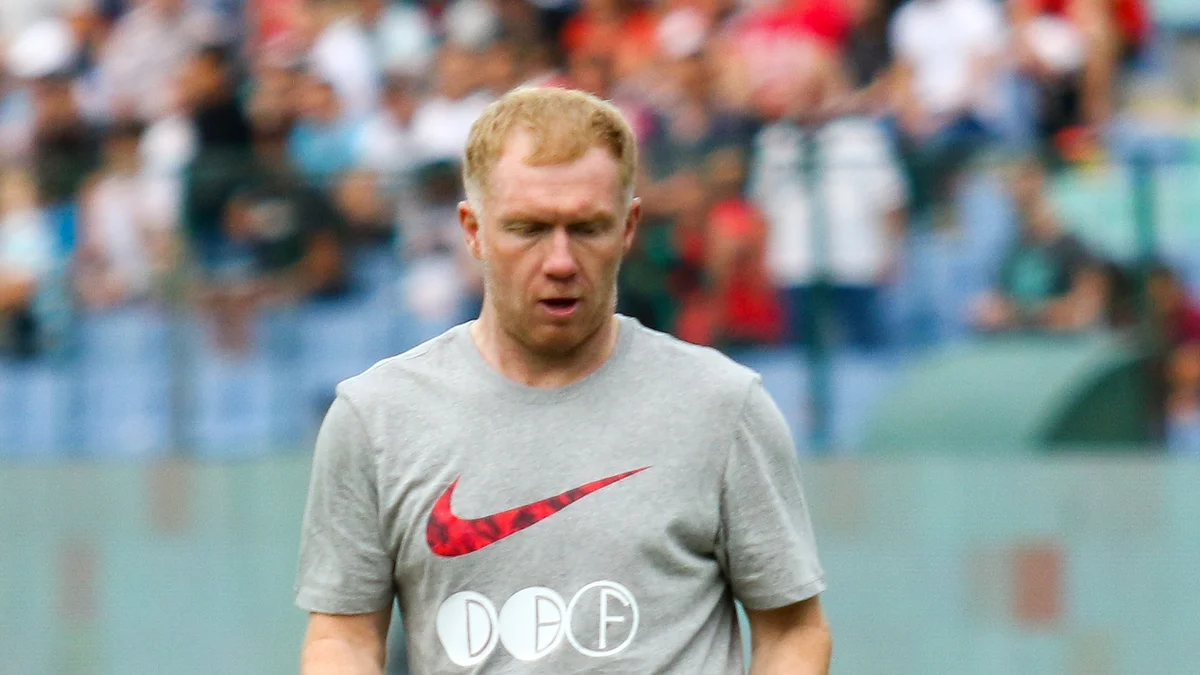
Scholes made 718 appearances for Manchester United, the third-highest total in club history, and scored 155 goals. He won 11 Premier League titles, a total bettered only by Ryan Giggs among United players. He scored 107 Premier League goals in 499 appearances, with 55 assists. He scored in 19 consecutive Premier League seasons, from 1994-95 to 2012-13. He was the highest-scoring central midfielder in Champions League history, with 25 goals in the competition. He won two Champions Leagues, three FA Cups, two League Cups, five Community Shields, the Intercontinental Cup, and the FIFA Club World Cup. For England he won 66 caps and scored 14 goals across two World Cups and two European Championships.
Awards and Honours
| Honour | Team or Level | Years |
|---|---|---|
| Premier League | Manchester United | 1995-96, 1996-97, 1998-99, 1999-2000, 2000-01, 2002-03, 2006-07, 2007-08, 2008-09, 2010-11, 2012-13 |
| UEFA Champions League | Manchester United | 1998-99, 2007-08 |
| FA Cup | Manchester United | 1995-96, 1998-99, 2003-04 |
| Football League Cup | Manchester United | 2008-09, 2009-10 |
| FA Community Shield | Manchester United | 1996, 1997, 2003, 2008, 2010 |
| Intercontinental Cup | Manchester United | 1999 |
| FIFA Club World Cup | Manchester United | 2008 |
| UEFA European Under-18 Championship | England Under-18 | 1993 |
| Jimmy Murphy Young Player of the Year | Manchester United | 1992-93 |
| PFA Team of the Year | Individual | 2002-03, 2006-07 |
| Premier League Player of the Month | Individual | January 2003, December 2003, October 2006, August 2010 |
| Premier League 10 Seasons Awards, Team of the Decade | Individual | 1992-93 to 2001-02 |
| Premier League 20 Seasons Awards, Fantasy Team of the 20 Seasons | Individual | 2012, Panel and Public choice |
| FWA Tribute Award | Individual | 2012 |
| English Football Hall of Fame | Individual | Inducted 2008 |
| Premier League Hall of Fame | Individual | Inducted 2022 |
Managerial Career
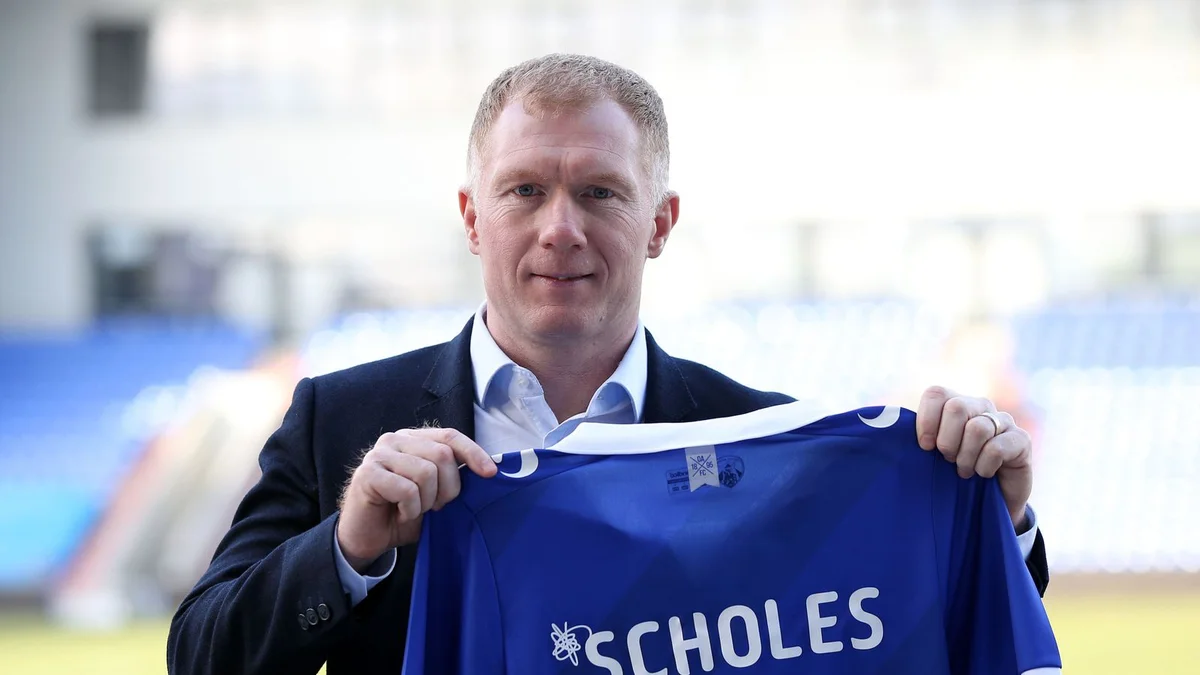
Scholes moved into management after his playing career, but his time in the dugout was short. In January 2015 he acted as joint caretaker manager of Salford City with Phil Neville for one game, a 2-1 win over Kendal Town. In February 2019 he took charge of his hometown club Oldham Athletic on an 18-month deal. He won his first game, then drew three and lost three of his seven matches in charge, and resigned after only 31 days, saying that he had not been able to operate as he had been led to believe he would. In October 2020 he returned to Salford City as interim head coach after the departure of Graham Alexander, and he took charge of five games before a permanent manager was appointed.
| Team | Period | Played | Won | Drawn | Lost |
|---|---|---|---|---|---|
| Salford City, caretaker, joint with Phil Neville | 2015 | 1 | 1 | 0 | 0 |
| Oldham Athletic | February to March 2019 | 7 | 1 | 3 | 3 |
| Salford City, interim | October to November 2020 | 5 | 2 | 1 | 2 |
| Career Total | 13 | 4 | 4 | 5 |
Net Worth
No reliable figure exists for the net worth of Paul Scholes. Published estimates on low-quality celebrity websites vary widely and conflict with each other, and none of them comes from a verified source. This article therefore gives no net worth figure. What is certain is that Scholes earned large wages across a 19-year professional career at Manchester United, and that he has built business and media interests since retiring, including his stake in Salford City.
Personal Life and Family
Scholes married Claire Froggatt in 1999. The couple later separated. They have three children: sons Arron and Aiden, and daughter Alicia. Their youngest son Aiden is non-verbal and autistic, something Scholes has discussed publicly, including in a BBC documentary about parenting an autistic child. Scholes has said that he now arranges his work around the strict daily routines of Aiden, and that he cares for him for part of each week.
Away from football, Scholes has kept a low profile. He rarely gave interviews during his playing career and avoided the celebrity side of the game. He wrote an autobiography, Scholes: My Story, published in 2011. In 2014, he and four fellow Class of 92 members, Gary Neville, Phil Neville, Ryan Giggs, and Nicky Butt, bought a controlling stake in Salford City, later joined by David Beckham as a co-owner.
Later Life and Legacy
After retiring for the second time, Scholes worked as a television pundit, including for BT Sport, ITV, and later TNT Sports, and as a regular on The Overlap podcast. He has remained a co-owner of Salford City. His reputation among fellow professionals stands as his greatest legacy. Zinedine Zidane called him the best midfielder of his generation. Xavi described him as the best central midfielder he had seen in 15 to 20 years, a player who could play the final pass, score, and never give possession away. Thierry Henry called him the greatest player in Premier League history. Bobby Charlton called Scholes his favourite player.
Scholes changed how English football judged a midfielder. At a time when English midfielders were expected to run and tackle first, Scholes showed that intelligence, technique, and passing could control a match. His partnership with Roy Keane, and later his deep role alongside younger runners, gave United a metronome for nearly two decades. His one-club loyalty, his refusal to chase celebrity, and his 718 games for one club made him a rare figure in the modern game.
Conclusion
Paul Scholes rose from a small-framed boy with asthma and a knee condition to become one of the greatest midfielders English football has produced. He won 11 Premier League titles and two Champions Leagues in 718 games for one club, played 66 times for England, retired early from international football, came back from retirement to win one more title, and then walked away for good. The praise of Zidane, Xavi, and Henry, and his place in two Halls of Fame, say more than any single trophy. He was the quiet man at the heart of the most successful club side in English history, and his passing still sets the standard for what a midfielder should be.
FAQs
How many appearances did Paul Scholes make for Manchester United?
Scholes made 718 appearances for Manchester United in all competitions and scored 155 goals. In the Premier League he played 499 games and scored 107 goals. He spent his whole professional career at United, from his debut in 1994 to his second retirement in 2013.
How many Premier League titles did Paul Scholes win?
Scholes won 11 Premier League titles with Manchester United, in 1995-96, 1996-97, 1998-99, 1999-2000, 2000-01, 2002-03, 2006-07, 2007-08, 2008-09, 2010-11, and 2012-13. Only Ryan Giggs won more league titles as a United player. Scholes also won two Champions Leagues, three FA Cups, and two League Cups.
Why did Paul Scholes retire from England at 29?
Scholes retired from international football in August 2004 at the age of 29. He wanted to spend more time with his family and to prolong his club career, and he was frustrated at being played out of position on the left side of midfield for England. He won 66 caps and scored 14 goals, and he turned down an approach to return for the 2010 World Cup.
Why did Paul Scholes come out of retirement?
Scholes came out of retirement in January 2012 because he missed playing after training with the United reserve team, and because United were short of midfielders through injury. He made his comeback as a substitute in a 3-2 FA Cup win over Manchester City on 8 January 2012, and he stayed for another season and a half, winning an 11th league title in 2012-13.
Did Paul Scholes win the Ballon d’Or?
No. Scholes never won the Ballon d’Or. His recognition came in other forms: two PFA Team of the Year selections, the FWA Tribute Award in 2012, induction into the English Football Hall of Fame in 2008, and induction into the Premier League Hall of Fame in 2022. Many of the greatest players of his era, including Zinedine Zidane and Xavi, called him the best midfielder of his generation.
What does Paul Scholes do now?
Scholes works as a television pundit, including for TNT Sports and as a regular on The Overlap podcast, and he remains a co-owner of Salford City. He arranges his work around the strict daily routines of his youngest son Aiden, who is non-verbal and autistic, and he cares for him for part of each week.