Bryan Robson Biography: Age, Wife, Family, Career, Stats, Records and Net Worth
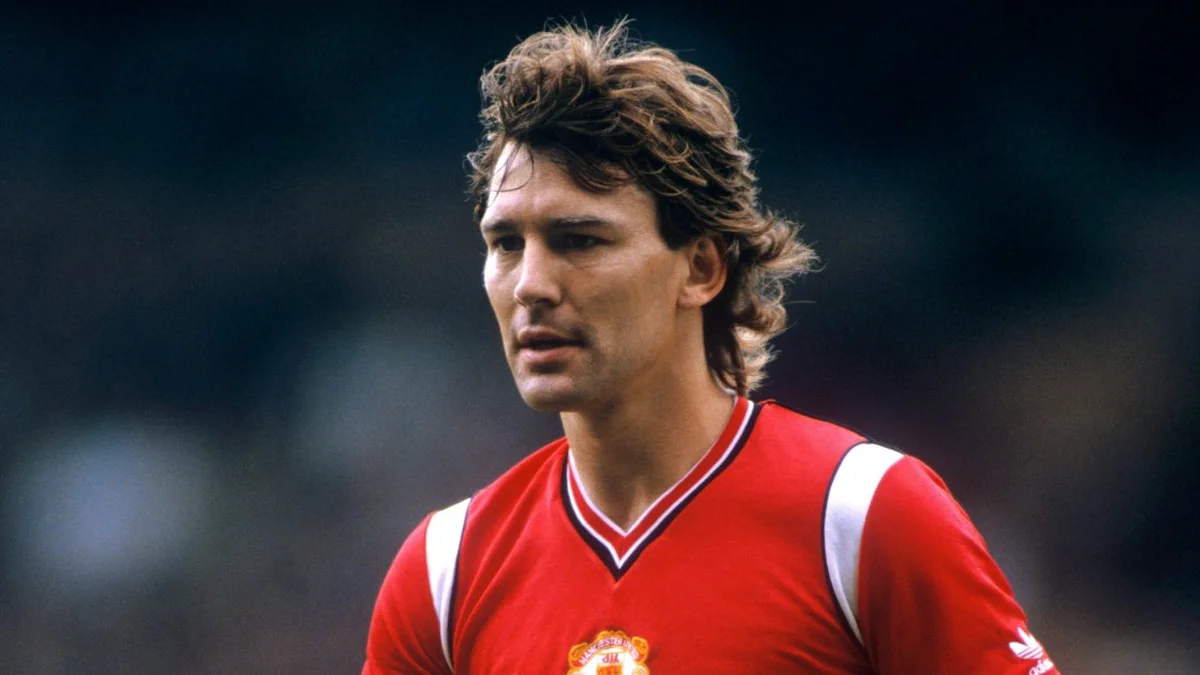
Bryan Robson is an English former footballer and manager who captained Manchester United for 12 years and captained England 65 times, earning the nickname Captain Marvel for a fearless, all-action style in midfield. Born on 11 January 1957 in Chester-le-Street, County Durham, Robson played 461 games and scored 99 goals for Manchester United, won 90 caps and 26 goals for England, and scored against France after just 27 seconds at the 1982 World Cup, at the time the third fastest goal in World Cup finals history. As a manager he later led Middlesbrough to two promotions and three Wembley finals, and he kept West Bromwich Albion in the Premier League with a famous final-day escape in 2005.
This biography covers his early life in County Durham, his rise at West Bromwich Albion through three serious leg injuries, his British record move to Manchester United and 12 years as captain of the club, his England career across three World Cups, his playing style, his management years with Middlesbrough and four other teams, his family life, and his work today as a global ambassador for Manchester United.
Quick Facts
| Detail | Fact |
|---|---|
| Full name | Bryan Robson |
| Date of birth | 11 January 1957 |
| Place of birth | Chester-le-Street, County Durham, England |
| Height | 1.75 m (5 ft 9 in) |
| Position | Midfielder |
| Club career | West Bromwich Albion, Manchester United, Middlesbrough, 1975 to 1997 |
| Manchester United appearances | 461 in all competitions, 99 goals |
| England caps | 90 caps, 26 goals, 1980 to 1991, captain in 65 matches |
| Captaincy record | Captain of Manchester United from 1982 to 1994, the longest captaincy in club history |
| Nickname | Captain Marvel |
| Teams managed | Middlesbrough, Bradford City, West Bromwich Albion, Sheffield United, Thailand |
| OBE | Awarded in the 1990 New Year Honours |
Early Life
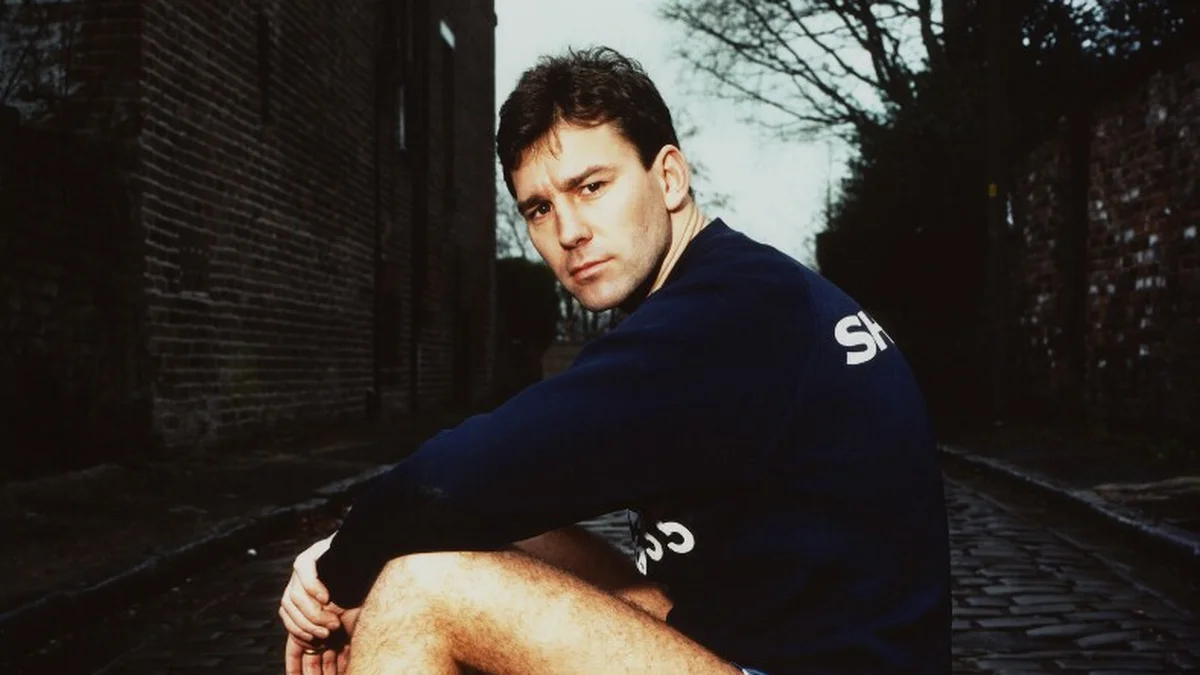
Bryan Robson was born on 11 January 1957 in Northlands, Chester-le-Street, County Durham. His father Brian worked as a long-distance lorry driver, and his mother was Maureen. Robson was the second of four children, with an older sister, Susan, and two younger brothers, Justin and Gary, who became footballers. The family lived in Witton Gilbert until he was six, and then moved to Chester-le-Street. As a boy he supported Newcastle United, and his childhood hero was the Newcastle forward Wyn Davies. He joined the local Cub Scout group mainly so that he could play for the football team of the group.
Robson attended Birtley South Secondary Modern School and then Lord Lawson of Beamish comprehensive school, where he captained the school football team and the Washington and District team. As a teenager he had trials with Burnley, Coventry City, Sheffield Wednesday, Newcastle United and West Bromwich Albion. In the summer of 1972 he accepted a two-year apprenticeship with West Bromwich Albion under manager Don Howe, at a wage of five pounds per week in the first year and eight pounds per week in the second.
Club Career
West Bromwich Albion: Apprentice to Captain (1975-1981)
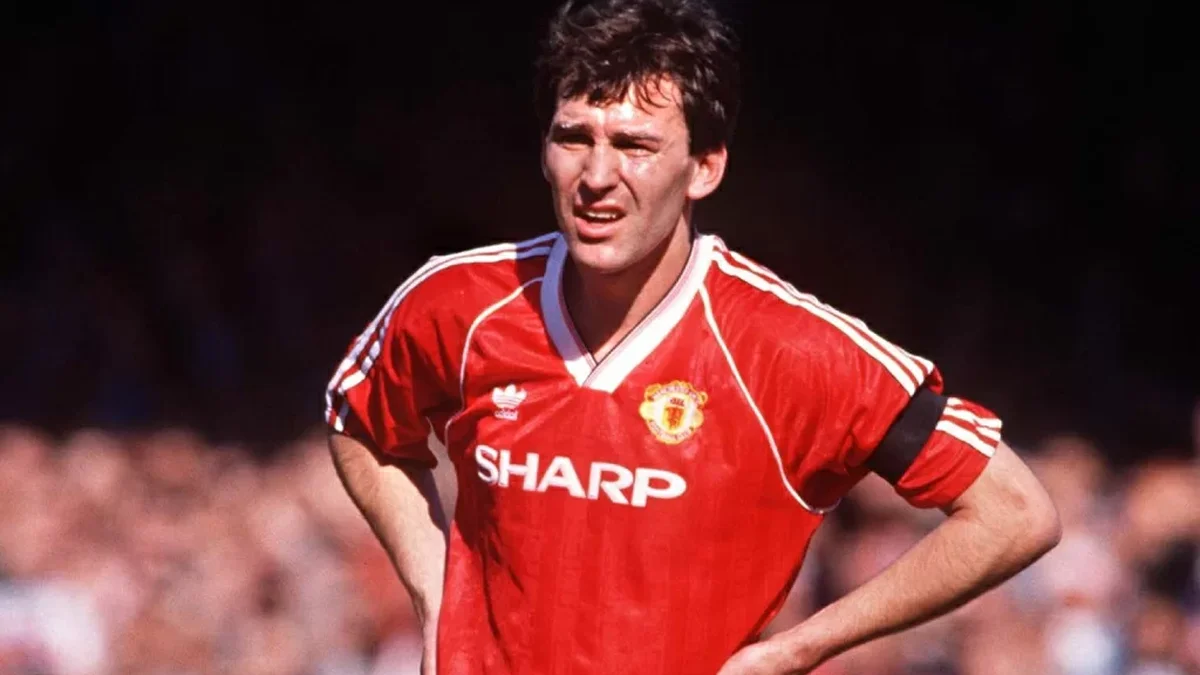
Robson signed a professional contract with West Bromwich Albion in the summer of 1974. He made his first team debut on 12 April 1975, at the age of 18, in a 3-1 win away at York City, and he scored his first goal for the club on his home debut, in a 2-0 win over Cardiff City. Albion won promotion back to the First Division in 1976, and Robson experienced top-flight football the following season, playing at left back and in central midfield.
Injuries then threatened to end his career before it had properly begun. He broke his left leg in a tackle with the Tottenham Hotspur striker Chris Jones, and two months later the same leg fractured again during his comeback in a reserve match. He recovered and scored his first hat-trick in a 4-0 win over Ipswich Town in March 1977. One month later he broke his right ankle in a challenge with the Manchester City player Dennis Tueart. Robson came back from all three injuries, and under manager Ron Atkinson he settled in central midfield. In 1978-79 he started 41 of the 42 league games as Albion finished third in the First Division, the highest league placing for the club in more than 20 years, and reached the quarter-finals of the UEFA Cup. He became captain of Albion, and in 1980-81 he scored ten goals in 40 league games as the club finished fourth.
Atkinson moved to Manchester United in June 1981, and Robson turned down a new contract worth 1,000 pounds per week and handed in a transfer request. On 1 October 1981 he followed Atkinson to Old Trafford for a fee of 1.5 million pounds, a British transfer record that stood for six years.
Manchester United and the Captain Marvel Years (1981-1994)
Robson made his debut for Manchester United on 7 October 1981, in a League Cup tie away at Tottenham Hotspur, and his league debut followed three days later in a goalless draw against Manchester City at Maine Road. He took the number 7 shirt that became his trademark, and he scored his first goal for the club on 7 November 1981, in a 5-1 win over Sunderland at Roker Park. United finished third in the league in his first season.
In 1982 Robson became captain of Manchester United, a role he held for 12 years, the longest captaincy in the history of the club. He tore ankle ligaments in the League Cup semi-final of 1983 and missed the final, but he recovered to score in the FA Cup semi-final against Arsenal and led United into the final against Brighton and Hove Albion. The first match ended 2-2. In the replay, Robson scored twice as United won 4-0, and he passed up the chance of a hat-trick by leaving a penalty to the regular taker, Arnold Muhren. He lifted the FA Cup as captain for the first time.
Robson scored twice in a 3-0 win over Barcelona at Old Trafford in the European Cup Winners Cup, as United overturned a two-goal deficit from the first leg, but a hamstring injury kept him out of the semi-final defeat against Juventus. In 1985 he captained United to a second FA Cup, beating Everton 1-0 in the final with a goal in extra time from Norman Whiteside. A dislocated shoulder suffered in February 1986 restricted him to 21 league appearances that season. In November 1986 Alex Ferguson replaced Atkinson as manager, and Ferguson rebuilt the team with Robson at its heart.
In 1990 Robson scored the first goal for United in the FA Cup final against Crystal Palace, a match that ended 3-3, and United won the replay 1-0. Robson became the first captain in the history of Manchester United to lift the FA Cup three times. In May 1991 he lifted the European Cup Winners Cup in Rotterdam, where United beat Barcelona 2-1 in the final with two goals from Mark Hughes.
Injuries and younger rivals reduced his role in the final years. He missed the League Cup final win over Nottingham Forest in 1992 through injury, and United lost the league title race to Leeds United. In 1992-93, the first season of the Premier League, Robson made 14 league appearances and finally won the league championship medal he had chased for 15 years, lifting the trophy alongside Steve Bruce. In 1993-94 he added a second Premier League medal, scored his final goal for the club in the FA Cup semi-final replay against Oldham Athletic, and was left out of the squad for the FA Cup final, a decision Ferguson later called one of the hardest of his career. His final appearance came on 8 May 1994, against Coventry City. Robson left the club with 461 appearances and 99 goals in all competitions, and in 2011 a poll of former players of the club voted him the greatest player in the history of Manchester United.
Middlesbrough as Player-Manager (1994-1997)
In May 1994 Robson accepted the job of player-manager at Middlesbrough, a club in the second tier. He played 25 league games for the club across three seasons, most of them in the promotion campaign of 1994-95, when Middlesbrough won the First Division title and returned to the Premier League. His final appearance as a player came on 1 January 1997, in a Premier League match against Arsenal at Highbury, ten days before his 40th birthday. He retired from playing later that season and concentrated on management, the story told in the Managerial Career section below.
International Career
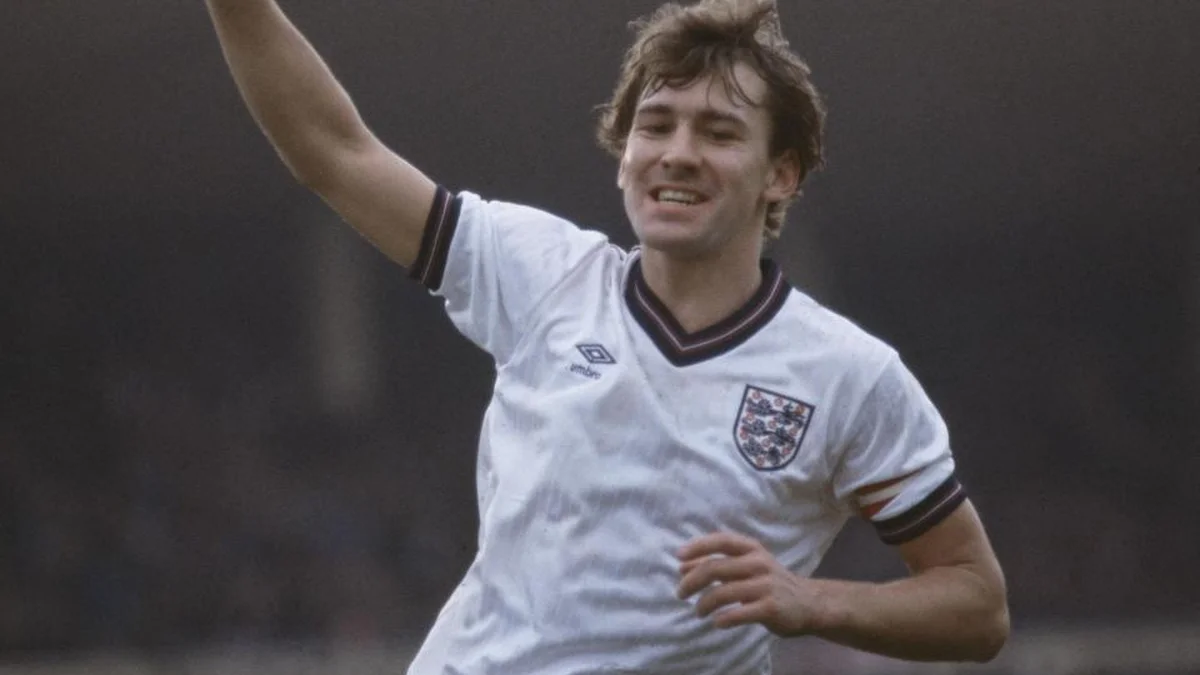
Robson made his senior England debut on 6 February 1980, in a 2-0 win over the Republic of Ireland at Wembley, in a qualifying match for the European Championship. He scored his first goal for England on 9 September 1981, in a 2-1 defeat against Norway in Oslo. Manager Ron Greenwood made him a regular, and Robson played in all eight qualifying matches as England reached the 1982 World Cup in Spain, the first World Cup finals for the country in 12 years.
The World Cup gave Robson the most famous moment of his international career. In the opening match against France in Bilbao on 16 June 1982, a long throw from Steve Coppell was flicked on by Terry Butcher, and Robson hooked the ball past the France goalkeeper Jean-Luc Ettori after just 27 seconds. It was the third fastest goal in World Cup finals history at the time, and no England player has scored a faster goal at a World Cup. Robson scored again in the second half as England won 3-1, and he received an inscribed gold watch to mark the achievement.
Robson captained England for the first time on 17 November 1982, leading the side to a 3-0 win over Greece in Salonika, and in November 1984 he scored a hat-trick in an 8-0 win over Turkey in Istanbul. England manager Bobby Robson rated him as the finest player in the country and gave him the nickname Captain Marvel. Injury then wrecked two World Cups in a row. At the 1986 World Cup in Mexico, Robson aggravated a shoulder injury in the second group match, against Morocco, and took no further part in the tournament. At the 1990 World Cup in Italy, injury in the second match, against the Netherlands, ended his tournament again. England finished fourth without their captain. He also captained England at the European Championship of 1988, where the team lost all three group matches. His final cap came against Turkey in October 1991. Robson closed his England career with 90 caps, 26 goals and 65 matches as captain.
| England Career | Record |
|---|---|
| Debut | 6 February 1980, against the Republic of Ireland |
| Final cap | October 1991, against Turkey |
| Appearances | 90 |
| Goals | 26 |
| Matches as captain | 65 |
| Tournaments | World Cup 1982, World Cup 1986, European Championship 1988, World Cup 1990 |
Style of Play
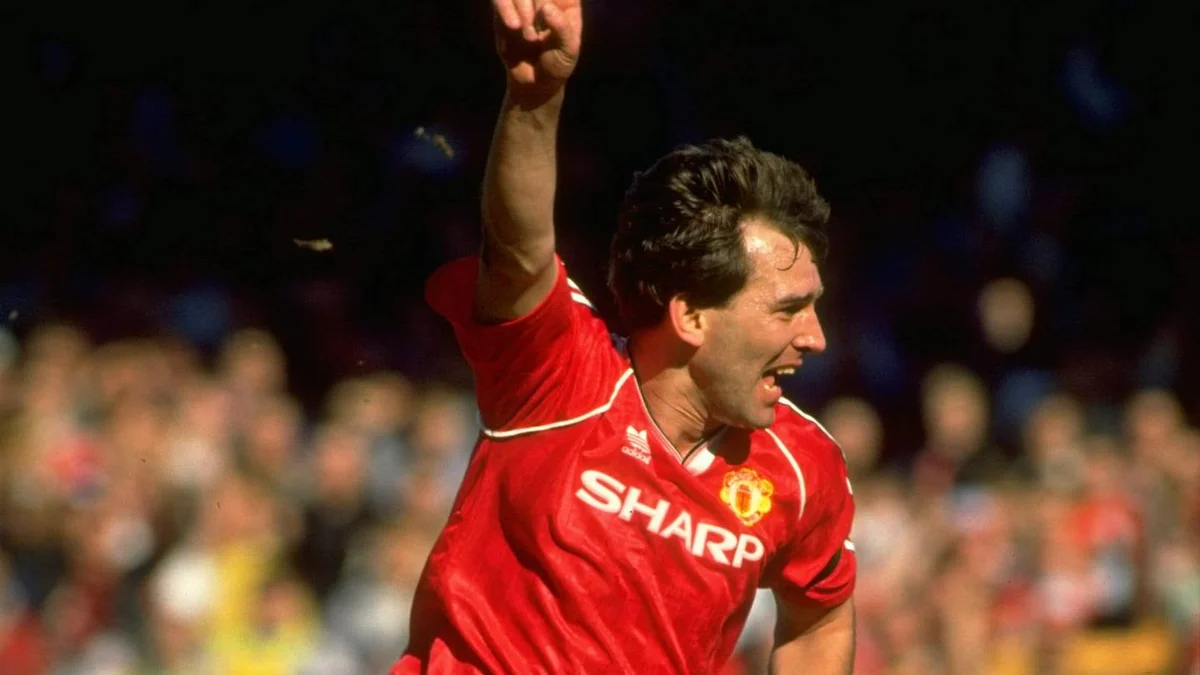
Robson was the complete box-to-box midfielder. He won tackles in front of his own defence, carried the ball through midfield, arrived late in the penalty area to score, and headed the ball with power at both ends of the pitch. His anticipation and reading of the game put him where the ball was about to land, and his stamina let him repeat those runs for ninety minutes. Few midfielders of his era combined ball-winning, passing and goalscoring in one player: he scored 99 goals for Manchester United and 26 goals for England from midfield.
The other half of his game was courage. Robson played through injuries that would have rested other players for months, and his fearless tackling caused the injuries that interrupted his career. Alex Ferguson described him as a miracle of commitment, a human marvel who pushed himself through every imaginable limit. Team-mates followed his example: Gareth Southgate named Robson as his sporting hero, and David Beckham compared the influence of Robson on his generation to the influence of Bobby Charlton on the generation before.
Managerial Career
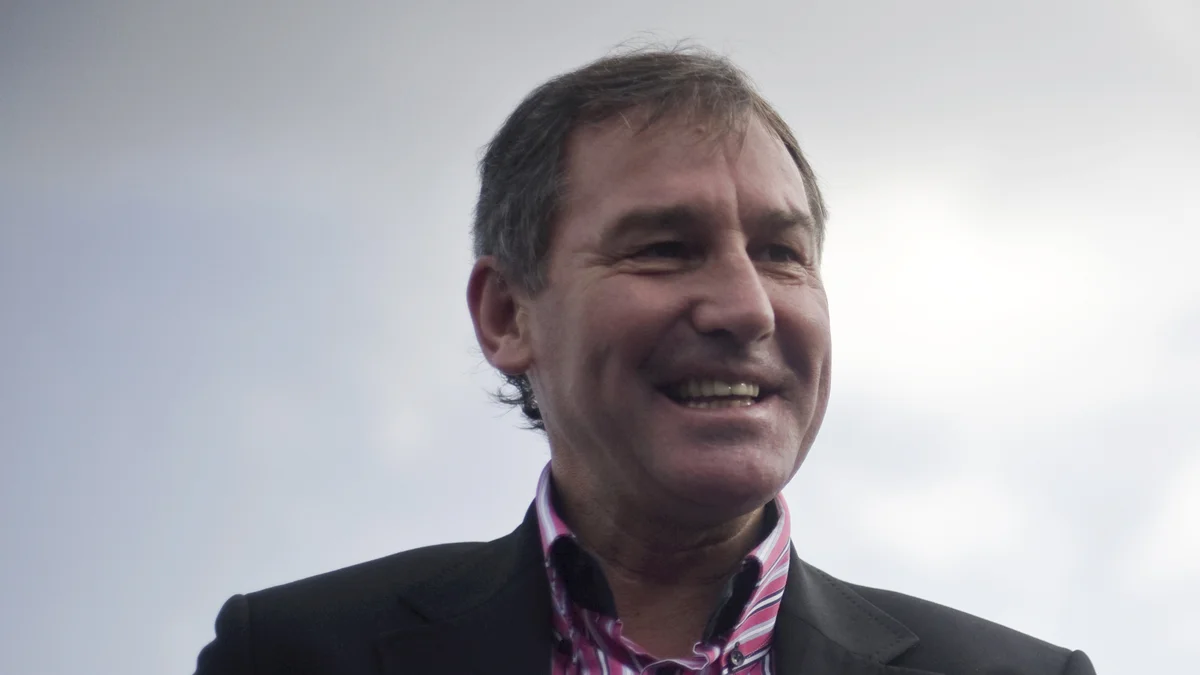
Robson began management as player-manager of Middlesbrough in 1994, assisted by Viv Anderson, and he won the First Division title in his first season, taking the club back to the Premier League and into the new Riverside Stadium. He spent heavily on star names such as Juninho and, in 1996, Fabrizio Ravanelli, signed from Juventus for 7 million pounds. In 1996-97 Middlesbrough reached both domestic cup finals and lost both, against Chelsea and against Leicester City, and the club was relegated from the Premier League after a deduction of three points for calling off a match at short notice. Robson kept his job, won promotion again in 1998, and reached a second League Cup final that year, losing again to Chelsea. Terry Venables arrived as head coach in December 2000 to help the fight against relegation, and Robson left the club by mutual consent in June 2001. From 1994 to 1996 he also worked as assistant coach of England under Venables, a spell that included Euro 96.
His later jobs brought mixed results. He took over at Bradford City in November 2003 but could not save the club from relegation, and he left in June 2004. In November 2004 he returned to West Bromwich Albion as manager. The club stood bottom of the Premier League at Christmas, a position from which no Premier League team had ever survived, yet a 2-0 win over Portsmouth on the final day completed a famous escape from relegation. Albion went down the following season, and Robson left in September 2006. He managed Sheffield United from May 2007 to February 2008, then took his first job in international management with Thailand in September 2009. He resigned from the Thailand job on 8 June 2011.
Career Statistics
| Club | Years | League Appearances | League Goals |
|---|---|---|---|
| West Bromwich Albion | 1975-1981 | 198 | 40 |
| Manchester United | 1981-1994 | 345 | 74 |
| Middlesbrough | 1994-1997 | 25 | 1 |
| Career Total | 568 | 115 |
The table covers league football only. In all competitions Robson played 245 games and scored 46 goals for West Bromwich Albion, 461 games and 99 goals for Manchester United, and 27 games for Middlesbrough. Across his whole club career he played 733 games and scored 146 goals.
| Team | Period | Main Achievement |
|---|---|---|
| Middlesbrough | 1994 to 2001 | First Division champions 1994-95, promotion again in 1998, FA Cup finalists 1997, League Cup finalists 1997 and 1998 |
| Bradford City | 2003 to 2004 | Relegated from Division One in 2003-04 |
| West Bromwich Albion | 2004 to 2006 | Premier League survival on the final day of 2004-05 after standing bottom at Christmas |
| Sheffield United | 2007 to 2008 | Left in February 2008 with the club in the Championship |
| Thailand | 2009 to 2011 | First job in international management, resigned in June 2011 |
Honours
- Premier League: 1992-93, 1993-94 (Manchester United)
- FA Cup: 1983, 1985, 1990 (Manchester United)
- European Cup Winners Cup: 1991 (Manchester United)
- FA Charity Shield: 1983, 1993 (Manchester United)
- Football League First Division title as player-manager: 1994-95 (Middlesbrough)
- PFA Team of the Year: six selections between 1982 and 1989
- First Division Goal of the Season: 1985-86
- Sir Matt Busby Player of the Year: 1988-89
- PFA Team of the Century (1977-1996): named in 2007
- OBE for services to football: 1990
- Football League 100 Legends: 1998
- English Football Hall of Fame: inaugural inductee, 2002
Net Worth
No reliable figure exists for the net worth of Bryan Robson. Published estimates on low-quality celebrity websites vary widely and conflict with each other, and none of them comes from a verified source. This article therefore gives no net worth figure. What is certain is that Robson commanded a British record transfer fee as a player in 1981 and later held a series of well-paid management jobs in the Premier League.
Personal Life and Family
Robson married Denise on 2 June 1979, during his West Bromwich Albion years. Denise came from Great Barr in the West Midlands, and the couple met early in his career at Albion. They have three children: Claire, born in 1980, Charlotte, born in 1982, and Ben, born in 1988. His autobiography, Robbo: My Autobiography, was published in 2006.
In March 2011, during his time as coach of Thailand, Robson underwent surgery in Bangkok to remove a tumour from his throat. The tumour proved to be cancerous, and Manchester United said the oncologist treating him was confident that the condition was treatable. Robson recovered, resigned from the Thailand job in June 2011, and returned to Manchester United. He works as a global ambassador for the club, a role he first took up in 2008, representing United at matches and events around the world.
Legacy
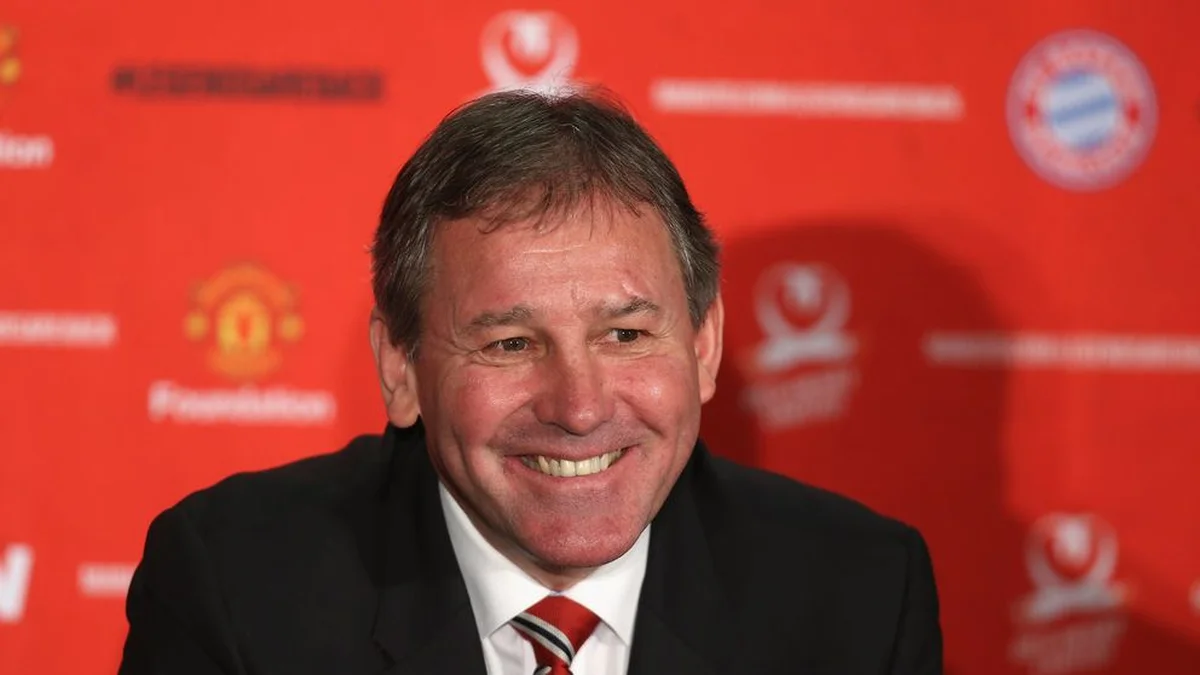
Robson holds a place in the history of English football that rests on leadership as much as talent. He is the longest-serving captain in the history of Manchester United, the first captain of the club to lift the FA Cup three times, and a captain of England in 65 matches, a figure bettered only by Bobby Moore and Billy Wright. In 2002 he was an inaugural inductee into the English Football Hall of Fame, and in 2011 the former players of Manchester United voted him the greatest player in club history.
His career also carries a question that supporters still debate: how much more might Robson have won without the broken legs of his youth and the injuries that ended his World Cup campaigns of 1986 and 1990? The judges of his era leave no doubt about his standing. Bobby Robson called him the best player in England, and Paul Gascoigne named him the best player of his generation and the finest footballer he ever shared a pitch with.
Conclusion
Bryan Robson rose from an apprenticeship on five pounds a week at West Bromwich Albion to become Captain Marvel: the longest-serving captain of Manchester United, a two-time Premier League champion, a three-time FA Cup winning captain, and the scorer of one of the fastest goals in World Cup history. He played 461 games for Manchester United and won 90 caps for England, then carried the same drive into management, where Middlesbrough and West Bromwich Albion defined his record. For supporters of his era, Robson remains the standard against which every box-to-box midfielder and every captain is measured.
FAQs
How old is Bryan Robson?
Robson was born on 11 January 1957 in Chester-le-Street, County Durham, so he is 69 years old. He played professional football until the age of 39, making his final appearance for Middlesbrough on 1 January 1997, ten days before his 40th birthday.
Who is the wife of Bryan Robson?
Robson married Denise on 2 June 1979, while he was a player at West Bromwich Albion. The couple have three children: Claire, born in 1980, Charlotte, born in 1982, and Ben, born in 1988.
How many caps did Bryan Robson win for England?
Robson won 90 caps for England between 1980 and 1991 and scored 26 goals. He captained the side 65 times, a total bettered only by Bobby Moore and Billy Wright, and he played at the World Cups of 1982, 1986 and 1990 and at the European Championship of 1988.
Why is Bryan Robson called Captain Marvel?
The nickname came from England manager Bobby Robson, who rated his namesake as the finest player in the country. It captured the way Robson played: he tackled, passed, scored and drove his team forward, and he played through injuries that stopped other players. The name followed him to Manchester United, where he captained the club for 12 years.
How fast was the goal Bryan Robson scored against France at the 1982 World Cup?
Robson scored after 27 seconds of the opening match of the 1982 World Cup, against France in Bilbao on 16 June 1982. A long throw from Steve Coppell and a flick on from Terry Butcher set up the finish. The goal stood as the third fastest in World Cup finals history until 2002, and no England player has scored a faster goal at a World Cup. Robson scored again in the match as England won 3-1, and received an inscribed gold watch.
What does Bryan Robson do now?
Robson works as a global ambassador for Manchester United, representing the club at matches, events and charitable work. He first took up an ambassador role with United in 2008, managed the Thailand national team from 2009 to 2011, and returned to ambassador work after resigning from the Thailand job in June 2011. In March 2011 he underwent surgery in Bangkok for throat cancer and recovered to continue his work.