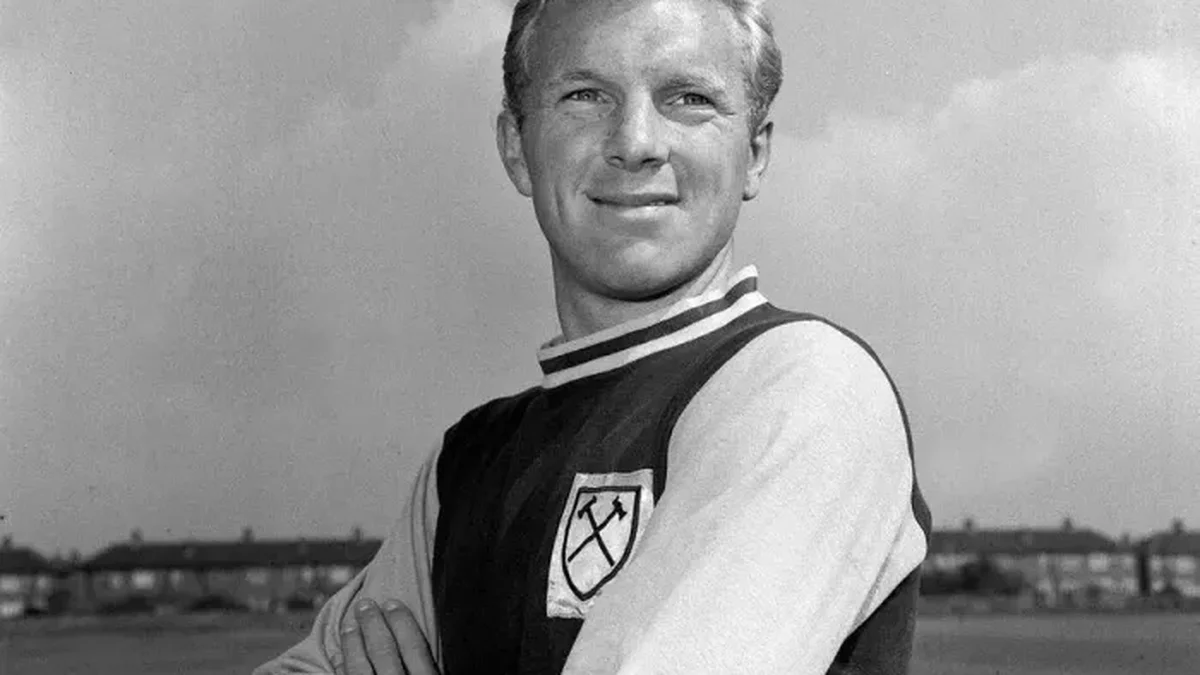
Bobby Moore Biography: Age, Wife, Family, Career, Stats, Records and Net Worth
This Bobby Moore biography covers the full journey of one of the greatest defenders of all time. Bobby Moore was born in Barking on 12 April 1941, and he died on 24 February 1993 at the age of 51. He captained England to victory in the 1966 World Cup, and he remains the only England captain to lift the World Cup.
Moore is best known for his reading of the game, his perfect timing in the tackle, and his calm leadership. He made 647 appearances for West Ham United, and he won 108 caps for England, with 90 of those caps as captain. Pele called him the greatest defender he ever played against.
This article covers the age, wife, family, career, stats, records, and net worth of Bobby Moore in simple English. It also answers the most common questions about his clubs, his England career, and his life after playing.
Quick Facts
| Detail | Fact |
|---|---|
| Full name | Robert Frederick Chelsea Moore |
| Date of birth | 12 April 1941 |
| Date of death | 24 February 1993 (aged 51) |
| Birthplace | Barking, Essex, England |
| Place of death | Putney, London, England |
| Height | 1.78 m (5 ft 10 in) |
| Position | Defender (centre-back) |
| Wife | Tina Moore (married in 1962, divorced in 1986); Stephanie Parlane (married in 1991) |
| Children | Two: Roberta and Dean |
| West Ham United debut | 8 September 1958 against Manchester United |
| England debut | 20 May 1962 against Peru |
| England caps and goals | 108 caps and 2 goals |
| England captain | 90 occasions |
| Clubs | West Ham United, Fulham, San Antonio Thunder, Seattle Sounders, Herning Fremad, Carolina Lightnin |
| Major trophies | World Cup 1966, FA Cup 1964, European Cup Winners Cup 1965 |
| Honours | OBE 1967 |
Early Life and Education
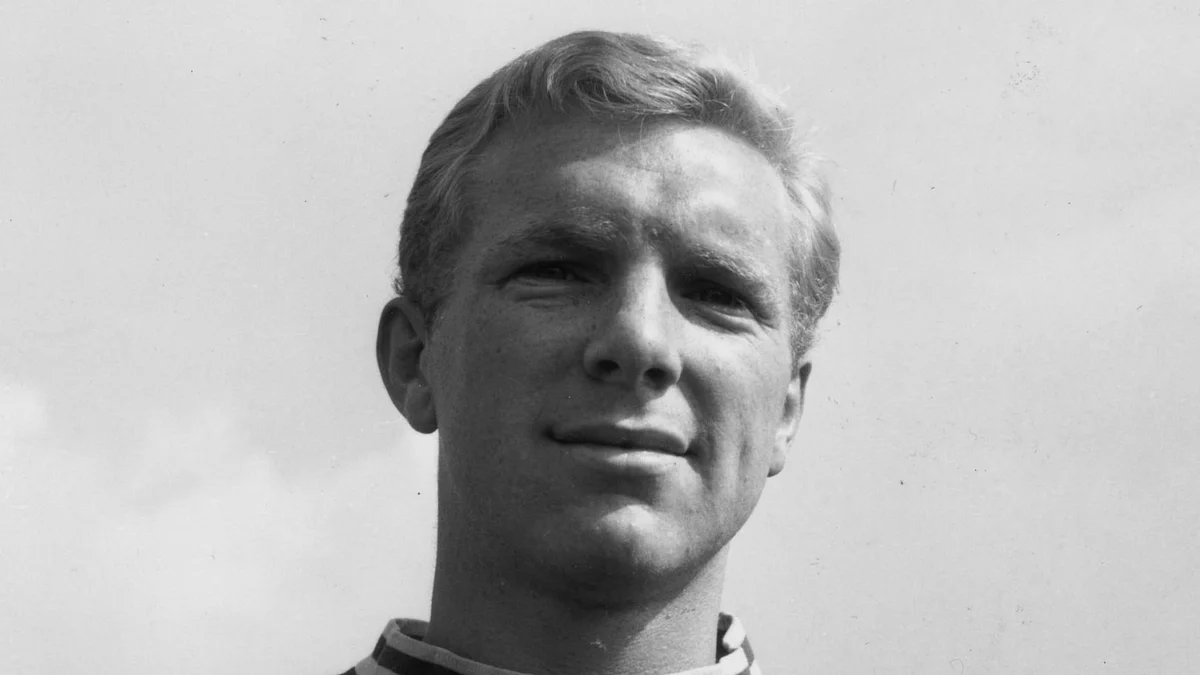
Robert Frederick Chelsea Moore was born in Barking, Essex, on 12 April 1941. He grew up in Barking and played for Barking as a youth player. In 1956, he joined West Ham United as a schoolboy, and he turned professional in 1958.
Moore came through the West Ham youth system, which also produced Geoff Hurst and Martin Peters. Coaches at the club saw a defender with rare reading of the game and calm passing from the back. He learned to bring the ball out of defence and to start attacks with simple, accurate passes.
He made his first-team debut on 8 September 1958 against Manchester United at the Boleyn Ground, at the age of 17. He stepped in for Malcolm Allison, who was ill with tuberculosis. West Ham won the match 3-2, and the debut marked the start of a 16-year career with the club.
Family
Moore met Tina Dean in 1957, and the couple married on 30 June 1962. The couple had two children, a daughter Roberta and a son Dean. The family lived in Chigwell, Essex, in a house they called Morlands.
The marriage ended in divorce in 1986 after the couple separated in 1984. In 1991, Moore married Stephanie Parlane on 4 December 1991. Stephanie stayed with Moore until his death in 1993, and she later founded the Bobby Moore Fund with Cancer Research UK.
Tragedy struck the family again in 2011, when Dean died at the age of 43.
The story of Moore and Tina became the subject of a television drama series, Tina and Bobby, which was broadcast on ITV in 2017.
Club Career
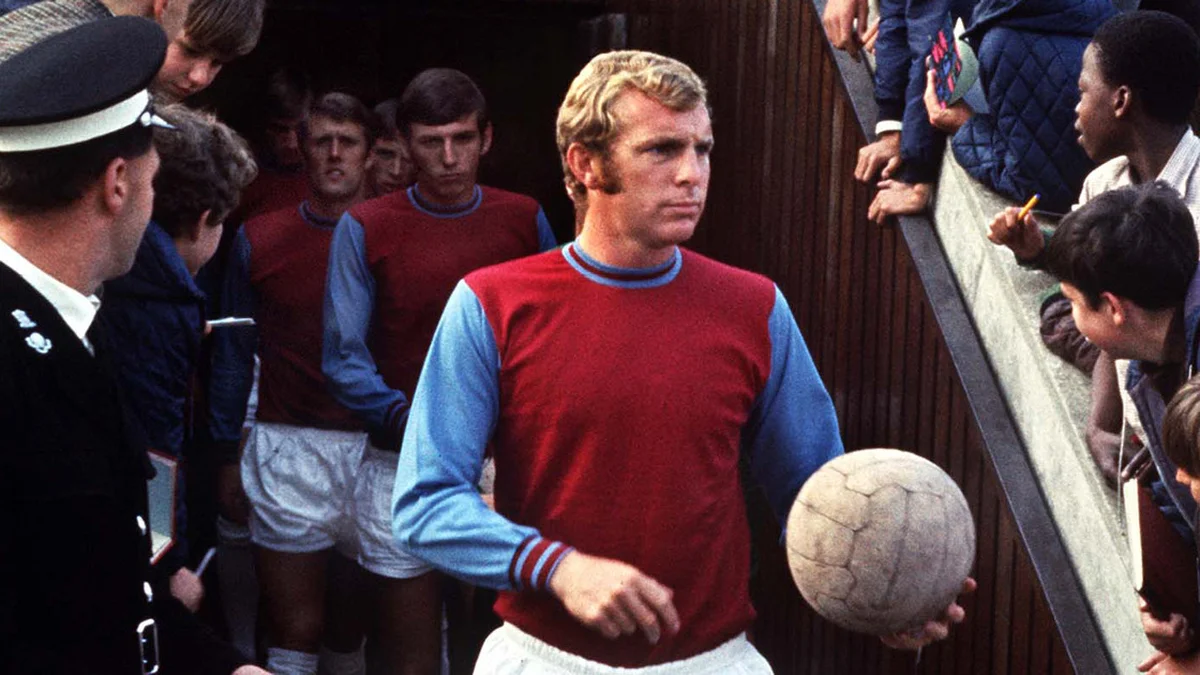
The club career of Bobby Moore lasted 20 years, from 1958 to 1978, with most of it at West Ham United. He later played for Fulham and had short spells in the United States and Denmark, plus a brief comeback in 1983.
West Ham United
Moore became a first-team regular in the 1960-61 season, when he made 38 league appearances. He was appointed captain of the club, and he led West Ham through the most successful period in the history of the club.
In 1964, Moore captained West Ham to victory in the FA Cup final against Preston North End. A year later, he led the club to the European Cup Winners Cup, with a 2-0 win over 1860 Munich at Wembley. In 1964, he was named FWA Footballer of the Year.
Moore won the Hammer of the Year award four times, in 1961, 1963, 1968, and 1970. In November 1970, the club held a testimonial match for him against Celtic at the Boleyn Ground.
His last appearance for West Ham came on 5 January 1974 against Hereford in the third round of the FA Cup, a match that ended in a 1-1 draw. He left the club in March 1974 in a move to Fulham for a fee of 25,000 pounds. At the time of his departure, he held the club record for appearances, with 647 appearances and 27 goals in all competitions.
Fulham and Later Clubs
Moore joined Fulham in March 1974. In his first full season with the club, he helped Fulham reach the 1975 FA Cup final, where Fulham lost 2-0 to West Ham. It was his last appearance at Wembley as a professional player.
He played his last professional game in England for Fulham on 14 May 1977 against Blackburn Rovers. In total, he made 124 league appearances for Fulham and scored one league goal.
In 1976, Moore played 24 games for San Antonio Thunder in the North American Soccer League and scored one goal. He was named to the All-NASL First Team for his performances. In 1978, he played seven games for Seattle Sounders and nine games for Herning Fremad in Denmark.
Moore ended his full-time playing career in 1978. In 1983, he played eight games for Carolina Lightnin in a brief comeback, after injuries left the club without cover.
International Career
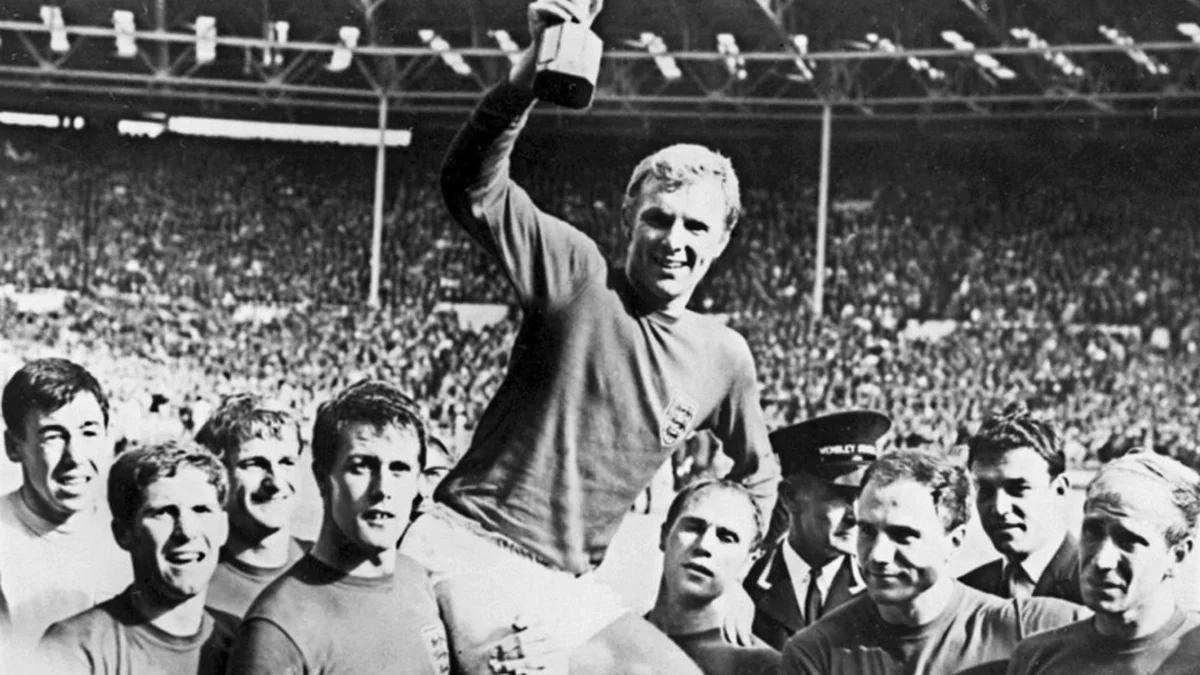
The international career of Bobby Moore lasted 11 years, from 1962 to 1973. He won 108 caps and scored 2 goals for England. He played at three World Cups and one European Championship, and he captained England in 90 of his 108 matches.
Debut and Early Years
Before his senior debut, Moore won nine caps for the England under-23 side. He made his full England debut on 20 May 1962 against Peru, at the age of 21.
He was named in the squad for the 1962 World Cup in Chile, and he stayed in the team until England lost to Brazil in the quarter-final. His first match as captain came on 29 May 1963 against Czechoslovakia, at the age of 22. In the summer of 1964, Alf Ramsey made him captain on a permanent basis.
1966 World Cup
The 1966 World Cup on home soil was the peak of the England career of Moore. He played all six matches and captained the side in every game.
On 30 July 1966 at Wembley, England beat West Germany 4-2 after extra time in the final. Geoff Hurst scored a hat-trick and Martin Peters scored the other goal. Moore set up two of the goals with pinpoint passes, and he lifted the Jules Rimet Trophy after the match. Before he shook hands with the Queen, he wiped the dirt from his hands, a small act that became part of the legend of the final.
Moore scored both of his England goals in 1966, in friendlies against Poland and Norway.
Later Tournaments
At Euro 1968, England finished third. England lost 1-0 to Yugoslavia in the semi-final, then beat the Soviet Union 2-0 in the third-place play-off.
At the 1970 World Cup in Mexico, Moore captained the defending champions. The most famous match came on 7 June 1970 against Brazil, when Brazil won 1-0. Moore made a perfect tackle on Jairzinho that is still shown as one of the greatest tackles in football history. After the match, he exchanged shirts with Pele, and Pele later called him the greatest defender he ever played against.
England lost 3-2 to West Germany in the quarter-final after leading 2-0, and the defence of the title ended. Moore reached his 100th cap on 14 February 1973 in a 5-0 win over Scotland at Hampden Park. He was the third player to reach 100 caps for England, after Billy Wright and Bobby Charlton.
His last cap came on 14 November 1973 against Italy, a 1-0 friendly defeat. England failed to qualify for the 1974 World Cup. At the time of his retirement, 108 caps was a record for England.
Managerial Career
After his playing career, Moore worked as a coach at Crystal Palace. He then managed Oxford City, Eastern AA in Hong Kong, and Southend United.
He became manager of Southend United in 1984. In his first full season, 1984-85, Southend narrowly avoided having to apply for re-election to the Football League amid severe financial problems. In the 1985-86 season, Southend started well and were in the promotion race until the new year, before finishing in ninth place. He left the club in 1986 and later served on the board of the club until his death.
Playing Style
Moore played as a centre-back, but he was far more than a stopper. His greatest strength was his reading of the game. He seemed to know where the ball would go before it arrived, and he made tackles with perfect timing rather than force.
He was also a fine passer. He brought the ball out of defence with calm, accurate passes, and he started attacks from the back. His leadership was quiet and steady, and his teammates trusted his judgment in every match.
Alf Ramsey, the England manager, called him “my captain, my leader, my right-hand man”. Jock Stein said of Moore: “There should be a law against him. He knows what is happening 20 minutes before everyone else.” Pele called him the greatest defender he ever played against.
Stats
The table below shows the West Ham United record of Bobby Moore by competition. The figures cover 647 appearances and 27 goals between 1958 and 1974.
| Competition | Appearances | Goals |
|---|---|---|
| First Division (league) | 544 | 24 |
| FA Cup | 36 | 0 |
| League Cup | 49 | 3 |
| Other (including Charity Shield and Cup Winners Cup) | 18 | 0 |
| Total | 647 | 27 |
The table below shows the league appearances and goals of Bobby Moore by club. The totals come to 716 league appearances and 26 league goals.
| Club | Period | League Appearances | League Goals |
|---|---|---|---|
| West Ham United | 1958-1974 | 544 | 24 |
| Fulham | 1974-1977 | 124 | 1 |
| San Antonio Thunder | 1976 | 24 | 1 |
| Seattle Sounders | 1978 | 7 | 0 |
| Herning Fremad | 1978 | 9 | 0 |
| Carolina Lightnin | 1983 | 8 | 0 |
| Total | 1958-1983 | 716 | 26 |
The table below shows the England record of Bobby Moore by year. The figures cover 108 caps and 2 goals between 1962 and 1973.
| Year | Caps | Goals |
|---|---|---|
| 1962 | 8 | 0 |
| 1963 | 9 | 0 |
| 1964 | 9 | 0 |
| 1965 | 9 | 0 |
| 1966 | 15 | 2 |
| 1967 | 6 | 0 |
| 1968 | 9 | 0 |
| 1969 | 9 | 0 |
| 1970 | 11 | 0 |
| 1971 | 7 | 0 |
| 1972 | 6 | 0 |
| 1973 | 10 | 0 |
| Total | 108 | 2 |
The table below shows the record of Bobby Moore at major tournament finals. He played 16 matches at World Cup and European Championship finals and scored no goals.
| Tournament | Matches | Goals | Result |
|---|---|---|---|
| World Cup 1962 | 4 | 0 | Quarter-final |
| World Cup 1966 | 6 | 0 | Winner |
| Euro 1968 | 2 | 0 | Third place |
| World Cup 1970 | 4 | 0 | Quarter-final |
| Total | 16 | 0 | One title |
Records
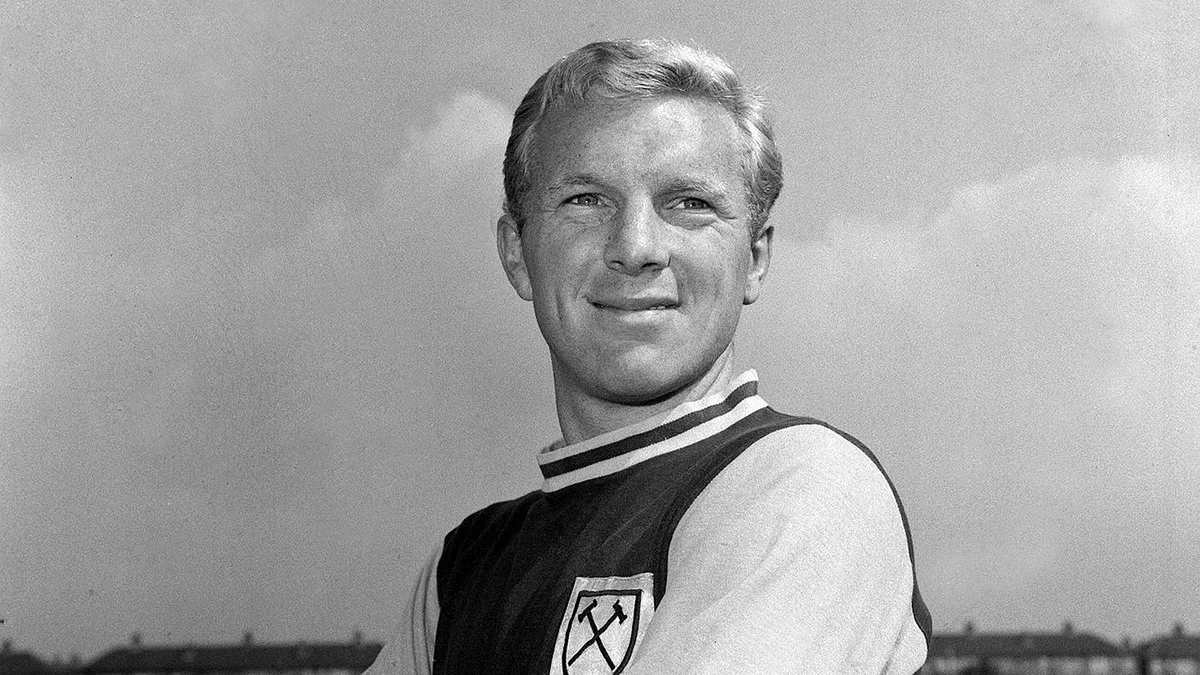
- Only England captain to lift the World Cup: 1966.
- Third player to reach 100 caps for England, after Billy Wright and Bobby Charlton.
- England appearance record at the time of his retirement: 108 caps.
- Joint record for appearances as England captain: 90, shared with Billy Wright.
- West Ham United appearance record at the time of his departure: 647.
- Set up two goals in the 1966 World Cup final.
- All-NASL First Team in 1976.
- Played at three World Cup tournaments: 1962, 1966, and 1970, with 14 World Cup finals matches in total.
Awards and Honours
Moore won many team and individual honours across his career. The list below covers his main awards and honours.
- World Cup winner with England in 1966.
- FA Cup winner with West Ham United in 1963-64.
- European Cup Winners Cup winner with West Ham United in 1964-65.
- FA Charity Shield winner in 1964.
- Third place at Euro 1968 with England.
- British Home Championship winner six times, plus three shared titles.
- FWA Footballer of the Year in 1964.
- BBC Sports Personality of the Year in 1966.
- Ballon d’Or runner-up in 1970.
- OBE in 1967.
- West Ham Hammer of the Year in 1961, 1963, 1968, and 1970.
- All-NASL First Team in 1976.
Net Worth
No reliable reported estimate of the net worth of Bobby Moore exists in public records. He played in an era long before modern football wages, and he died in 1993.
Reports about his later life describe his work in management, media, and business, but none of them give a confirmed total for his wealth. This article gives no net worth figure, because no figure is verified.
Later Life and Legacy
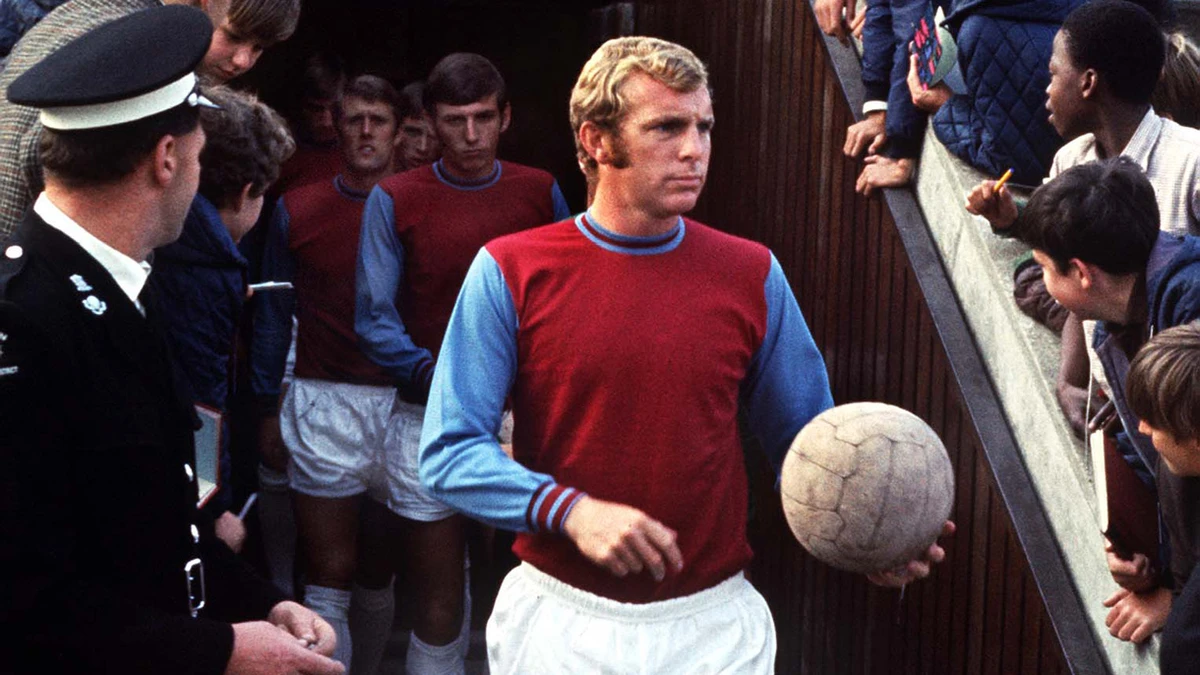
After his playing career, Moore worked in management and media. He appeared in the 1981 film Escape to Victory as Terry Brady.
Moore had already beaten testicular cancer in 1964. In April 1991, he underwent an emergency operation for suspected colon cancer. He died on 24 February 1993 at Putney, at the age of 51, of bowel cancer. He was the first member of the 1966 World Cup-winning side to die.
Thousands of supporters gathered at the Boleyn Ground to mark his passing, and a memorial service was held at Westminster Abbey. In 1993, Stephanie Moore founded the Bobby Moore Fund with Cancer Research UK to fund research into bowel cancer and to raise awareness of the disease.
His legacy is visible across English football. A statue of Moore stands outside Wembley Stadium, and it was unveiled in 2007. West Ham United retired his number 6 shirt in 2008, and the club named a stand after him at the London Stadium. Moore is remembered as much for his character as for his football: a calm leader, a fair player, and a gentleman on and off the pitch.
Conclusion
The story of Bobby Moore is a story of leadership and grace. He led West Ham United and England with calm authority, and he lifted the World Cup at Wembley in 1966.
His numbers tell the story: 647 appearances for West Ham United, 108 caps for England, and 90 matches as captain of his country. Few defenders in the long history of the game can match that record.
For young readers, the main lesson is clear. Talent opens the door, but reading of the game and character keep it open. Moore was never the fastest or the strongest player on the pitch, but he read the game better than anyone else. That is why his name still stands among the greats of English football.
Today, his statue stands at Wembley, his number 6 shirt is retired, and his fund still works to beat bowel cancer. The legacy of Bobby Moore lives on in the game he loved and in the lives his charity continues to change.
FAQs
When did Bobby Moore die and how old was he?
Bobby Moore died on 24 February 1993 at the age of 51. He died of bowel cancer at Putney, in London.
Who was the wife of Bobby Moore?
Bobby Moore was married twice. His first wife was Tina, whom he married in 1962. The couple divorced in 1986 and had two children, Roberta and Dean. His second wife was Stephanie Parlane, whom he married in 1991.
How many caps did Bobby Moore win for England?
Bobby Moore won 108 caps and scored 2 goals for England between 1962 and 1973. He captained England in 90 of those matches.
Did Bobby Moore captain England to the World Cup?
Yes. Bobby Moore captained England to victory in the 1966 World Cup. England beat West Germany 4-2 in the final at Wembley, and Moore remains the only England captain to lift the World Cup.
How many appearances did Bobby Moore make for West Ham United?
Bobby Moore made 647 appearances and scored 27 goals in all competitions for West Ham United between 1958 and 1974. At the time of his departure, it was a club record.
What happened between Bobby Moore and Pele in 1970?
At the 1970 World Cup, Moore faced Pele in a group match between England and Brazil, which Brazil won 1-0. Moore made a famous tackle on Jairzinho, and after the match he exchanged shirts with Pele. Pele later called him the greatest defender he ever played against.
One Comment