Glenn Hoddle Biography: Age, Wife, Family, Career, Stats, Records and Net Worth
Glenn Hoddle is an English former footballer and manager who is widely regarded as one of the most gifted and creative midfielders England has ever produced. Born on 27 October 1957 in Harlington, Middlesex, Hoddle played 490 games and scored 110 goals for Tottenham Hotspur, won the FA Cup twice and the UEFA Cup with the club, and then won the French league title with AS Monaco under Arsène Wenger. He won 53 caps and scored 8 goals for England, and he later managed England at the 1998 World Cup.
This biography covers his early life in Middlesex and Essex, his rise at Tottenham Hotspur from teenage debutant to FA Cup winner, his title-winning years in France with AS Monaco, his move into player-management with Swindon Town and Chelsea, his England career as player and manager, his later years in management with Southampton, Tottenham Hotspur and Wolverhampton Wanderers, his family life, and his work today as a television pundit and commentator.
Quick Facts
| Detail | Fact |
|---|---|
| Full name | Glenn Hoddle |
| Date of birth | 27 October 1957 |
| Place of birth | Harlington, Middlesex, England |
| Height | 1.83 m (6 ft 0 in) |
| Position | Midfielder |
| Club career | Tottenham Hotspur, AS Monaco, Swindon Town, Chelsea, 1975 to 1995 |
| Tottenham Hotspur appearances | 490 in all competitions, 110 goals |
| England caps | 53 caps, 8 goals, 1979 to 1988 |
| England manager | 1996 to 1999, took England to the second round of the 1998 World Cup |
| Teams managed | Swindon Town, Chelsea, England, Southampton, Tottenham Hotspur, Wolverhampton Wanderers |
| Hall of Fame | Inducted into the National Football Museum Hall of Fame in 2007 |
Early Life
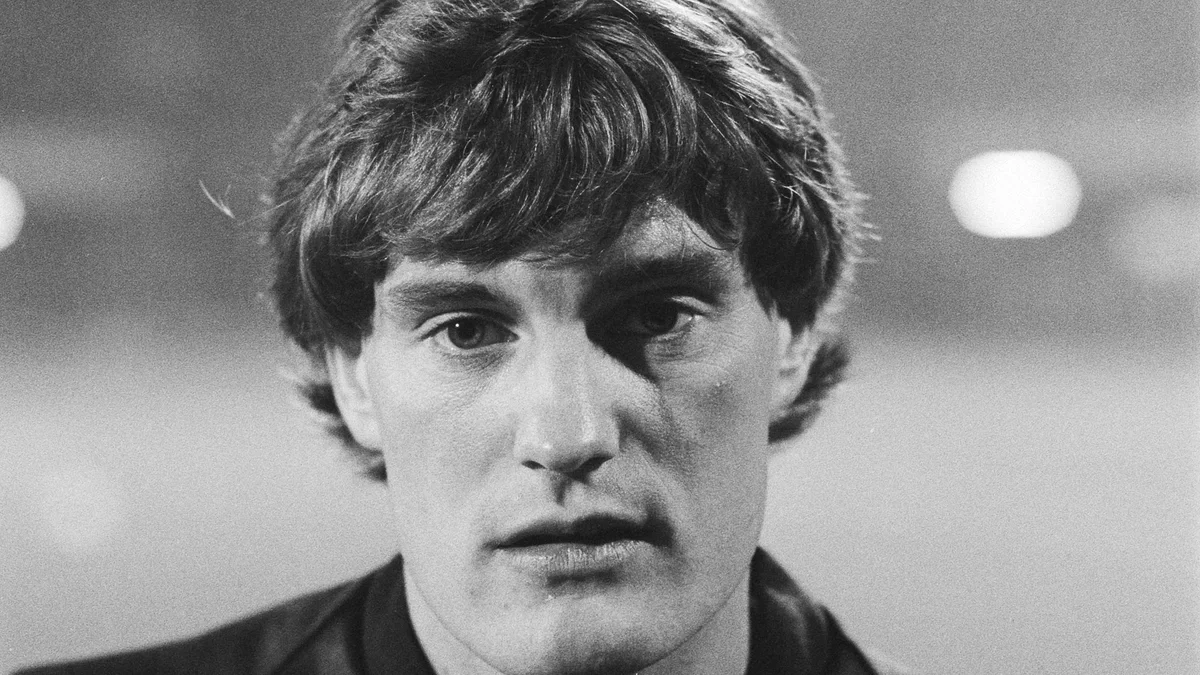
Glenn Hoddle was born on 27 October 1957 in Harlington, Middlesex, to Derek Hoddle and Teresa Roberts. The family lived in Hillingdon, and young Glenn watched his father play for Uxbridge in the Corinthian League. When Hoddle was four, the family moved to Harlow in Essex, where he attended a local primary school and then Burnt Mill Comprehensive School.
Hoddle began supporting Tottenham Hotspur at the age of eight, and his favourite player was the Tottenham forward Martin Chivers. At the age of 11 he played in a local school cup final where Chivers and Ray Evans presented the prizes, and on the recommendation of Chivers he was invited to train with Tottenham at the practice ground of the club in Cheshunt. He joined Tottenham as a junior at the age of 12, played Sunday league football for the Harlow club Longmans alongside his father at 15, and signed as an apprentice on 17 April 1974.
Club Career
Tottenham Hotspur: Debutant to FA Cup Winner (1975-1987)
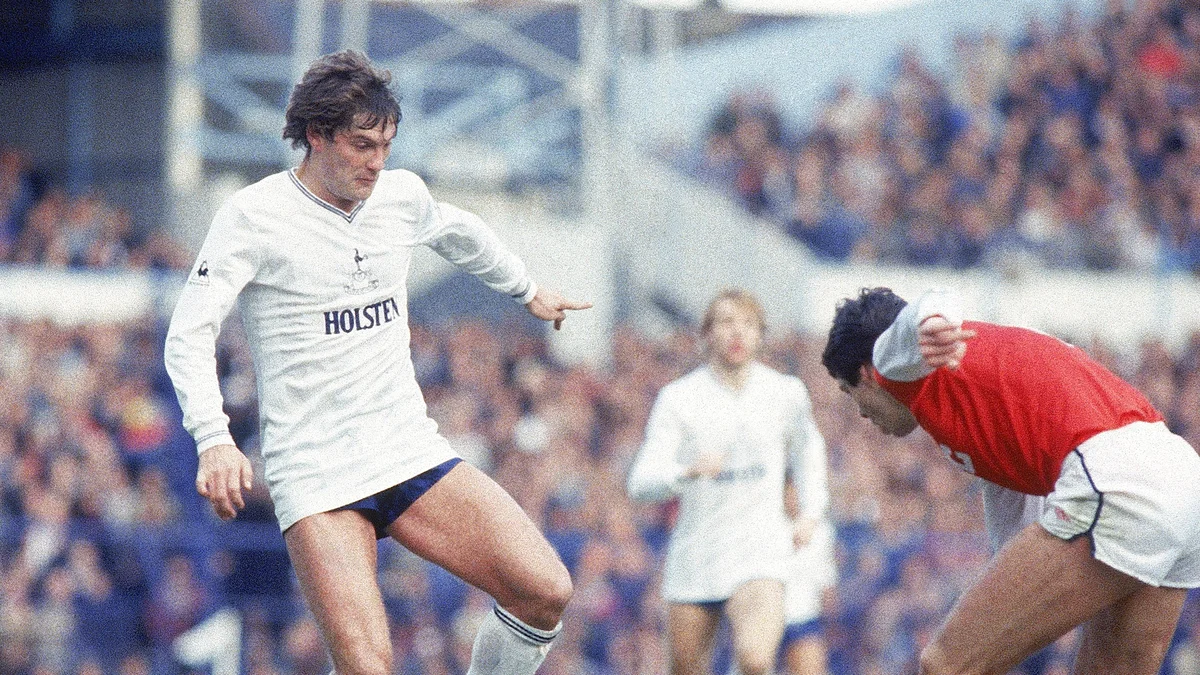
Hoddle made his first team debut for Tottenham on 30 August 1975, at the age of 17, coming on as a substitute for Cyril Knowles in a 2-2 draw against Norwich City. He waited until 21 February 1976 for his first league start and marked the occasion with the winning goal. Tottenham were relegated from the First Division in 1977 after 27 seasons in the top flight, but a side inspired by Hoddle won promotion back at the first attempt.
By 1979-80 Hoddle was a top-class player. He scored 19 goals in 41 league appearances that season and was named PFA Young Player of the Year. In 1981 he starred as Tottenham won the FA Cup, beating Manchester City after a replay, and in 1982 Tottenham retained the trophy, with Hoddle scoring in both the final and the replay. Tottenham finished fourth in the league that season, reached the League Cup final, where they lost to Liverpool, and made the semi-finals of the European Cup Winners Cup.
Injuries limited Hoddle over the next three seasons, but he was still the architect of the UEFA Cup triumph of 1984, even though fitness problems kept him out of the final itself. In October 1983 he produced a famous performance against Feyenoord of Rotterdam, a side led by Johan Cruyff, as Tottenham won 6-2 on aggregate. Cruyff had dismissed Hoddle before the tie, but after the match he swapped shirts with him as a sign of respect. Tottenham finished third in the First Division in 1985, and Hoddle played his final match for the club in the FA Cup final of 1987, a 3-2 defeat against Coventry City. In 12 years he played 490 first team matches and scored 110 goals for Tottenham, and only four players have worn the shirt of the club more often. He also won 44 of his England caps during his Tottenham career.
AS Monaco: A League Title in France (1987-1991)
In 1987 Hoddle announced that he would leave Tottenham at the end of the season to pursue a career overseas. Arsène Wenger, the newly appointed manager of AS Monaco, signed him for a fee of 750,000 pounds, and Hoddle joined a squad that included George Weah and Mark Hateley. The move was an immediate success. Monaco won the French Division 1 title in the 1987-88 season, the first league title for the club in six seasons, and Hoddle was voted the Division 1 Foreign Player of the Year.
Hoddle scored 18 league goals in the 1988-89 season and helped Monaco reach the quarter-finals of the European Cup. A severe knee injury then ended his time at the highest level. In November 1990, at the age of 33, he left Monaco by mutual consent. His record in France was 69 league appearances and 27 league goals, and 87 appearances and 30 goals in all competitions. He returned to England and signed for Chelsea on a non-contract basis to rebuild his fitness, but he left Stamford Bridge in March 1991 without playing a senior match in order to become player-manager of Swindon Town.
Swindon Town: Player-Manager and a Famous Promotion (1991-1993)
Hoddle took over at Swindon in March 1991 with the club damaged by a financial scandal. Swindon had been stripped of promotion to the First Division at the end of the previous season, and several leading players had been sold. Hoddle kept the club in the Second Division, and in 1991-92 Swindon finished eighth, just outside the play-off places after leading the table in October.
In 1992-93 Swindon reached the play-offs of the rebranded Division One. In the final at Wembley against Leicester City, Hoddle scored the first goal as Swindon won 4-3 and were promoted to the Premier League. As a player he made 67 league appearances for Swindon and scored two league goals. Days after the play-off triumph he left to become player-manager of Chelsea, and his assistant John Gorman took charge at Swindon.
Chelsea: The Final Playing Years (1993-1995)
Hoddle became player-manager of Chelsea in June 1993. He played 19 league games in his first season and 12 more in 1994-95, finishing with 31 league appearances and one league goal, and 39 appearances in all competitions. He retired from playing in 1995 at the age of 37 to concentrate on management.
His Chelsea team reached the FA Cup final in his first season, losing 4-0 to Manchester United, and the semi-finals of the European Cup Winners Cup in 1995. The full management story is told in the Managerial Career section below.
International Career
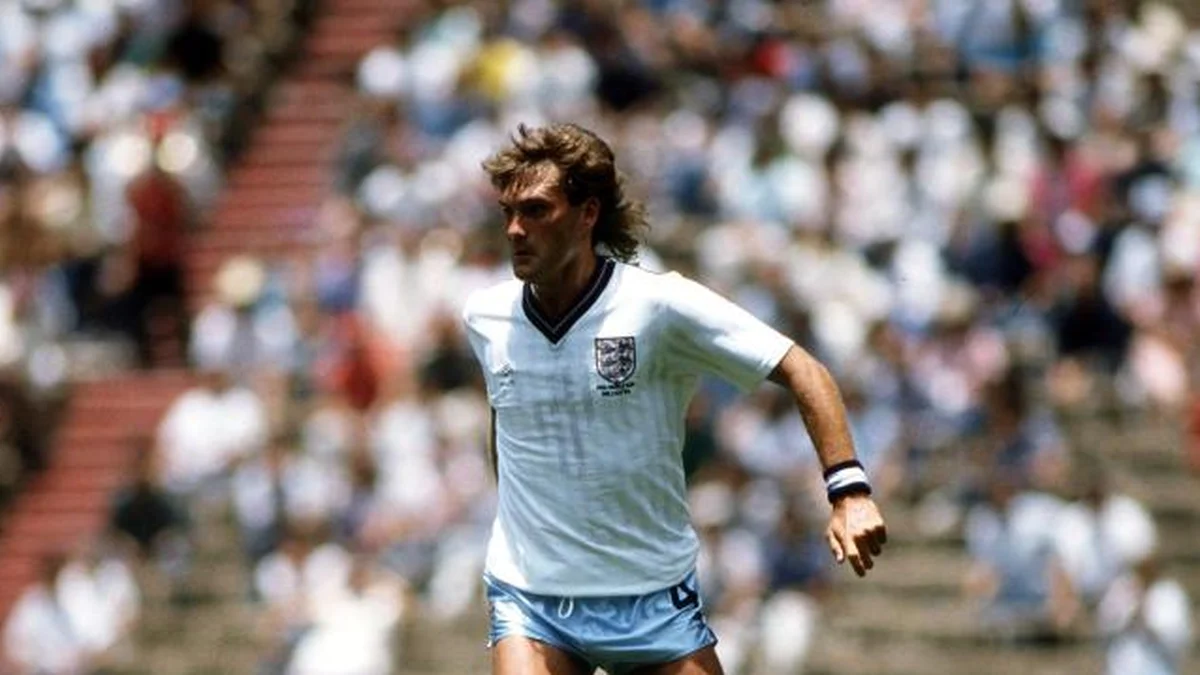
Hoddle made his senior England debut on 22 November 1979, in a European Championship qualifying match against Bulgaria at Wembley, and he scored in a 2-0 win. He was part of the England squad at the European Championship of 1980, and at the 1982 World Cup in Spain he played in two matches in the opening group phase, starting against Kuwait after a substitute appearance in a 2-0 win over Czechoslovakia.
Hoddle played an important part at the 1986 World Cup in Mexico, where England reached the quarter-finals before losing to Argentina. He was also in the squad at the European Championship of 1988 in West Germany, and his 53rd and final appearance for England came in the final group match of that tournament, a 3-1 defeat against the Soviet Union in June 1988. His last goal for England had come on 23 April 1986, in a 2-1 win over Scotland at Wembley. He closed his international career with 53 caps and 8 goals, 44 of them won with Tottenham and the last nine with Monaco. For a player of his talent, the cap total has often been described as low, because a series of England managers preferred more physical midfield players.
| England Career | Record |
|---|---|
| Debut | 22 November 1979, against Bulgaria |
| Final cap | June 1988, against the Soviet Union |
| Appearances | 53 |
| Goals | 8 |
| Tournaments | European Championship 1980, World Cup 1982, World Cup 1986, European Championship 1988 |
Style of Play
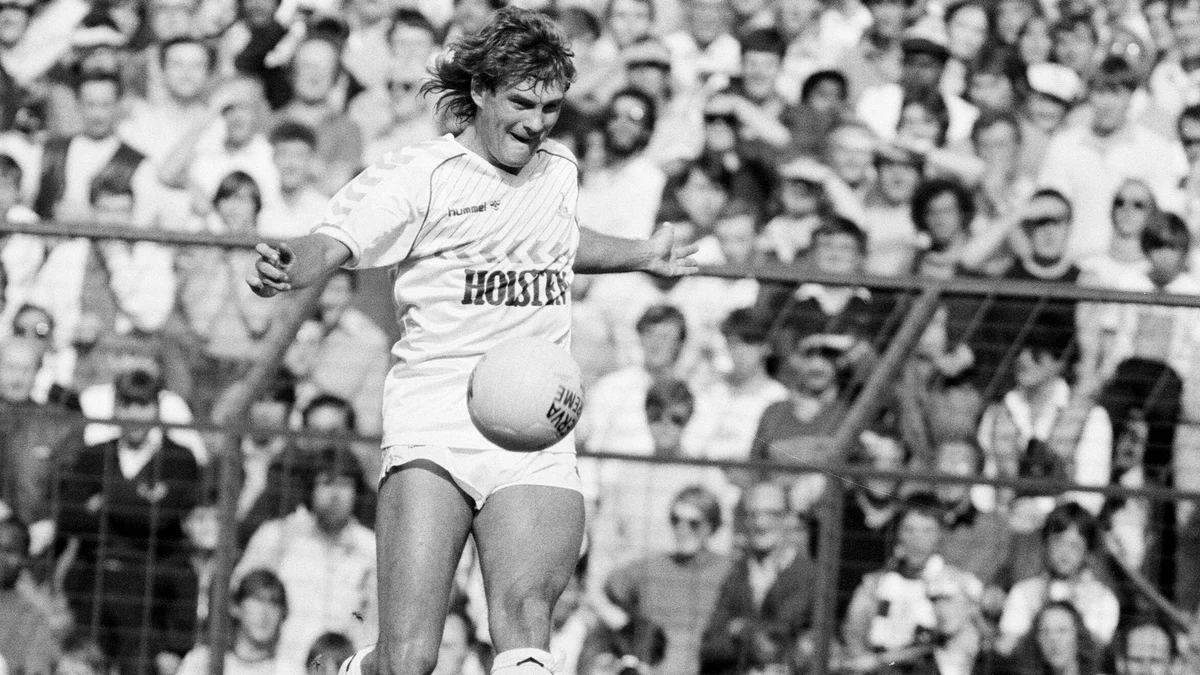
Hoddle was a playmaker in the purest sense. He passed the ball with either foot over any distance, saw moves before they developed, and controlled the tempo of a match from central midfield. His balance, close control and first touch let him receive the ball in tight areas and move it on in one movement, and he shot with power and accuracy from open play and from free kicks. At a time when English midfield play often valued strength and running above technique, Hoddle built his game on vision and skill.
The National Football Museum inducted Hoddle into the Hall of Fame in 2007 and described him as one of the most gifted and creative English footballers of his generation, with unrivalled passing and vision and extraordinary shooting ability. Johan Cruyff, a European champion as player and manager, praised Hoddle after facing him with Feyenoord in 1983 and swapped shirts with him. As a manager, Hoddle stayed loyal to that education and built teams that passed the ball and kept possession.
Managerial Career
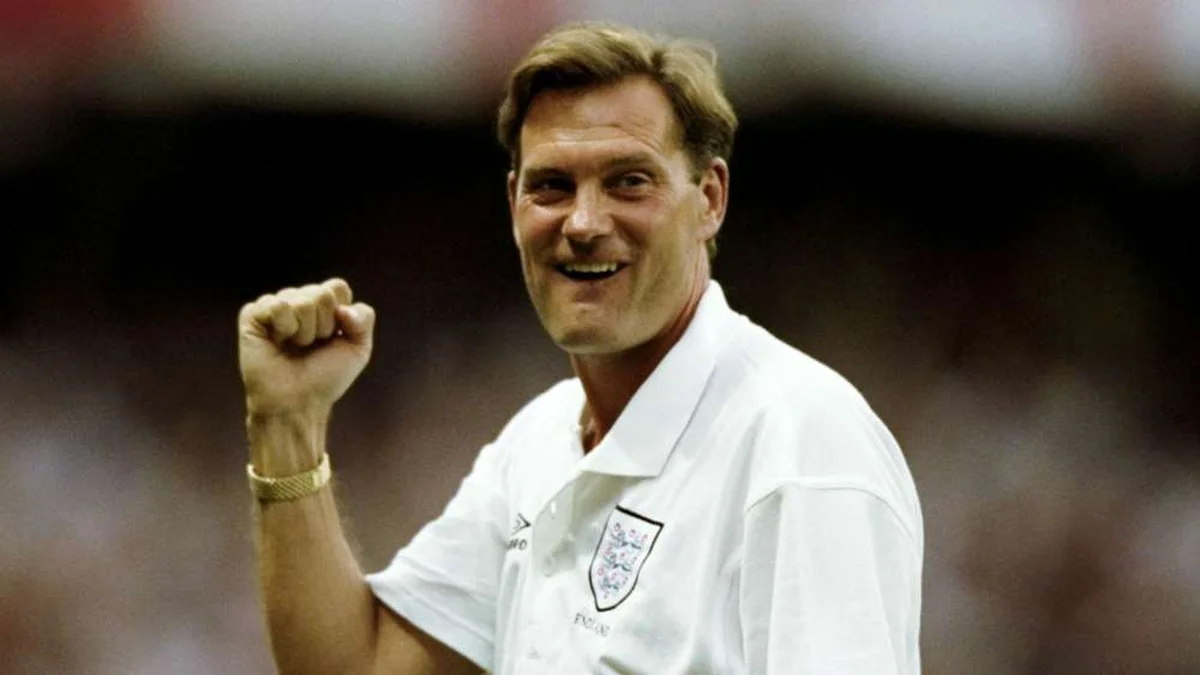
Hoddle began in management as player-manager of Swindon Town in March 1991 and won promotion to the Premier League through the play-offs in 1993, the story told in the Club Career section above. He moved to Chelsea in June 1993 and in three seasons took the club to the FA Cup final of 1994, the semi-finals of the European Cup Winners Cup in 1995 and the FA Cup semi-finals in 1996. He also transformed the squad, signing players of the calibre of Ruud Gullit and Mark Hughes, and made Chelsea a cup team again after a long decline.
In the summer of 1996 Hoddle accepted the job of England manager, succeeding Terry Venables after Euro 96. England won the Tournoi de France in 1997, ahead of Brazil, France and Italy, and qualified for the 1998 World Cup with a goalless draw against Italy in Rome. At the finals in France, England reached the second round and lost to Argentina on penalties after a 2-2 draw. The win rate of Hoddle as England manager was 60 per cent, among the best records in the history of the job.
His time as England manager ended in controversy. On 30 January 1999 The Times published an interview with the journalist Matt Dickinson in which Hoddle discussed his beliefs about reincarnation and karma, and the interview was widely reported as saying that disabled people were being punished for sins in a past life. The comments were criticised by politicians including Prime Minister Tony Blair. Hoddle said his words had been misinterpreted, and he apologised for the offence caused, but the Football Association terminated his contract on 2 February 1999.
Hoddle returned to club management with Southampton in January 2000 and kept the club in the Premier League with a 15th place finish. In March 2001 he left to manage Tottenham Hotspur, the club of his boyhood. He took Tottenham to the League Cup final in February 2002, where they lost 2-1 to Blackburn Rovers, and he was named Premier League Manager of the Month in October 2001 and again in August 2002, but results faded and he was dismissed in September 2003. His final job as a manager came at Wolverhampton Wanderers, from December 2004 to July 2006. Wolves lost only one of the last 25 league games of his first season but drew too many matches to reach the play-offs, and he stepped down in the summer of 2006. He later worked as first team coach at QPR under Harry Redknapp from August 2014 to February 2015, and he founded the Glenn Hoddle Academy in Spain in 2008 to give released young players a second chance in professional football.
Career Statistics
| Club | Years | League Appearances | League Goals |
|---|---|---|---|
| Tottenham Hotspur | 1975-1987 | 377 | 88 |
| AS Monaco | 1987-1991 | 69 | 27 |
| Swindon Town | 1991-1993 | 67 | 2 |
| Chelsea | 1993-1995 | 31 | 1 |
| Career Total | 544 | 118 |
The table covers league football only. In all competitions Hoddle played 490 games and scored 110 goals for Tottenham Hotspur, 87 games and 30 goals for AS Monaco, 74 games and three goals for Swindon Town, and 39 games and one goal for Chelsea. Across his whole club career he played 690 games and scored 144 goals.
| Team | Period | Main Achievement |
|---|---|---|
| Swindon Town | 1991 to 1993 | First Division play-off winners 1993, promotion to the Premier League |
| Chelsea | 1993 to 1996 | FA Cup finalists 1994, European Cup Winners Cup semi-finalists 1995 |
| England | 1996 to 1999 | Tournoi de France winners 1997, World Cup second round 1998 |
| Southampton | 2000 to 2001 | Kept the club in the Premier League |
| Tottenham Hotspur | 2001 to 2003 | League Cup finalists 2002 |
| Wolverhampton Wanderers | 2004 to 2006 | Seventh place in the Championship in 2006 |
Honours
- FA Cup: 1981, 1982 (Tottenham Hotspur)
- UEFA Cup: 1984 (Tottenham Hotspur)
- FA Charity Shield: 1981, shared (Tottenham Hotspur)
- French Division 1: 1988 (AS Monaco)
- Football League First Division play-offs as player-manager: 1993 (Swindon Town)
- Tournoi de France as England manager: 1997
- PFA Young Player of the Year: 1980
- PFA Team of the Year: six selections between 1978 and 1987
- Division 1 Foreign Player of the Year: 1988
- PFA Team of the Century (1977-1996): named in 2007
- English Football Hall of Fame: inducted in 2007
- Premier League Manager of the Month: October 2001 and August 2002
Net Worth
No reliable figure exists for the net worth of Glenn Hoddle. Published estimates on low-quality celebrity websites vary and conflict with each other, and none of them comes from a verified source. This article therefore gives no net worth figure. What is certain is that Hoddle earned top-level wages in England and France as a player, held the England manager job and a series of Premier League management posts, and has worked for major television broadcasters for more than a decade.
Personal Life and Family
Hoddle married Christine in 1979, and the couple had three children, Zara, Jamie and Zoe. The marriage ended in 1998. In 2000 he married Vanessa, and that marriage ended in 2015. Hoddle became a born-again Christian after an experience on holiday in Israel in 1986, and his faith has remained a public part of his life. His younger brother Carl, also a former footballer, died in 2008 at the age of 40. His autobiography, Playmaker, was published in 2021.
On 27 October 2018, his 61st birthday, Hoddle suffered a cardiac arrest in a London television studio while working for BT Sport. A sound engineer, Simon Daniels, gave him CPR and used a defibrillator, actions that were widely credited with saving his life. Hoddle had emergency heart surgery and left hospital on 23 November 2018 to recover at home. He returned to television work, and he later campaigned with the British Heart Foundation to place defibrillators at grassroots football clubs. Today he works as a pundit and commentator for ITV Sport and TNT Sports.
Legacy

Hoddle holds a special place in the history of Tottenham Hotspur. Only four players have made more appearances for the club, and his two FA Cup wins and the UEFA Cup triumph of 1984 came in one of the most successful periods in the modern history of the club. The Hall of Fame citation of the National Football Museum called him one of the most gifted and creative English footballers of his generation, and his passing range remains the standard against which English playmakers are judged.
His England career, as player and manager, is the great debate of his story. As a player he won 53 caps across nine years, a total many observers consider small for a footballer of his ability, and as manager he took England to a World Cup and won 60 per cent of his matches before his dismissal in 1999. In France, where technique was valued above power, he won a league title and was named the best foreign player in the country, proof that his talent was recognised at the highest level of the European game.
Conclusion
Glenn Hoddle rose from the youth ranks of Tottenham Hotspur to become the creative heart of the club for 12 years, a title winner in France with AS Monaco, and a player-manager who carried Swindon Town into the Premier League. He played 490 games for Tottenham and won 53 caps for England, then managed his country at a World Cup. For supporters who watched him pass a ball, Hoddle remains the most naturally gifted English midfielder of his era and one of the great playmakers of English football.
Related Biographies
- Bryan Robson
- Kevin Keegan
- Paul Gascoigne
- Gary Lineker
- Steven Gerrard
FAQs
How old is Glenn Hoddle?
Hoddle was born on 27 October 1957 in Harlington, Middlesex, so he is 68 years old. He made his Tottenham debut at the age of 17 in 1975 and played professional football until 1995, when he retired at the age of 37.
Who is the wife of Glenn Hoddle?
Hoddle has been married twice. He married Christine in 1979 and the couple had three children, Zara, Jamie and Zoe, before the marriage ended in 1998. He married Vanessa in 2000, and that marriage ended in 2015.
How many caps and goals did Glenn Hoddle win for England?
Hoddle won 53 caps for England between 1979 and 1988 and scored 8 goals. He scored on his debut against Bulgaria in November 1979, played at the World Cups of 1982 and 1986 and at the European Championships of 1980 and 1988, and made his final appearance against the Soviet Union at Euro 1988.
Why did Glenn Hoddle leave Tottenham Hotspur for AS Monaco?
Hoddle announced in 1987 that he wanted to pursue a career overseas after 12 years at Tottenham. Arsène Wenger signed him for Monaco for a fee of 750,000 pounds, and the move brought instant success, with a French league title in his first season and the Division 1 Foreign Player of the Year award.
What happened to Glenn Hoddle as England manager?
Hoddle took charge of England in 1996, won the Tournoi de France in 1997 and led the team to the second round of the 1998 World Cup, where they lost to Argentina on penalties. In January 1999 a newspaper interview about his beliefs on reincarnation and disability caused widespread criticism, and the Football Association terminated his contract on 2 February 1999. Hoddle said his words had been misinterpreted and apologised for the offence caused.
What does Glenn Hoddle do now?
Hoddle works as a television pundit and commentator for ITV Sport and TNT Sports. He founded the Glenn Hoddle Academy in Spain in 2008 to help released young players return to professional football, published his autobiography Playmaker in 2021, and recovered from a cardiac arrest in 2018 to return to broadcasting.