John Terry Biography: Age, Wife, Family, Career, Stats, Records and Net Worth
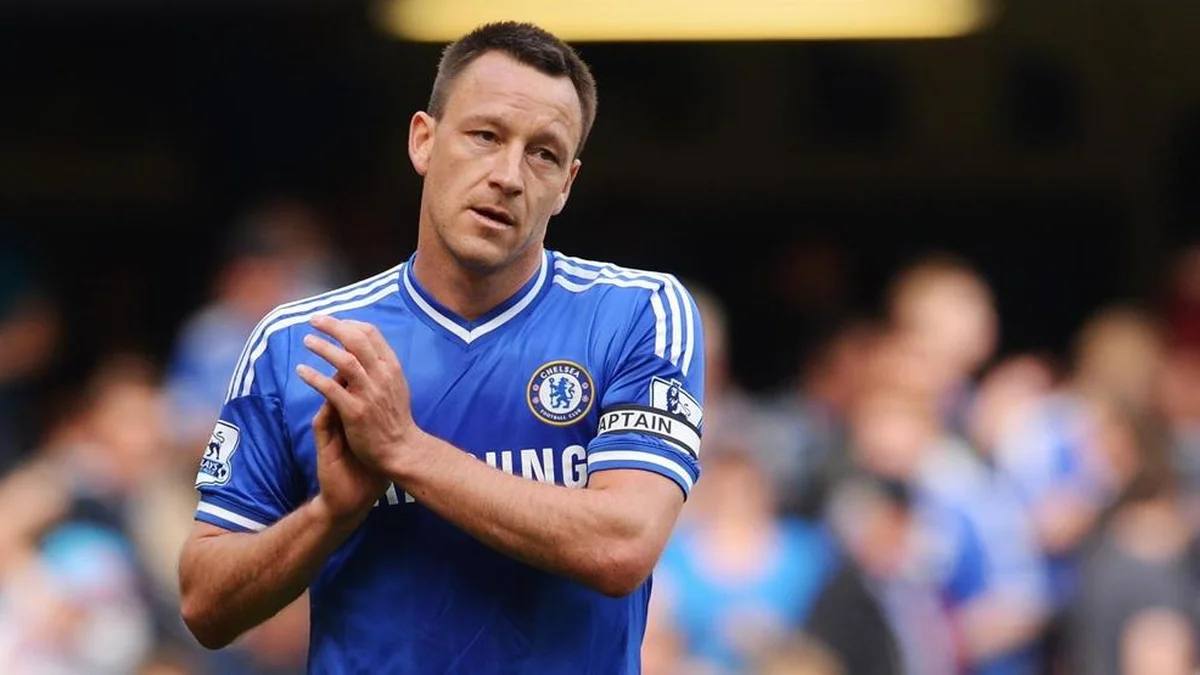
John Terry made 717 appearances for Chelsea, captained the club to five Premier League titles, and won 78 caps for England across a career that ran for 20 years. He lifted the Champions League in 2012, the Europa League in 2013, and five FA Cups, and he retired as the most decorated captain in the history of Chelsea. His career also carried controversy, from a missed penalty in Moscow in 2008 to a racism case that ended his England career in 2012.
This John Terry biography covers his age, wife, family, career, stats, records and net worth, from a schoolboy at Chelsea to the title wins under Jose Mourinho, the European nights of 2008 and 2012, and a coaching career that took him back to Chelsea as an academy coach.
Quick Facts
| Detail | Fact |
|---|---|
| Full name | John George Terry |
| Date of birth | 7 December 1980 |
| Place of birth | Barking, London, England |
| Position | Centre-back |
| Clubs | Chelsea, Nottingham Forest (loan), Aston Villa |
| Chelsea | 717 appearances, 67 goals |
| England | 78 caps, 6 goals |
| Major honours with Chelsea | 15 |
Early Life and Education
John Terry was born on 7 December 1980 in Barking, in the East End of London. He attended Eastbury Comprehensive School and played for the local Sunday league team Senrab, a youth club that also produced Sol Campbell, Jermain Defoe, Ledley King and Bobby Zamora. As a boy, Terry was part of the West Ham United youth system, where he played as a midfielder. He moved to Chelsea at the age of 14 and played for the youth and reserve teams. A shortage of central defenders at the club led to a move to centre-back, the position he held for the rest of his career. After finishing school, he joined Chelsea on a youth training scheme at the age of 16 and signed professional terms a year later.
Family
Terry married his childhood sweetheart Toni Poole. The couple had twins before the wedding: a son, Georgie John, and a daughter, Summer Rose, born on 18 May 2006 in Westminster, London. Terry celebrated the birth of the twins when he scored for England against Hungary days later, with a baby-rocking celebration. The couple married at Blenheim Palace on 15 June 2007.
The older brother of Terry, Paul, was also a professional footballer and played for Dagenham and Redbridge and Yeovil Town. Terry lives in Oxshott in Surrey.
Club Career
Chelsea
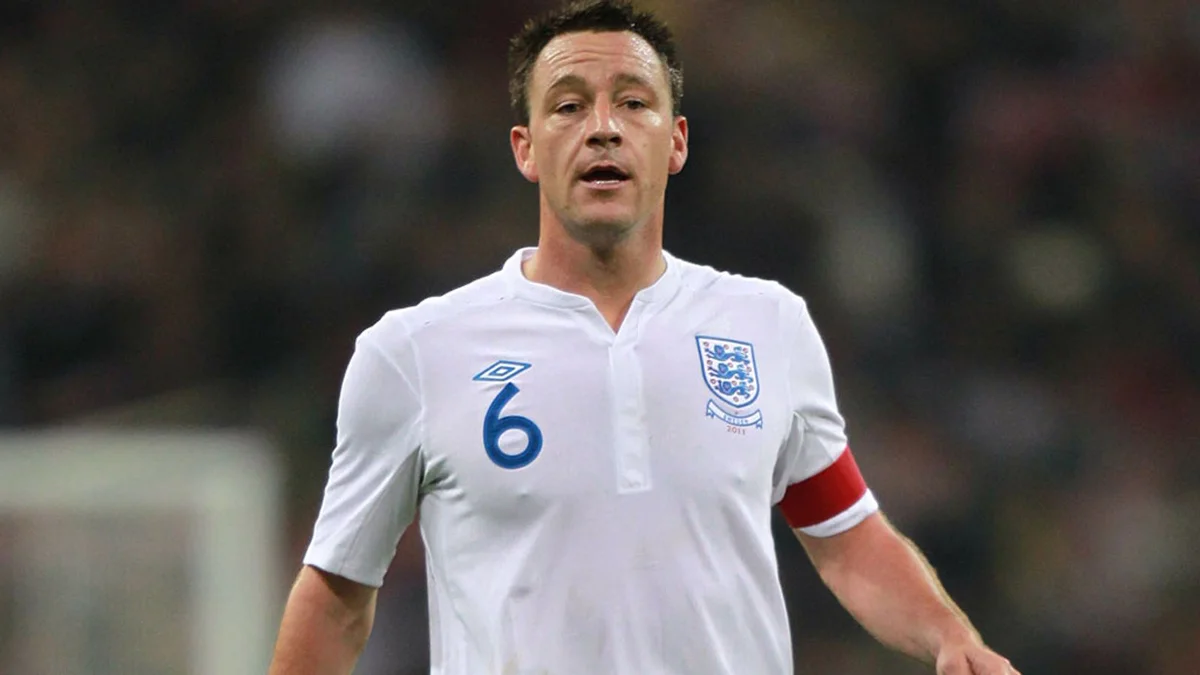
Terry made his Chelsea debut on 28 October 1998 as a late substitute in a League Cup tie against Aston Villa. His first start came later that season in an FA Cup third-round match, a 2-0 win over Oldham Athletic. He spent a brief period on loan at Nottingham Forest in 2000 to build first-team experience, then broke into the Chelsea side in the 2000-01 season. He captained Chelsea for the first time in December 2001, a few days before his 21st birthday.
In the summer of 2004, after Marcel Desailly retired, Jose Mourinho made Terry the permanent Chelsea captain. The decision shaped the next 13 years at the club. In the 2004-05 season, his first as permanent captain, Chelsea conceded only 15 league goals on the way to a first league title in 50 years. Terry was named the PFA Players Player of the Year at the end of that season.
Chelsea won the FA Cup again in 2009, with Terry as captain. Injuries limited his appearances in some of the seasons between the title wins, but he remained the first name on the team sheet when fit, and he stayed a regular through the seasons that followed, even as younger defenders arrived at the club.
Chelsea won the league again in 2005-06, then the FA Cup in 2007, when Terry became the first captain to lift the trophy at the new Wembley Stadium. In May 2008, Chelsea reached the Champions League final against Manchester United in Moscow. Terry stepped up to take the penalty that would have won the trophy, slipped as he struck the ball, and watched the shot hit the post. Manchester United won the shoot-out.
Chelsea won the Premier League and FA Cup Double in 2009-10. In 2012, Terry was sent off in the Champions League semi-final second leg against Barcelona and missed the final against Bayern Munich through suspension. Chelsea won the final on penalties, and Terry joined the trophy celebrations in full kit, an image that became one of the most mocked moments of his career. Terry later said that UEFA had instructed all players to wear full kit for the trophy presentation. In 2013, Terry missed the Europa League final through injury as Chelsea beat Benfica, and again celebrated in full kit.
The Champions League win of 2012 came at the end of a dramatic European run. Chelsea lost the first leg of the semi-final to Barcelona, and in the second leg at Camp Nou, Terry was sent off in the first half. Chelsea held on to reach the final, where Bayern Munich were the hosts. Chelsea won the final on penalties after a late equaliser from Didier Drogba, and Terry collected a winner medal despite missing the match through suspension.
In his final Chelsea season, 2016-17, Terry was a squad player under Antonio Conte, whose three-man defence did not suit his game as well as the back four he had played in for most of his career. He made limited appearances, stayed a leader in the dressing room, and lifted the Premier League trophy one last time as Chelsea won the title.
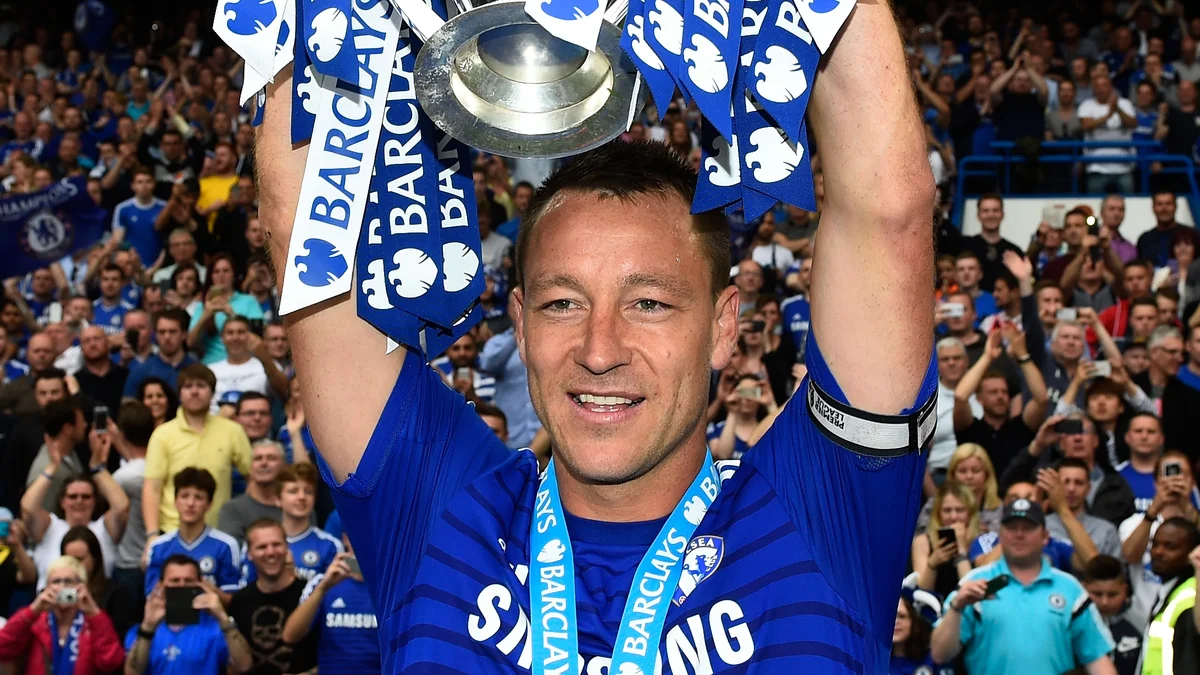
Terry won two more Premier League titles, in 2014-15 and 2016-17. His final Chelsea match came against Sunderland at Stamford Bridge in May 2017, when he was substituted in the 26th minute so that the crowd and his team-mates could pay tribute to him. He left Chelsea with 717 appearances and 67 goals, a figure bettered only by Ron Harris and Peter Bonetti in the history of the club.
Nottingham Forest (loan)
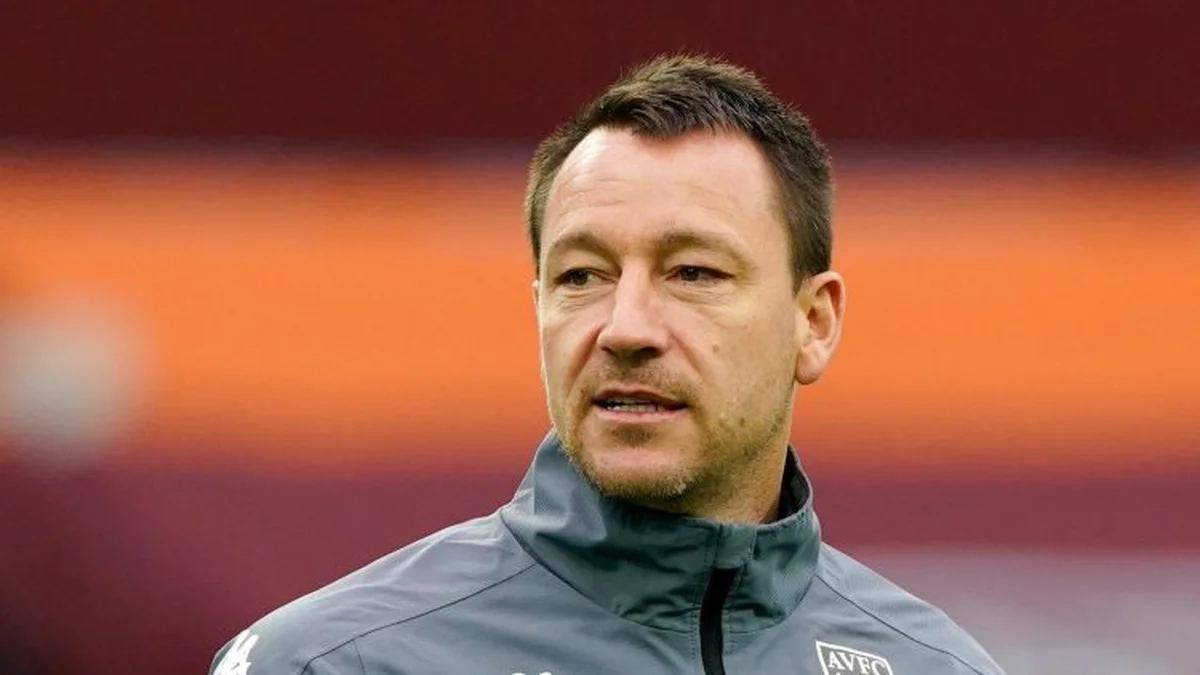
Terry spent a brief period on loan with Nottingham Forest in 2000 to build first-team experience. He made six league appearances for Forest and scored no goals, then returned to Chelsea.
Aston Villa
Terry joined Aston Villa in the summer of 2017 after leaving Chelsea. He captained Villa through the 2017-18 Championship season, made 36 appearances in all competitions, and scored one goal. Villa reached the Championship play-off final but lost 1-0 to Fulham. Terry left Villa in the summer of 2018, underwent a medical with Spartak Moscow, and then turned down the move for family reasons. On 7 October 2018, Terry announced his retirement from playing.
International Career
Terry made his England debut on 3 June 2003 as a substitute in a friendly against Serbia and Montenegro. His first start came on 20 August 2003 in a friendly against Croatia at Portman Road. He played at Euro 2004, where the England manager Sven-Goran Eriksson named him as the first-choice centre-back, and England lost the quarter-final to Portugal on penalties. He scored his first England goal on 30 May 2006 against Hungary in a World Cup warm-up match.
At the 2006 World Cup in Germany, Terry played in the opening win over Paraguay and cleared a goal-bound header off the line with an overhead kick against Trinidad and Tobago. England lost the quarter-final to Portugal on penalties, and Terry was the only English player named in the all-star squad for the tournament.
Terry took over as England captain in August 2006, after David Beckham stepped down following the 2006 World Cup. He held the captaincy for four years before the events of 2010.
He scored his first competitive England goal on 1 April 2009, a late winner against Ukraine in a World Cup qualifier. In February 2010, the England manager Fabio Capello stripped Terry of the captaincy after reports of an affair with the former partner of team-mate Wayne Bridge. Capello restored Terry as captain in March 2011.
At the 2010 World Cup in South Africa, Terry spoke to the media about dissatisfaction with team selection and training camp life after the draw with Algeria. Capello responded that Terry had made a very big mistake in challenging his authority. England lost 4-1 to Germany in the second round.
In February 2012, the Football Association stripped Terry of the England captaincy for a second time, ahead of his trial over allegations that he had used racist language towards Anton Ferdinand of Queens Park Rangers. Capello resigned as England manager in protest. Terry was named in the Euro 2012 squad and played 90 minutes in all four of the England matches at the tournament, as England lost the quarter-final to Italy on penalties.
In October 2011, during a match against Queens Park Rangers, Terry was accused of using racist language towards Anton Ferdinand. A criminal court acquitted Terry of the charge in July 2012. The Football Association then found Terry guilty of misconduct, banned him for four matches, and fined him 220,000 pounds. Terry did not appeal against the verdict. On 23 September 2012, Terry announced his retirement from international football, saying his position had become untenable. His last cap had come in a 5-0 World Cup qualifying win over Moldova earlier that month.
Managerial and Coaching Career
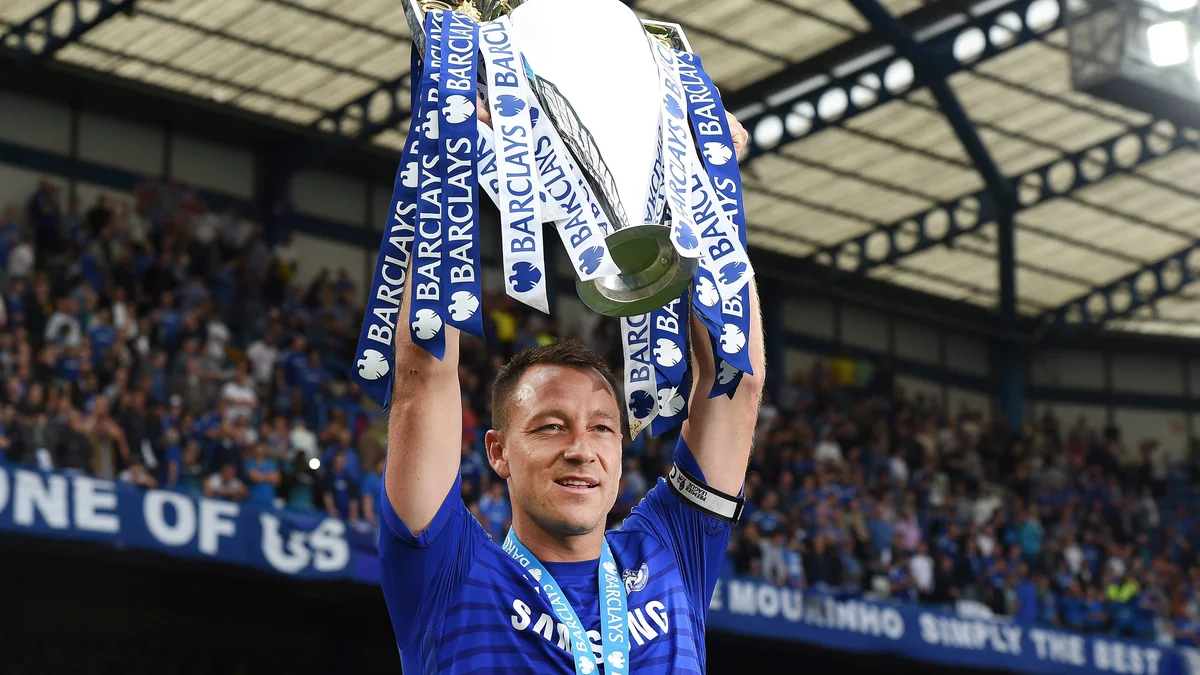
After retiring from playing, Terry returned to Aston Villa as assistant coach under Dean Smith in October 2018. Villa won the Championship play-off final in 2019 and returned to the Premier League. Terry left the role in July 2021. When Smith became manager of Leicester City in April 2023, Terry joined his coaching staff again. In July 2023, Terry returned to Chelsea as an academy coach.
Terry has not yet held a head coach or manager role. He has said that managing Chelsea remains his dream.
Playing Style
Terry was a commanding and physical centre-back, known for aggressive tackling, aerial strength, and sharp tactical intelligence. He read the game well, organised the defence around him, and led by example at the back. His heading ability made him a goal threat at set pieces, and his 67 goals for Chelsea remain a club record for a defender.
Terry also contributed goals from set pieces throughout his career. His heading ability from corners and free kicks made him a regular scorer for a defender, and several of his goals arrived at important moments, including late winners and equalisers in league and cup matches.
His main weakness was pace. Terry struggled against quicker forwards, and his reading of the game, positioning, and anticipation compensated for a lack of speed, above all in the later years of his career. His bravery, discipline in training, and consistency kept him at the top level for almost 20 years.
Stats
The tables below cover his club career by club and his England record by year.
| Club | League Apps | FA Cup Apps | League Cup Apps | Europe Apps | Other Apps | Total Apps | Goals |
|---|---|---|---|---|---|---|---|
| Chelsea | 492 | 58 | 37 | 123 | 7 | 717 | 67 |
| Nottingham Forest (loan) | 6 | 0 | 0 | 0 | 0 | 6 | 0 |
| Aston Villa | 32 | 1 | 0 | 0 | 3 | 36 | 1 |
| Total | 530 | 59 | 37 | 123 | 10 | 759 | 68 |
| Year | England Appearances | Goals |
|---|---|---|
| 2003 | 6 | 0 |
| 2004 | 9 | 0 |
| 2005 | 6 | 0 |
| 2006 | 14 | 2 |
| 2007 | 7 | 1 |
| 2008 | 6 | 2 |
| 2009 | 10 | 1 |
| 2010 | 7 | 0 |
| 2011 | 7 | 0 |
| 2012 | 6 | 0 |
| Total | 78 | 6 |
Records
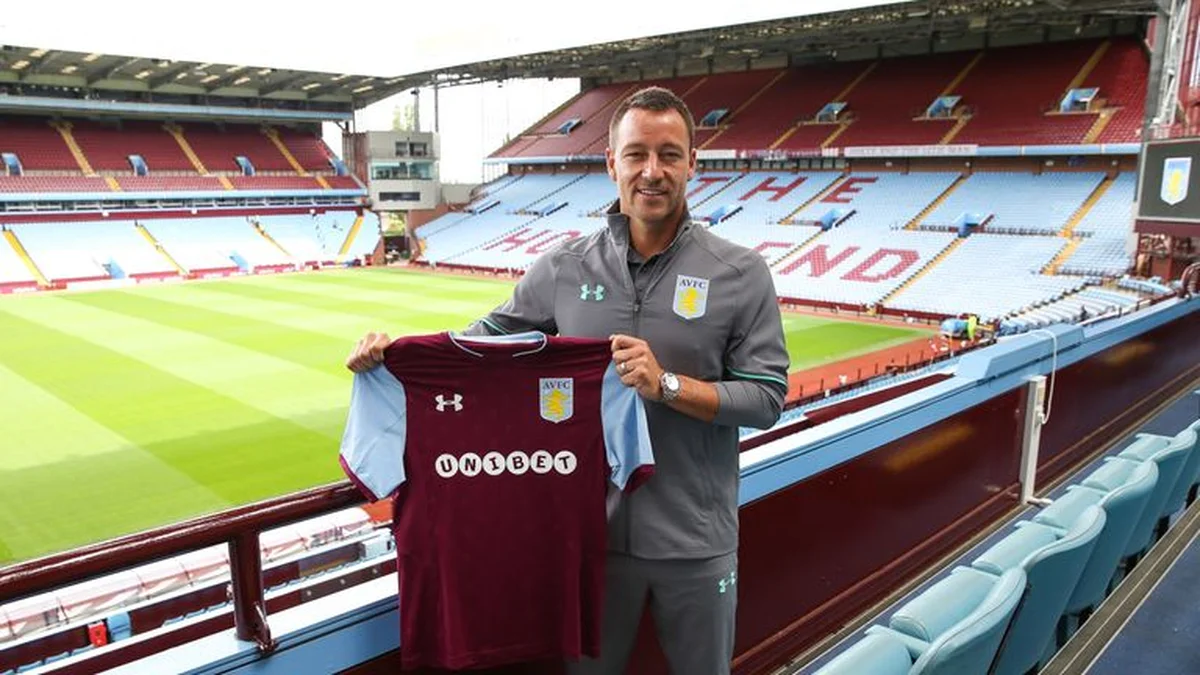
Terry was the first player to captain a team to the Premier League title on five occasions. He captained Chelsea on more than 500 occasions, a club record. He is the highest scoring defender in the history of Chelsea, with 67 goals, and his 717 appearances place him third in the all-time Chelsea list, behind Ron Harris and Peter Bonetti.
Terry was the first captain to lift the FA Cup at the new Wembley Stadium, in 2007, and the first player to score an international goal at the new Wembley, with a header in a 1-1 draw against Brazil in June 2007. His 41 Premier League goals are part of his total of 67 Chelsea goals.
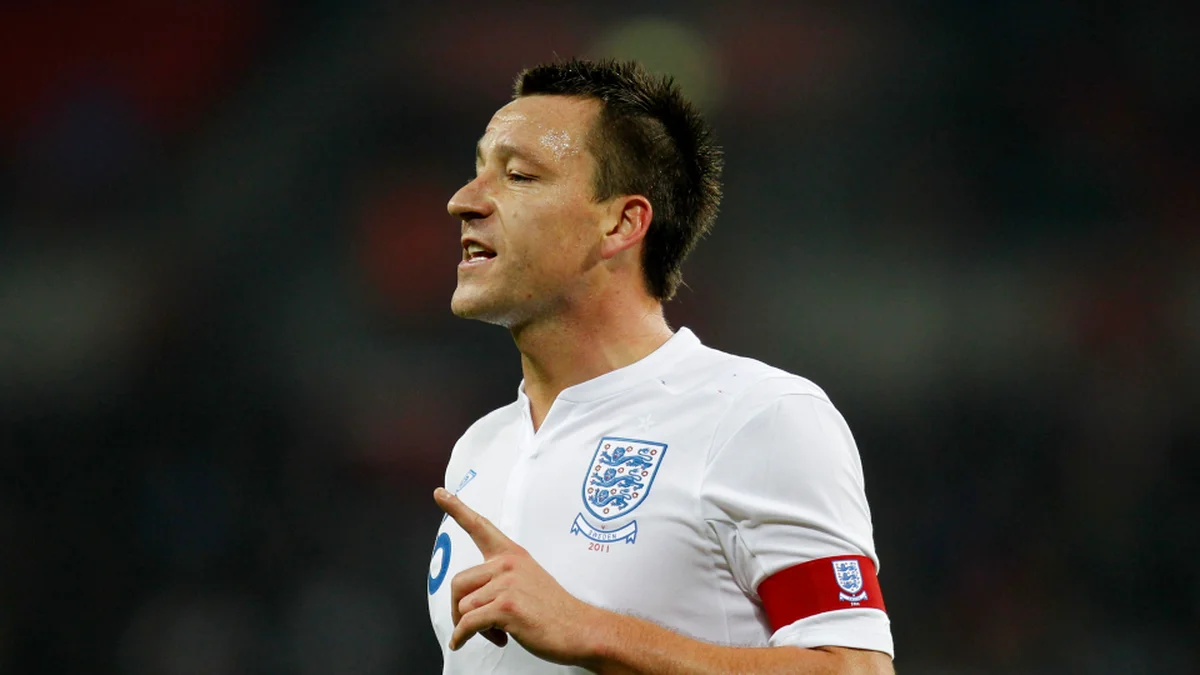
With England, Terry won 78 caps and captained the national team in two spells, from 2006 to 2010 and from 2011 to 2012. He played at four major tournaments: Euro 2004, the 2006 World Cup, the 2010 World Cup, and Euro 2012.
Terry is one of only six players to have made more than 500 appearances for Chelsea. He captained the club in the 2008 Champions League final against Manchester United in Moscow.
Awards and Honours
With Chelsea, Terry won the Premier League in 2004-05, 2005-06, 2009-10, 2014-15 and 2016-17, the FA Cup in 2000, 2007, 2009, 2010 and 2012, the League Cup in 2005, 2007 and 2015, the Champions League in 2011-12, and the Europa League in 2012-13. He was a Champions League runner-up in 2007-08 and a FIFA Club World Cup runner-up in 2012.
As an individual, Terry was named the PFA Players Player of the Year in 2005, the UEFA Club Defender of the Year in 2005, 2008 and 2009, and was named in the FIFPro World XI for five consecutive seasons, from 2005 to 2009. He was named in the all-star squad for the 2006 FIFA World Cup, the only English player in the team. In 2024, Terry was inducted into the Premier League Hall of Fame.
Net Worth
Published estimates place the net worth of Terry at around 40 million pounds to 50 million pounds. The figures come from celebrity wealth sites and newspaper reports rather than from verified financial records, and no figure has been confirmed by a reliable source. This article states no figure as fact, because no figure has been confirmed.
What is known is that Terry earned elite Premier League salaries for more than a decade at Chelsea, along with commercial income from his playing career. Since retiring, he has worked as a coach and has been involved in property development and business ventures.
Later Life and Legacy
After retiring from playing in 2018, Terry moved into coaching, working at Aston Villa, Leicester City, and Chelsea, where he returned as an academy coach in July 2023. He has spoken openly about his ambition to become a manager, with Chelsea the club he most wants to lead.
In 2026, Terry auctioned memorabilia from his playing career, including his Premier League medal from the 2004-05 season, with proceeds going to the John Terry Foundation, which supports British charities. In the same year, reports linked Terry with a consortium seeking to buy League Two club Colchester United.
His legacy rests on leadership, longevity, and trophies. He captained Chelsea through the most successful period in the history of the club, won every major honour available to an English club, and stayed at the top level for almost 20 years. For supporters who watched him play, and for the defenders who came after him, he remains the standard of English centre-back play.
Conclusion
John Terry rose from a schoolboy at Chelsea to the most decorated captain in the history of the club, and he did it with physical strength, positioning, and leadership that few defenders of his era could match. From five Premier League titles to the Champions League win of 2012, from a missed penalty in Moscow to a racism case that ended his England career, his life in football joined rare success with rare controversy. He led the club he joined as a boy through the most successful era in its history, and he did so as a captain who demanded the highest standards from himself and from every player around him. The records still stand, and the name of Terry remains a byword for captaincy in English football.
FAQs
How many appearances did John Terry make for Chelsea?
John Terry made 717 appearances for Chelsea between 1998 and 2017, and scored 67 goals. His 717 appearances place him third in the all-time Chelsea list, behind Ron Harris and Peter Bonetti. He also made six appearances on loan at Nottingham Forest and 36 appearances for Aston Villa.
How many Premier League titles did John Terry win?
John Terry won five Premier League titles with Chelsea, in 2004-05, 2005-06, 2009-10, 2014-15 and 2016-17. He was the first player to captain a team to the Premier League title on five occasions. He also won five FA Cups, three League Cups, the Champions League in 2012, and the Europa League in 2013.
Why did John Terry miss the 2012 Champions League final?
John Terry missed the 2012 Champions League final because he was sent off in the semi-final second leg against Barcelona and was suspended for the final against Bayern Munich. Chelsea won the final on penalties, and Terry joined the trophy celebrations in full kit. Terry later said that UEFA had instructed all players to wear full kit for the trophy presentation.
How many caps did John Terry win for England?
John Terry won 78 caps for England between 2003 and 2012, and scored six goals. He captained England in two spells, from 2006 to 2010 and from 2011 to 2012. He played at four major tournaments: Euro 2004, the 2006 World Cup, the 2010 World Cup, and Euro 2012.
Who is the wife of John Terry?
The wife of John Terry is Toni Poole, his childhood sweetheart. The couple had twins, Georgie John and Summer Rose, born on 18 May 2006, and married at Blenheim Palace on 15 June 2007.
What is John Terry doing now?
John Terry is a football coach. He worked as assistant coach at Aston Villa and Leicester City, and returned to Chelsea as an academy coach in July 2023. He has not yet held a head coach or manager role, and has said that managing Chelsea remains his dream.