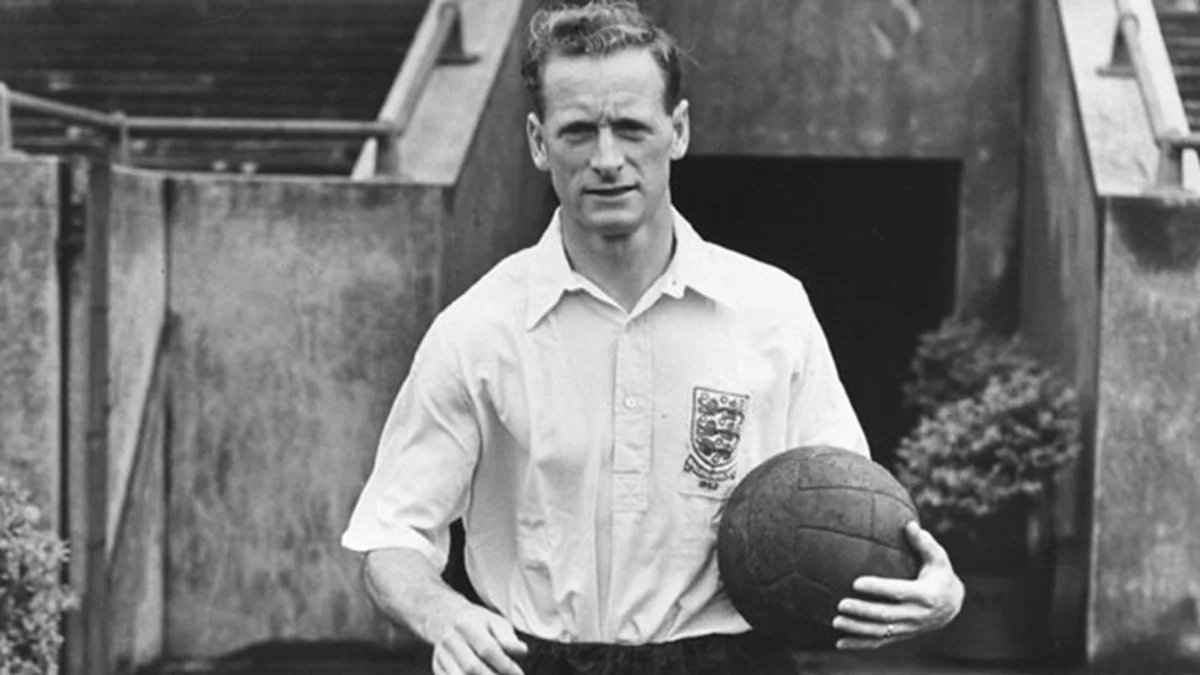
Tom Finney Biography: Age, Wife, Family, Career, Stats, Records and Net Worth
Tom Finney spent his entire English league career with one club, Preston North End, won 76 caps for England, and was never booked or sent off in his career. He played in three World Cups, scored 30 goals for England, and became the first player to win the Football Writers Association Footballer of the Year award twice. Bill Shankly described him as the greatest player he ever saw, and Stanley Matthews ranked him alongside Pele, Maradona, Best and Di Stefano as one of the few players who could dictate the pace and course of a game on a regular basis.
This Tom Finney biography covers his age, wife, family, career, stats, records and net worth, from a frail schoolboy in Preston who trained as a plumber to a one-club legend, a knighthood, and a statue outside Deepdale.
Quick Facts
| Detail | Fact |
|---|---|
| Full name | Sir Thomas Finney |
| Date of birth | 5 April 1922 |
| Place of birth | Preston, Lancashire, England |
| Date of death | 14 February 2014, aged 91 |
| Place of death | Preston, England |
| Position | Outside left, outside right, centre-forward |
| Clubs | Preston North End |
| England | 76 caps, 30 goals |
| Honours | OBE, CBE, Knight Bachelor |
Early Life and Education
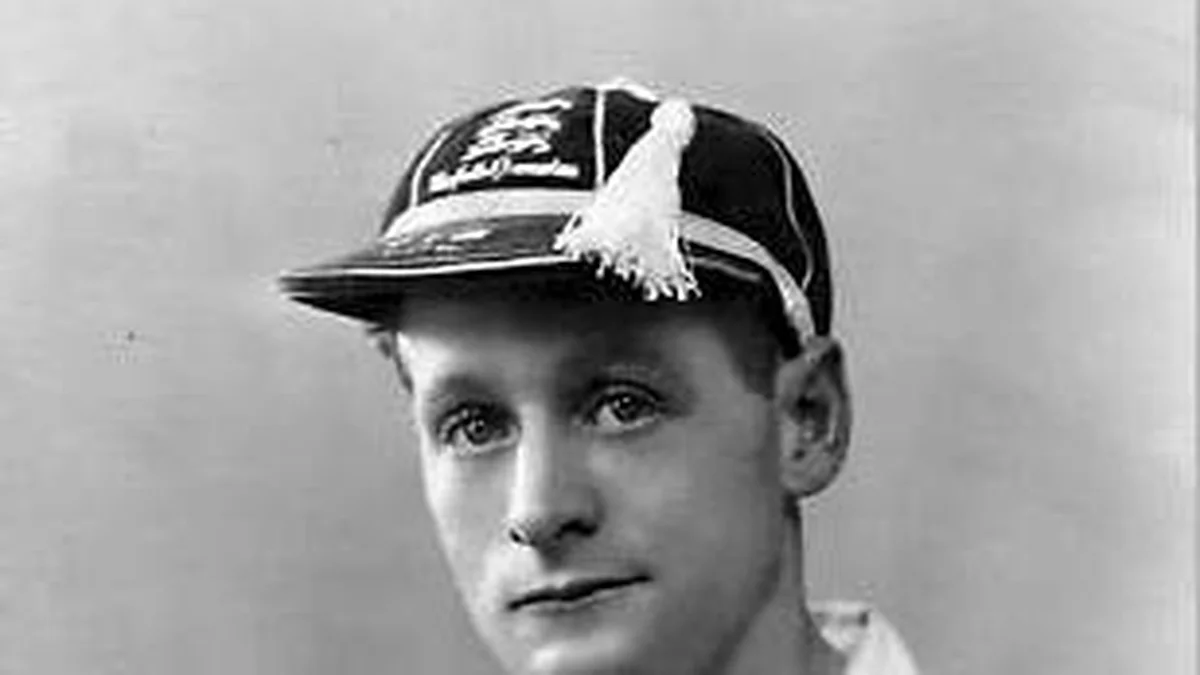
Tom Finney was born on 5 April 1922 at his parents home on St Michaels Road in Preston, a short walk from Deepdale, the home of Preston North End. His parents were Alf Finney and Maggie Finney. His mother died in 1927 at the age of 32, when Tom was only four years old. His father kept the family together with the help of relatives and neighbours.
Finney was a frail and sickly youth who stood only 4 ft 9 in when he left school in 1936 at the age of 14. His ambition was always to become a professional footballer, but his father insisted that he learn a trade first so that he would have something to fall back on when his football life ended. Finney therefore trained as a plumber and completed an apprenticeship in the family plumbing business before he signed as a professional. The trade stayed with him for life and gave him his famous nickname, the Preston Plumber.
Finney signed for Preston North End as a teenager, but he had yet to make a first-team appearance when the Second World War brought football to a halt. He served in the Royal Armoured Corps and drove tanks in the Eighth Army campaign in North Africa under General Montgomery. During the war he played wartime football for Preston and guested for other clubs, including an appearance in the 1941 wartime cup final, which Preston won after a replay against Arsenal. He was 24 years old by the time competitive football resumed and he could make his official debut.
Family
Finney married Elsie Noblett in 1945. The couple had two children together: a son, Brian, born in 1947, and a daughter, Barbara, born in 1950. The marriage lasted nearly six decades, until the death of Elsie in 2004.
In her later years Elsie suffered from Alzheimers disease, and Finney became her full-time carer. He supported the work of the Alzheimers Society and devoted much of his later life to charity and hospital work in Preston. He remained in Preston for his whole life, close to the ground where he made his name.
Club Career
Preston North End
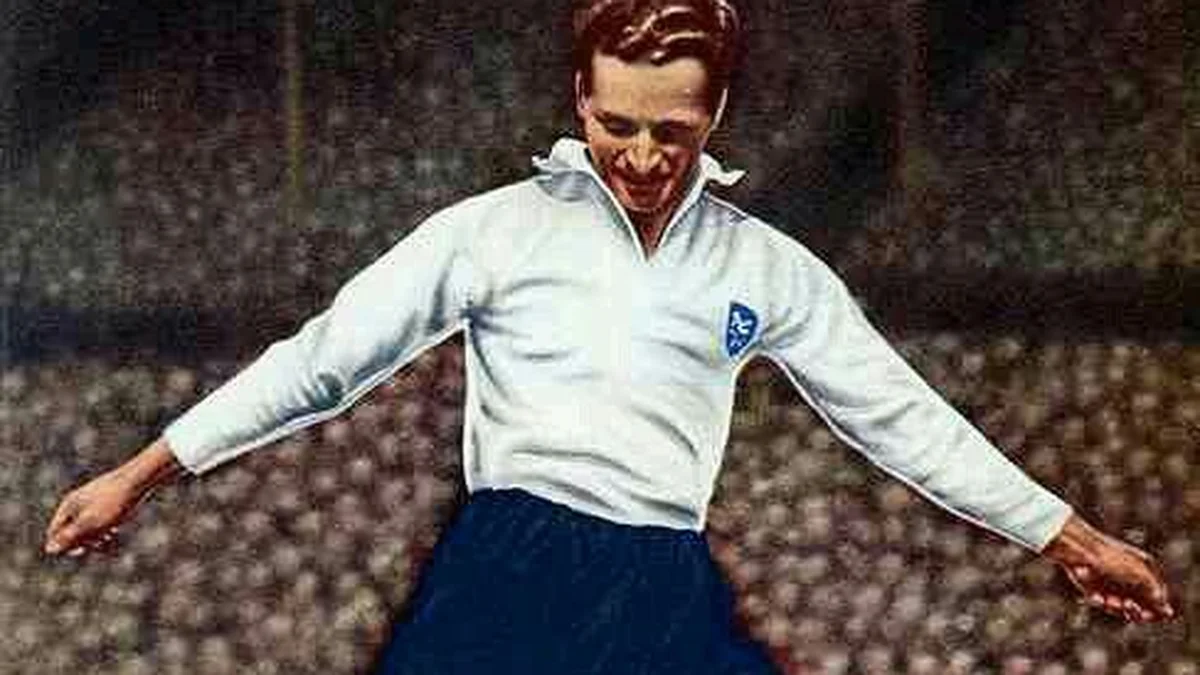
Finney made his official debut for Preston North End on 31 August 1946 against Leeds United at Deepdale, and he marked the occasion by scoring in a 3-2 win. A month later he made his England debut. He went on to spend 14 seasons in the Preston first team, from 1946 to 1960, making 473 appearances in all competitions and scoring 210 goals. His league record was 433 appearances and 187 goals, and he added 40 FA Cup appearances and 23 FA Cup goals.
Preston were relegated from the First Division in 1949, in his third season at the club, but they won the Second Division title in 1951 and returned to the top flight. The club finished as runners-up in the First Division in 1953 and again in 1958. Preston were often described as a one-man team during the Finney era, and the season after his retirement the club were relegated from the First Division and have not returned to the top flight since.
Finney turned down a famous offer from the Italian club Palermo in 1952. The offer included a signing fee of 10,000 pounds, a villa and a car, a fortune in the era of the maximum wage. Finney stayed loyal to Preston and never played league football for another English club. His loyalty cost him medals: the only championship medal he collected as a player was for the 1951 Second Division title, alongside the wartime cup medal from 1941, which is not counted as a full football honour.
Finney carried the Preston attack for most of his career. In the 1952-53 season he scored 17 league goals as Preston finished as runners-up in the First Division, and in the 1955-56 season he scored 17 league goals again. His goals came from the wing and from centre-forward alike, and his passing mattered as much as his goals. Team-mates knew that a run into space would bring a pass, and defenders knew that stopping Finney meant stopping Preston.
The 1954 FA Cup final
The closest Finney came to a major trophy was the 1954 FA Cup final, when Preston lost 3-2 to West Bromwich Albion at Wembley. Finney was not fully fit for the final, and the defeat left him without the one medal that his talent deserved. It was his only FA Cup final appearance. Preston had reached the final after a strong cup run, but West Bromwich Albion took the trophy, and Finney never played in another final.
Final seasons
Finney played some of his best football in the later years of his career. In 1956 he moved from the wing to a deep-lying centre-forward role, where his balance, passing and ability to glide past players made him the pivot of the Preston attack. He won the Footballer of the Year award for a second time in 1957, becoming the first player to win the award twice. In the 1956-57 season he scored 28 goals in 40 appearances in all competitions, and in the 1957-58 season he scored 26 goals in 35 appearances.
The 1958-59 season was badly hit by injury. A persistent groin injury limited him to 16 league appearances and six goals. He recovered for one final season in 1959-60, playing 43 games and scoring 21 goals at the age of 38. His last appearance for Preston came on 30 April 1960 against Luton Town at Deepdale. He retired from competitive football at the end of that season because the groin injury would not clear.
Brief comebacks
After leaving Preston, Finney kept playing football in charity and benefit matches. In 1962 he played briefly for Toronto City in the Eastern Canada Professional Soccer League. In 1963 he came out of retirement to play for the Northern Irish club Distillery against Benfica in the European Cup, a tie that ended 3-3. Neither spell counted toward his Preston totals.
International Career
Finney made his England debut on 28 September 1946 against Northern Ireland at Windsor Park in Belfast, scoring in a 7-2 win at the age of 24. Two days later he scored again, netting the only goal in a 1-0 win over the Republic of Ireland in Dublin. He went on to win 76 caps and score 30 goals for England between 1946 and 1958. At the time, his 30 goals made him the leading scorer in the history of the England team.
Finney scored four goals in a single game for England on 14 May 1950, as England beat Portugal 5-3 in Lisbon. He later regarded it as one of his finest performances in an England shirt. He also scored in the 10-0 win over Portugal in Lisbon in May 1947, and he scored twice as England beat the world champions Italy 4-0 in Turin in May 1948.
Finney played at three World Cups. At the 1950 World Cup in Brazil he played in all three group games, as England beat Chile and then lost to the United States and Spain. At the 1954 World Cup in Switzerland he again played in all three games, scoring in the 4-2 quarter-final defeat to Uruguay. At the 1958 World Cup in Sweden he played only in the first match, scoring a late penalty equaliser in a 2-2 draw with the Soviet Union, before a knee injury kept him out of the remaining group games.
Finney missed the famous 6-3 defeat to Hungary at Wembley in November 1953, but he played in the return match in Budapest in May 1954, when Hungary won 7-1, still the worst defeat in the history of the England team. His 30th and final goal for England came on 4 October 1958 against Northern Ireland. His 76th and final cap came on 22 October 1958 against the Soviet Union at Wembley, a 5-0 win, at the age of 36 years and 200 days. He started all 76 of his England games and was never used as a substitute.
Playing Style
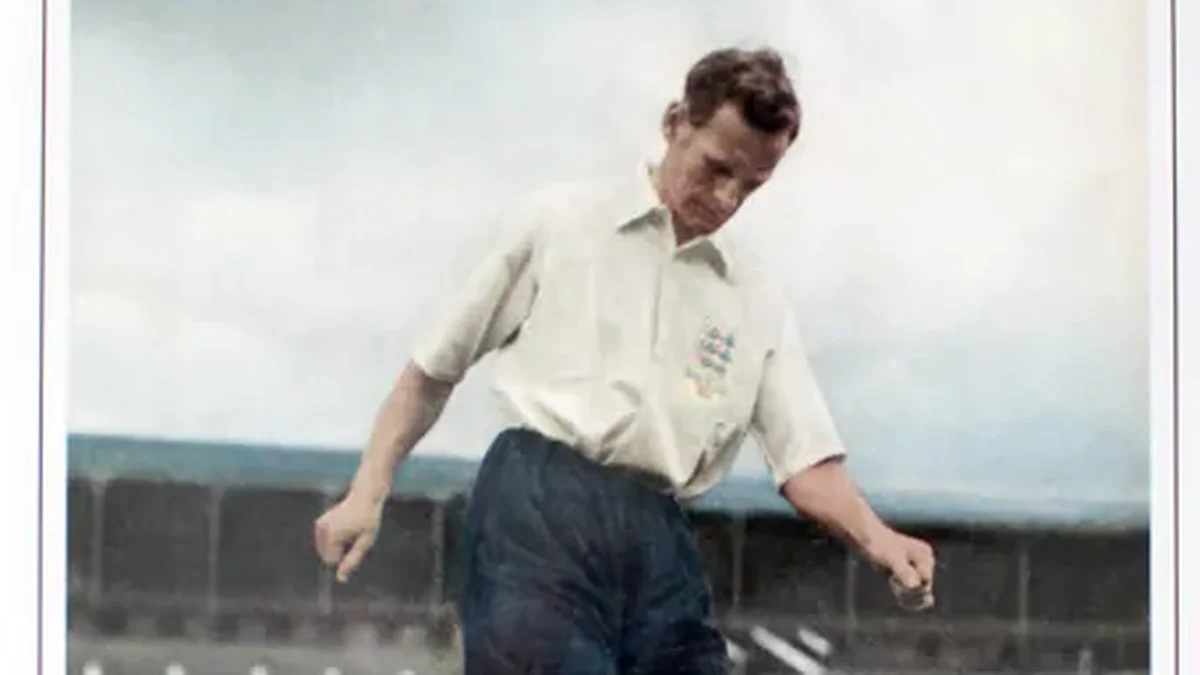
Finney was a versatile attacker who could play in any forward position: on the right wing, on the left wing, or at centre-forward. He was naturally left-footed, but he practised with his right foot until he could shoot with power off either foot. He had speed, balance, close control and an explosive shot, and despite his lack of height he was a strong header of the ball.
What set Finney apart was his directness and his team play. He beat defenders with dribbling and change of pace, but he passed as soon as a team-mate stood in a better position, and he never beat a man twice when once was enough. He created as many goals as he scored, and his crossing gave Preston a constant threat from either flank. For England, he played 42 games at outside right, scoring 13 goals, 31 games at outside left, scoring 16 goals, and three games at centre-forward, scoring once.
Finney worked hard to become two-footed. He was naturally left-footed, and he trained his right foot until he could pass and shoot with power off either side. The work paid off in matches, where defenders could not force him onto a weaker foot. He was also a strong header of the ball despite his lack of height, and he scored goals with his head as well as with his feet.
Finney was also a model of sportsmanship. He was never booked or sent off in his career, and he was known on and off the field as a gentleman. He took the hard tackles that defenders aimed at him in an era when defenders did not hold back, and he never retaliated. His discipline, combined with his skill, made him one of the most respected players of his generation.
Stats
The tables below cover his club career by season, his England record by competition, and his record at World Cup finals.
| Season | League Apps | League Goals | FA Cup Apps | FA Cup Goals | Total Apps | Total Goals |
|---|---|---|---|---|---|---|
| 1946-47 | 32 | 7 | 3 | 2 | 35 | 9 |
| 1947-48 | 33 | 13 | 4 | 1 | 37 | 14 |
| 1948-49 | 24 | 7 | 2 | 2 | 26 | 9 |
| 1949-50 | 37 | 10 | 1 | 1 | 38 | 11 |
| 1950-51 | 34 | 13 | 2 | 0 | 36 | 13 |
| 1951-52 | 33 | 13 | 0 | 0 | 33 | 13 |
| 1952-53 | 34 | 17 | 3 | 2 | 37 | 19 |
| 1953-54 | 23 | 11 | 8 | 3 | 31 | 14 |
| 1954-55 | 30 | 7 | 3 | 2 | 33 | 9 |
| 1955-56 | 32 | 17 | 1 | 1 | 33 | 18 |
| 1956-57 | 34 | 23 | 6 | 5 | 40 | 28 |
| 1957-58 | 34 | 26 | 1 | 0 | 35 | 26 |
| 1958-59 | 16 | 6 | 0 | 0 | 16 | 6 |
| 1959-60 | 37 | 17 | 6 | 4 | 43 | 21 |
| Total | 433 | 187 | 40 | 23 | 473 | 210 |
| Competition | Appearances | Goals |
|---|---|---|
| Friendly | 36 | 18 |
| World Cup Qualifier | 9 | 0 |
| World Cup Finals | 7 | 2 |
| British Home Championship | 24 | 10 |
| Total | 76 | 30 |
| Tournament | Appearances | Goals |
|---|---|---|
| World Cup 1950 | 3 | 0 |
| World Cup 1954 | 3 | 1 |
| World Cup 1958 | 1 | 1 |
| Total | 7 | 2 |
Records
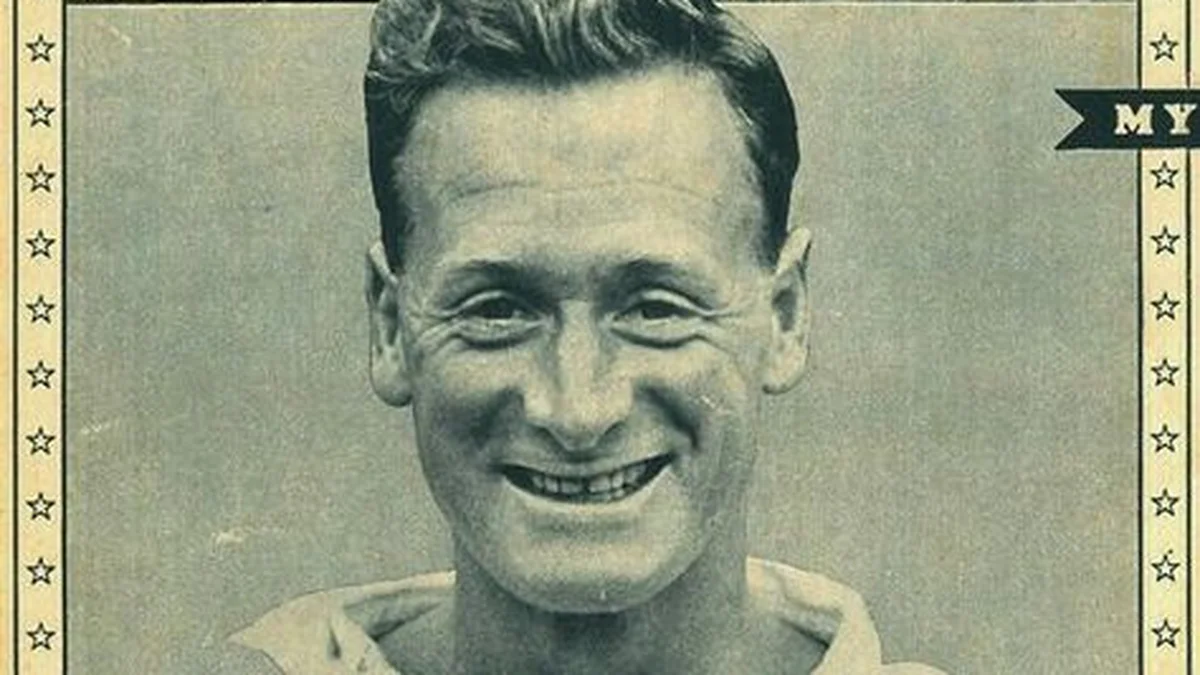
Finney holds a place in English football history as the first player to win the Footballer of the Year award twice, in 1954 and 1957. His 30 goals for England made him the leading scorer in the history of the national team at the time he retired from international football. He was also one of the first players to reach 76 caps for England, in an era when international matches were far less frequent than they are today.
His club record stands as one of the great one-club careers in English football: 473 appearances and 210 goals for Preston North End, all in 14 seasons, after a war that cost him six years of his career. He remains the only Preston player to score 200 goals for the club, and his name is on the main stand at Deepdale.
Awards and Honours
With Preston North End, Finney won the Second Division title in 1951 and finished as a First Division runner-up in 1953 and 1958. He was an FA Cup runner-up in 1954. With England, he played in three World Cups and helped the team win multiple British Home Championship titles across the 1940s and 1950s.
As an individual, he won the Football Writers Association Footballer of the Year award in 1954 and 1957. He was appointed an Officer of the Order of the British Empire (OBE) in the 1961 Birthday Honours, a Commander of the Order of the British Empire (CBE) in the 1992 New Year Honours, and he was knighted in the 1998 New Year Honours for services to football and charity. He entered the English Football Hall of Fame in 2002 as an inaugural inductee.
Net Worth
No reliable figure exists for the net worth of Finney at the time of his death. Published estimates come from low-quality celebrity wealth sites rather than from verified financial records, and they vary widely. This article states no figure as fact, because no figure has been confirmed by a reliable source.
What is known is that Finney earned far less from football than modern players earn. He played in the era of the maximum wage, and his main income after football came from the plumbing business that he ran from the 1940s until the 1990s. His lifestyle remained modest, in keeping with a man known more for humility than for extravagance.
Later Life and Legacy
After retiring from football, Finney continued to run his plumbing business in Preston and worked for local charities and hospitals. He served as president of Preston North End and as president of the non-league club Kendal Town. He remained a familiar figure around Deepdale and in the town where he had lived his whole life.
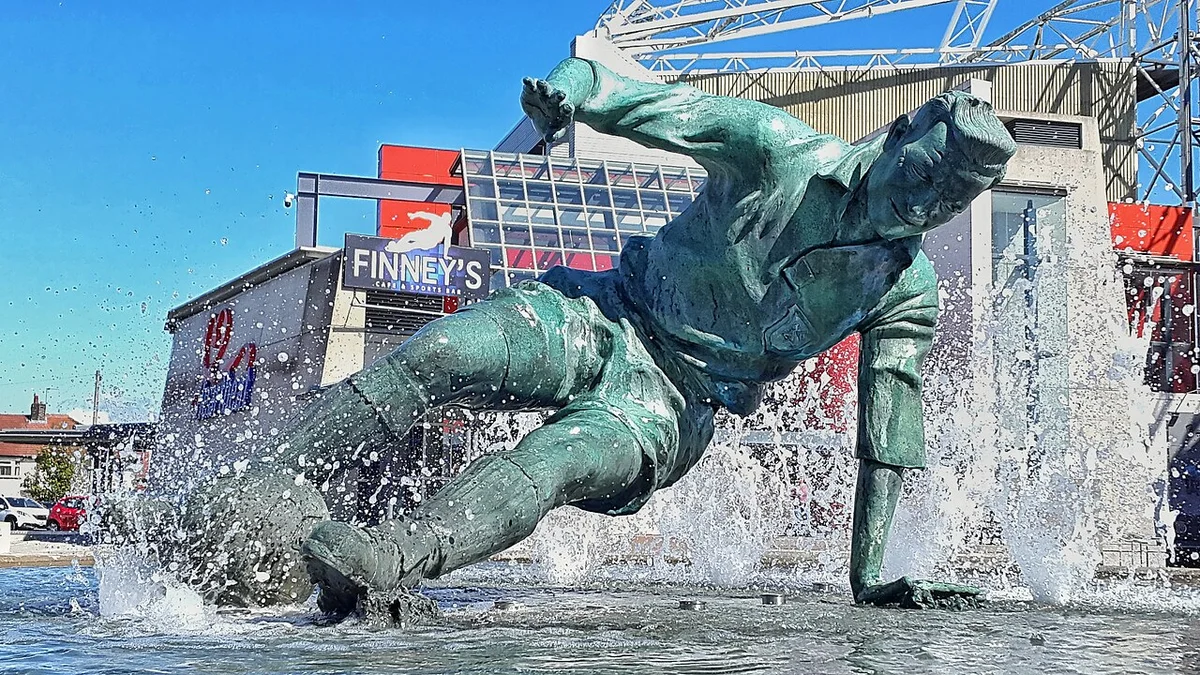
The honours of his later life reflected his standing in the game. The main stand at Deepdale was rebuilt in the mid-1990s as the Sir Tom Finney Stand, with his face replicated in the seats. On 31 July 2004 Finney himself unveiled The Splash, a water feature sculpture by Peter Hodgkinson outside Deepdale, inspired by a famous 1956 photograph of Finney beating two Chelsea defenders at a waterlogged Stamford Bridge.
Finney died in Preston on 14 February 2014, aged 91. His funeral took place on 27 February at Preston Minster, with the cortege starting at Deepdale and thousands of people lining the streets to pay their respects. Tributes came from across football, including from former team-mates, opponents and managers who had watched him play.
His legacy rests on loyalty, versatility and sportsmanship. He stayed with one club through relegation and promotion, played in every forward position for club and country, and was never booked in a career of more than 470 games. For supporters who saw him play, and for the generations who know him only through The Splash, he remains the standard of the one-club footballer and the gentleman of English football.
Conclusion
Tom Finney rose from a frail schoolboy who trained as a plumber to one of the greatest players in the history of English football, and he did it without ever leaving Preston. From a debut goal against Leeds in 1946 to 30 goals for England, from the 1954 FA Cup final to a knighthood, his life joined rare skill with rare character. The records of 473 appearances, 210 goals and a career without a single booking still stand, and the name of Finney remains a byword for the way football should be played.
FAQs
How old was Tom Finney when he died?
Tom Finney was born on 5 April 1922 and died on 14 February 2014, aged 91.
Why was Tom Finney called the Preston Plumber?
Tom Finney was called the Preston Plumber because his father insisted that he complete an apprenticeship in plumbing before signing as a professional footballer. Finney trained as a plumber, worked in the family plumbing business, and continued to run his own plumbing business from the 1940s until the 1990s, alongside and after his football career.
How many goals did Tom Finney score for England?
Tom Finney scored 30 goals in 76 appearances for England between 1946 and 1958. At the time, his 30 goals made him the leading scorer in the history of the England team. He played at three World Cups, in 1950, 1954 and 1958, scoring two goals at World Cup finals.
Did Tom Finney ever win a major trophy?
Tom Finney never won a major trophy. His closest chance came in the 1954 FA Cup final, when Preston lost 3-2 to West Bromwich Albion. His only medals as a player were for the 1941 wartime cup, which is not counted as a full football honour, and the 1951 Second Division title with Preston.
Was Tom Finney ever booked?
Tom Finney was never booked or sent off in his career. His record of sportsmanship remains one of the most remarkable facts of his career, across more than 470 club appearances and 76 England caps.
Who was the wife of Tom Finney?
The wife of Tom Finney was Elsie Noblett. The couple married in 1945 and had two children: a son, Brian, born in 1947, and a daughter, Barbara, born in 1950. Elsie died in 2004 after suffering from Alzheimers disease, and Finney had been her full-time carer.