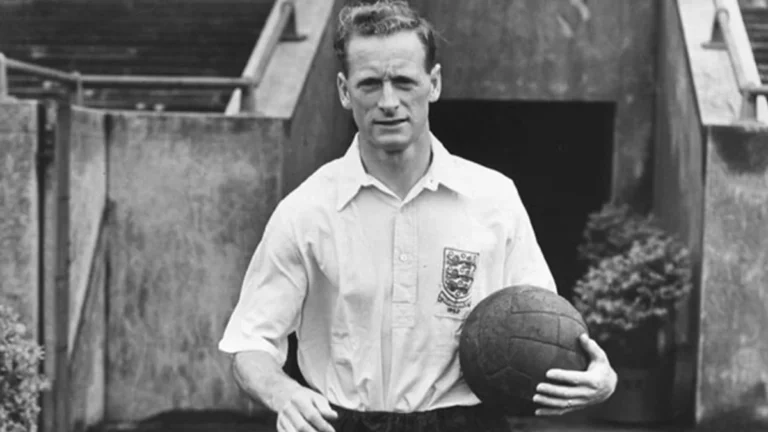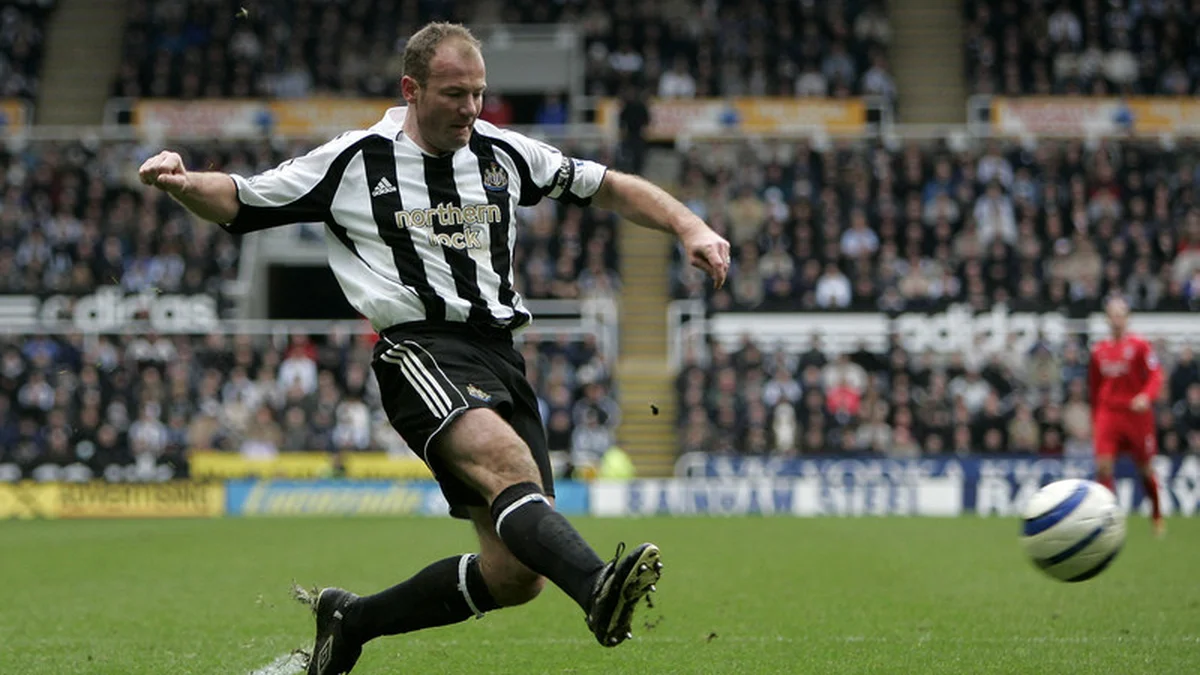
Alan Shearer Biography: Age, Wife, Family, Career, Stats, Records and Net Worth
Alan Shearer is the all-time top scorer in Premier League history with 260 goals, and he built that record across 14 seasons with Blackburn Rovers and Newcastle United. No player has passed the mark since he retired in 2006, and the gap to the next scorer still measures more than 50 goals. Shearer won the Premier League title with Blackburn, captained England at two major tournaments, and finished as the top scorer at Euro 96.
This Alan Shearer biography covers his age, wife, family, career, stats, records and net worth, from a hat-trick on his full debut as a 17-year-old at Southampton to a world-record transfer home to Newcastle and a second career as a BBC pundit.
Quick Facts
| Detail | Fact |
|---|---|
| Full name | Alan Shearer |
| Date of birth | 13 August 1970 |
| Place of birth | Gosforth, Newcastle upon Tyne, England |
| Age | 56 (turned 56 on 13 August 2026) |
| Height | 1.83 m (6 ft 0 in) |
| Position | Striker |
| Clubs | Southampton, Blackburn Rovers, Newcastle United |
| England | 63 caps, 30 goals |
| Premier League goals | 260 (all-time record) |
| Managerial role | Newcastle United interim manager, 2009 |
| Current role | BBC Match of the Day pundit |
| Honours | OBE 2001, CBE 2016 |
Early Life and Education
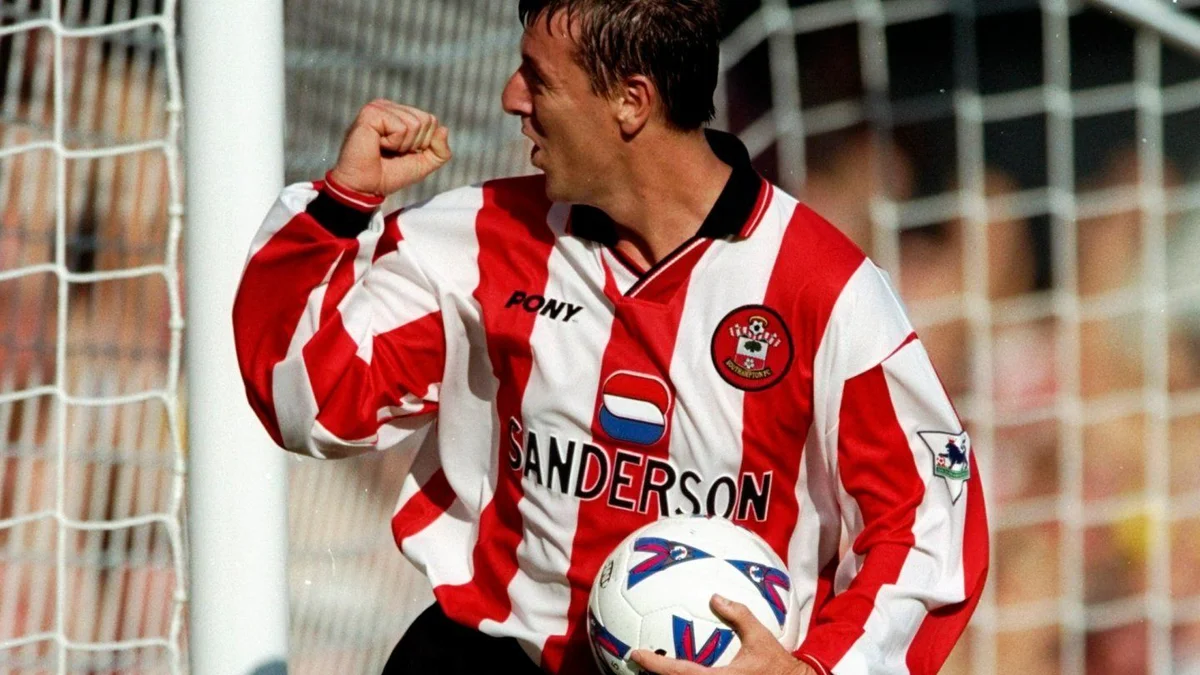
Alan Shearer was born on 13 August 1970 in Gosforth, a suburb of Newcastle upon Tyne. His father Alan worked as a sheet metal worker, and his mother Anne worked for the local council. He grew up in a working-class household and supported Newcastle United from the terraces as a boy.
Shearer attended Grange First School, Gosforth Central School and Gosforth High School. He started his football journey at Wallsend Boys Club, a nursery club famous for producing professional players. As a schoolboy, he had a trial at Newcastle United, and he played much of the session in goal rather than in attack. Newcastle did not sign him, and Southampton took him on instead.
Shearer later said that he left home at 15 to go to Southampton to become a professional footballer. The move south shaped his career, because Southampton gave him a first-team chance while he was still a teenager.
Family
Shearer met his wife Lainya Arnold while he was a Southampton player. The couple married on 8 June 1991 at St James Church in Southampton. They have three children together: Chloe, Hollie and Will.
Shearer has described his wife as a quiet and reserved person who is uncomfortable with the public attention that his fame sometimes brings. He cited not wanting to uproot his family as a key reason for remaining in England during his career, even when clubs abroad showed interest. After his testimonial match in May 2006, his family accompanied him onto the pitch at St James Park as he performed a lap of honour.
Club Career
Southampton
Shearer made his full debut for Southampton on 9 April 1988 against Arsenal, and he announced himself with a hat-trick in a 4-2 win. He was 17 years and 240 days old. The performance marked him out as a striking talent, but his progress was gradual. In the 1988-89 season he made 10 league appearances without scoring, and he became a regular only in the 1991-92 season, when he scored 13 league goals.
Across four seasons in the Southampton first team, Shearer made 158 appearances in all competitions and scored 43 goals. His league record for the club was 118 appearances and 23 goals. Southampton reached the Full Members Cup final in the 1991-92 season and finished as runners-up. By then, the biggest clubs in England were watching the young striker.
Blackburn Rovers
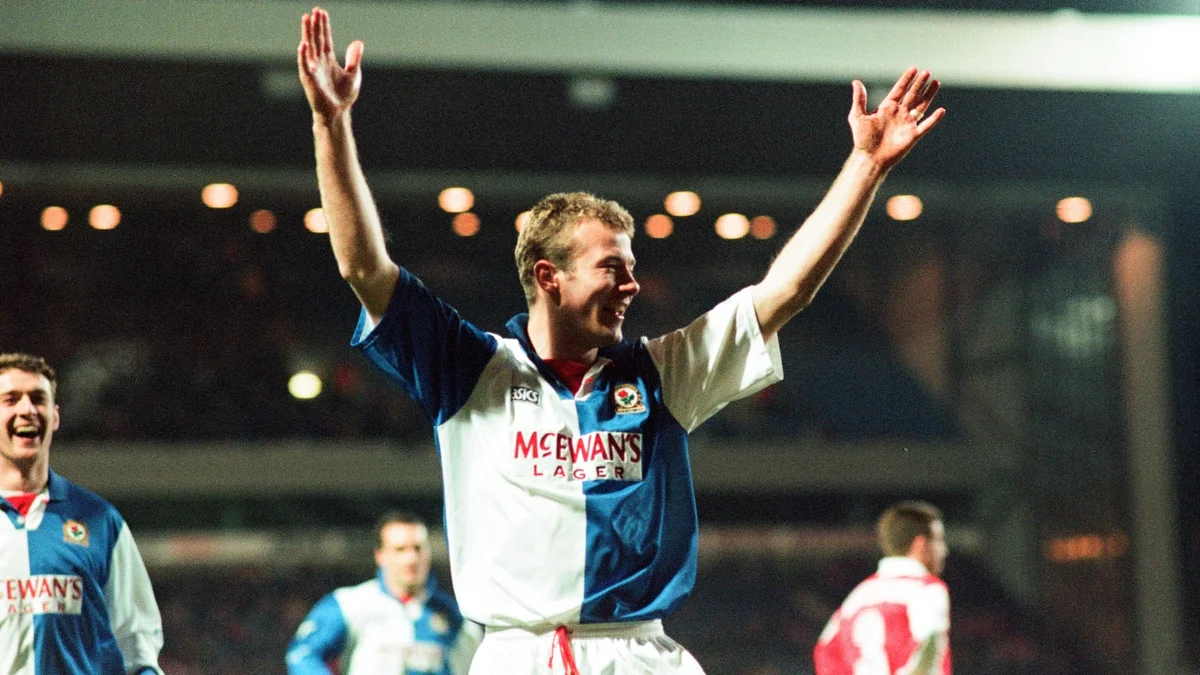
Blackburn Rovers signed Shearer in July 1992 for a British record fee of 3.6 million pounds. Manchester United had also shown interest, but the backing of Blackburn benefactor Jack Walker carried the deal through. Shearer started in style, scoring twice against Crystal Palace on the opening weekend of the first Premier League season on 15 August 1992.
His first Blackburn season ended early. On Boxing Day 1992, against Leeds United, Shearer scored twice and then ruptured the anterior cruciate ligament in his right knee. He missed the rest of the season. Even so, he finished with 22 goals in 26 appearances in all competitions.
Shearer returned to fitness for the 1993-94 season and scored 31 goals in 40 league games as Blackburn finished as Premier League runners-up. His form earned him the Football Writers Association Footballer of the Year award for that season.
The 1994-95 season was the peak of his Blackburn career. Shearer scored 34 league goals as Blackburn won the Premier League title by a single point ahead of Manchester United. His strike partnership with Chris Sutton became known as the SAS, and the pair scored 49 league goals between them in the title season. Shearer won the first of three consecutive Premier League Golden Boots.
In the 1995-96 season he scored 31 league goals and won a second consecutive Golden Boot. Across four seasons at Blackburn, Shearer made 171 appearances in all competitions and scored 130 goals. His league record for the club was 138 appearances and 112 goals.
Newcastle United
In the summer of 1996, Shearer joined his hometown club Newcastle United for a world-record fee of 15 million pounds. Manchester United were among his suitors, but he chose Newcastle. In his first season he scored 25 league goals, won a third consecutive Premier League Golden Boot, and was named PFA Player of the Year.
The 1997-98 season brought a serious setback. An ankle injury suffered in pre-season against Everton kept him out for months and restricted him to 17 league appearances and 2 league goals. Newcastle still reached the FA Cup final in 1998, where they finished as runners-up. They reached the FA Cup final again in 1999, with Shearer as captain, and finished as runners-up once more.
Shearer kept scoring through the following seasons. On 20 April 2002, his goal against Charlton Athletic made him the first player to reach 200 Premier League goals. He passed the 200-goal mark for Newcastle with his 201st goal for the club against Portsmouth on 4 February 2006, breaking the long-standing record of Jackie Milburn and becoming the all-time top scorer for Newcastle United.
His playing career ended in a derby match. On 17 April 2006, in a 4-1 win at Sunderland, Shearer scored his 206th and final goal for Newcastle and then suffered a tear to the medial collateral ligament in his left knee. The injury ruled him out of the final three games of the season and brought his retirement forward. In May 2006 he played a testimonial match against Celtic and took a lap of honour with his family.
Across ten seasons at Newcastle, Shearer made 405 appearances in all competitions and scored 206 goals. His league record for the club was 303 appearances and 148 goals. He retired at the end of the 2005-06 season as the Premier League record scorer, with 260 goals.
International Career
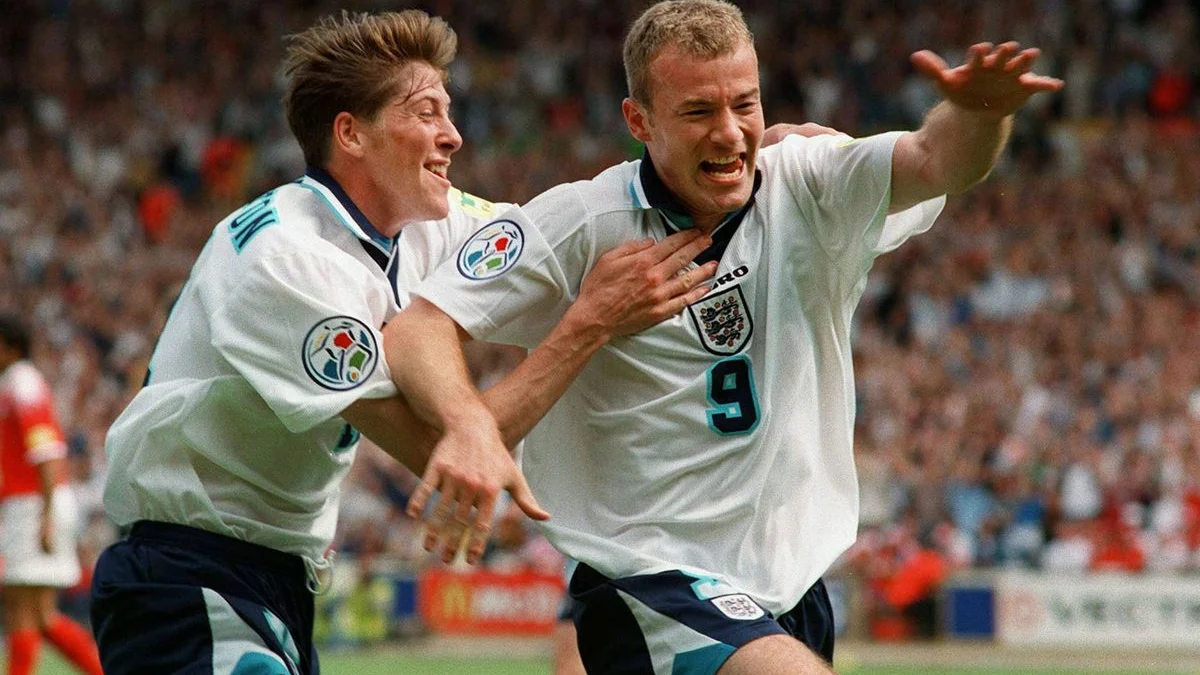
Shearer made his England debut on 19 February 1992 against France, and he scored in a 2-0 win. He played once at Euro 92, in a goalless draw against France. England failed to qualify for the 1994 World Cup, and his early international career was interrupted by injury.
Euro 96, played on home soil, became his finest international tournament. Shearer entered the tournament without a goal in 12 England games across 21 months. He then scored in the opening match against Switzerland, scored against Scotland, scored twice in a 4-1 win over the Netherlands, and headed England into the lead after three minutes of the semi-final against Germany. England lost that semi-final on penalties. His five goals made him the top scorer of the tournament, and he was named in the official UEFA team of the tournament.
The new England manager Glenn Hoddle appointed Shearer captain for the 1998 World Cup qualifier against Moldova on 1 September 1996. Shearer scored in that match and scored twice in the next qualifier against Poland, and he held the captaincy after that. He scored five goals in the qualification campaign for the 1998 World Cup.
At the 1998 World Cup finals, Shearer played four matches and scored two goals. He scored the first England goal of the tournament in a 2-0 win over Tunisia, and he scored a first-half penalty equaliser against Argentina in the second round. England lost that match on penalties after a 2-2 draw, although Shearer scored his kick in the shootout.
In September 1999, Shearer scored his only England hat-trick in a Euro 2000 qualifier against Luxembourg. At Euro 2000 he played three matches and scored two goals, with the winner against Germany and a penalty against Romania. He retired from international football after the tournament. His England record was 63 caps and 30 goals, with 34 appearances as captain.
Managerial Career
Shearer returned to Newcastle United as interim manager on 1 April 2009, with eight matches left in the 2008-09 season and the club in a relegation battle. He won one match, drew two and lost five. Newcastle were relegated to the Championship on the final day of the season, and Shearer left the post. He has not managed another club since, and he returned to his media work.
Playing Style
Shearer was a classic English centre forward. He combined physical strength with sharp movement in the penalty area, a powerful shot with either foot, and commanding ability in the air. His hold-up play brought team-mates into the game, and his penalty record showed his reliability from the spot. His trademark celebration, one arm raised to the crowd, became one of the most recognised images of the Premier League era.
Injuries changed his game over time. After the cruciate ligament injury of 1992 and the ankle injury of 1997, he lost some pace, and he adapted by playing smarter: arriving in the box at the right moment, shielding the ball, and using his experience to find space. Defenders found him difficult to handle because he combined strength with precise finishing, and he stayed dangerous until the final season of his career.
Shearer also led by example. He captained Newcastle and England for long spells, and team-mates looked to him in big matches because he kept his standards high in every game. He trained hard, played through pain when the team needed him, and set the tone for the dressing room. That leadership, added to his scoring record, explains why supporters at both Blackburn and Newcastle still regard him as the standard for a number nine.
Stats
The tables below cover his club career by competition, his Premier League record by club, his England record by year, his record at major tournament finals, and his managerial record.
| Club | League | FA Cup | League Cup | Europe | Other | Total |
|---|---|---|---|---|---|---|
| Southampton | 118 / 23 | 14 / 4 | 18 / 11 | 0 / 0 | 8 / 5 | 158 / 43 |
| Blackburn Rovers | 138 / 112 | 8 / 2 | 16 / 14 | 8 / 2 | 1 / 0 | 171 / 130 |
| Newcastle United | 303 / 148 | 36 / 21 | 16 / 7 | 49 / 30 | 1 / 0 | 405 / 206 |
| Career total | 559 / 283 | 58 / 27 | 50 / 32 | 57 / 32 | 10 / 5 | 734 / 379 |
Appearances and goals are shown as appearances / goals.
| Club | Premier League appearances | Premier League goals |
|---|---|---|
| Blackburn Rovers | 138 | 112 |
| Newcastle United | 303 | 148 |
| Total | 441 | 260 |
Shearer played his Southampton league matches in the old First Division, before the Premier League began, so his Premier League total comes only from Blackburn and Newcastle.
| Year | England appearances | England goals |
|---|---|---|
| 1992 | 6 | 2 |
| 1993 | 1 | 0 |
| 1994 | 6 | 3 |
| 1995 | 8 | 0 |
| 1996 | 9 | 8 |
| 1997 | 5 | 3 |
| 1998 | 11 | 6 |
| 1999 | 10 | 6 |
| 2000 | 7 | 2 |
| Total | 63 | 30 |
| Tournament | Appearances | Goals |
|---|---|---|
| Euro 1992 | 1 | 0 |
| Euro 1996 | 5 | 5 |
| World Cup 1998 | 4 | 2 |
| Euro 2000 | 3 | 2 |
| Total | 13 | 9 |
| Team | Period | Matches | Won | Drawn | Lost |
|---|---|---|---|---|---|
| Newcastle United (interim) | 2009 | 8 | 1 | 2 | 5 |
| Total | 8 | 1 | 2 | 5 |
Records
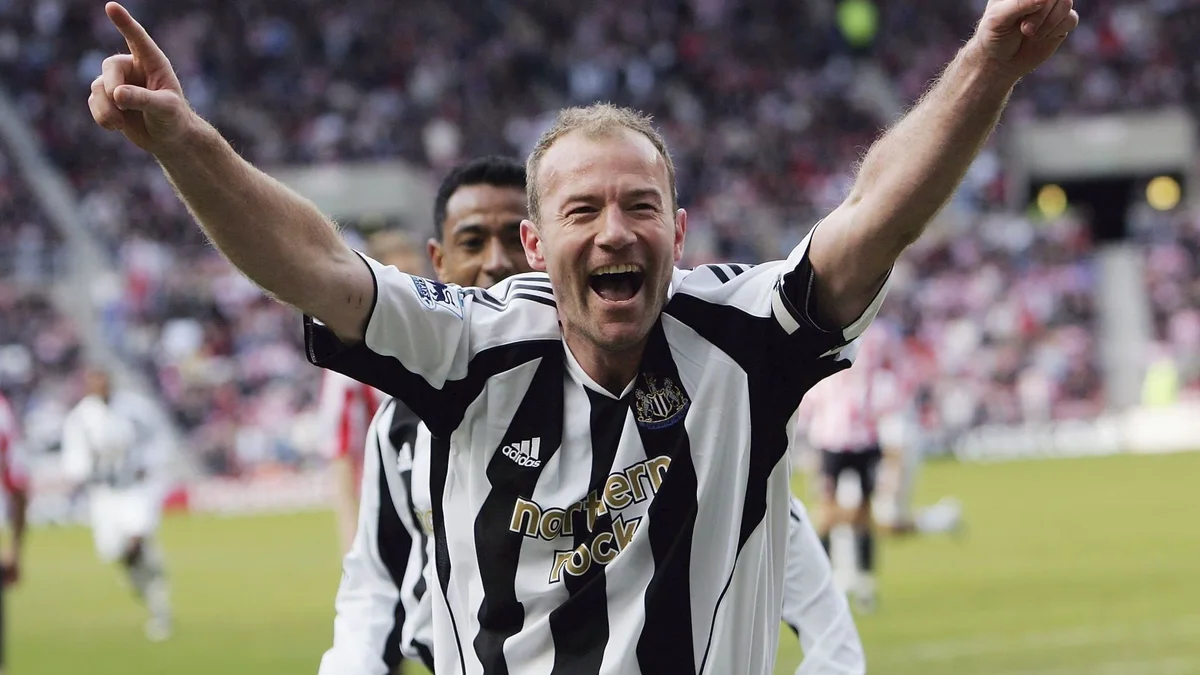
Shearer holds the record for most goals in Premier League history, with 260. He also holds the Premier League records for most penalties scored, with 56, and most goals scored from inside the box, with 227. He shares the record for most goals in a single Premier League match, with five.
His other records show how fast he reached his milestones. He was the first player to reach 100 Premier League goals, and he did it in 124 matches, the fewest matches needed to reach that mark. He was also the first player to reach 200 Premier League goals. He is the only player to score 100 Premier League goals for two clubs, with 112 for Blackburn and 148 for Newcastle.
Shearer scored 11 Premier League hat-tricks, a record at the time of his retirement. He scored 30 or more league goals in three consecutive seasons: 31 in 1993-94, 34 in 1994-95 and 31 in 1995-96. At Newcastle, his 206 goals make him the all-time top scorer for the club.
Awards and Honours
Shearer won the Premier League title with Blackburn Rovers in the 1994-95 season. He finished as an FA Cup runner-up with Newcastle in the 1997-98 and 1998-99 seasons, and as a Full Members Cup runner-up with Southampton in the 1991-92 season. With England Under-21 he won the Toulon Tournament in 1991, and with England he won the Tournoi de France in 1997.
His individual honours include the Euro 96 Golden Boot and a place in the Euro 96 Team of the Tournament. He was named Football Writers Association Footballer of the Year in 1993-94, PFA Player of the Year in 1994-95 and 1996-97, and Premier League Player of the Year in 1994-95. He won the Premier League Golden Boot three times, in 1994-95, 1995-96 and 1996-97, and he was named in the PFA Team of the Year seven times.
Shearer entered the English Football Hall of Fame in 2004 and was named by Pele in the FIFA 100 list of the greatest living players in the same year. In 2021 he was one of the first two players inducted into the Premier League Hall of Fame, alongside Thierry Henry. He received the Freedom of the City of Newcastle upon Tyne in 2000, was appointed OBE in the 2001 Birthday Honours, and was elevated to CBE in the 2016 Birthday Honours for charitable services to the community in North East England. In 2009 he was commissioned as Deputy Lieutenant of Northumberland. A statue of Shearer, showing his trademark celebration, was unveiled outside St James Park on 12 September 2016.
Net Worth
Reported estimates of the net worth of Shearer range from about 40 million pounds to about 50 million pounds. No official figure exists, and these numbers are unverified estimates published by media outlets, not confirmed facts. His wealth comes from his playing career, his long career as a BBC pundit, endorsement work, and property investments.
Later Life and Legacy
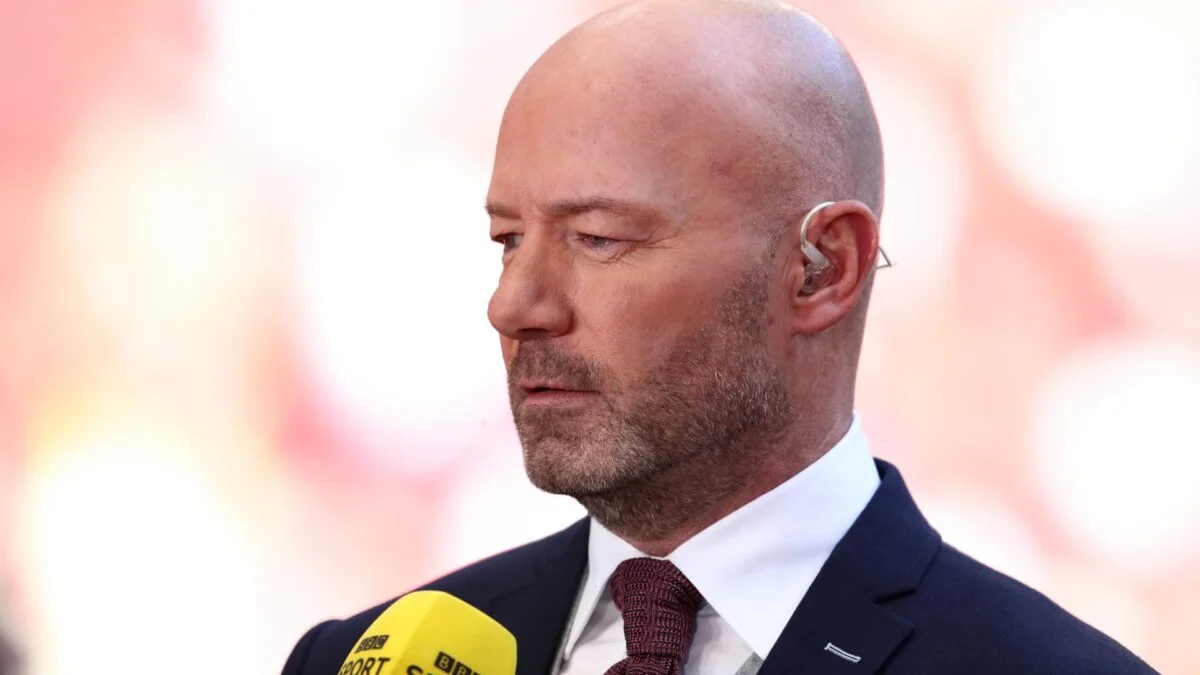
Since retiring as a player in 2006, Shearer has worked as a football pundit, mainly on the BBC flagship highlights show Match of the Day. He also appears on TNT Sports coverage and on The Rest Is Football podcast alongside Gary Lineker and Micah Richards. His direct style as a pundit matches his style as a player: plain speaking, firm in judgement, and focused on the action in the box.
His charity work centres on the Alan Shearer Foundation, which he created in 2012 to support the Alan Shearer Centre in Newcastle, a specialist centre for people with complex disabilities. His charitable services in North East England led to his CBE in 2016.
Shearer left a legacy built on goals and loyalty. He spent his whole club career in the top flight of English football, turned down the dominant club of his era to return home, and stayed at Newcastle for ten seasons without winning a major trophy there. His Premier League record of 260 goals has stood for two decades, and his statue outside St James Park keeps his name at the centre of the city where his career began and ended.
Conclusion
Alan Shearer scored more Premier League goals than any other player, and he did it with a style that never changed: power, precision, and a hunger for the next chance. From a hat-trick on his full debut at 17 to a world-record move home and a title with Blackburn, his career joined rare scoring feats with rare loyalty. The record of 260 goals still stands, and it remains the standard against which every Premier League striker is measured.
FAQs
How old is Alan Shearer?
Alan Shearer was born on 13 August 1970, and he turned 56 years old on 13 August 2026.
Who is the wife of Alan Shearer?
The wife of Alan Shearer is Lainya Arnold. The couple married on 8 June 1991 at St James Church in Southampton, and they have three children together: Chloe, Hollie and Will.
How many goals did Alan Shearer score in the Premier League?
Alan Shearer scored 260 Premier League goals in 441 appearances. He scored 112 goals for Blackburn Rovers and 148 goals for Newcastle United, and his total remains the all-time Premier League record.
Did Alan Shearer win the Premier League?
Yes, Alan Shearer won the Premier League with Blackburn Rovers in the 1994-95 season, when he scored 34 league goals and Blackburn finished one point ahead of Manchester United. It was the only major league title of his career.
How many goals did Alan Shearer score for Newcastle United?
Alan Shearer scored 206 goals in 405 appearances in all competitions for Newcastle United. His 201st goal for the club, against Portsmouth on 4 February 2006, broke the record of Jackie Milburn and made him the all-time top scorer for Newcastle.
What is Alan Shearer doing now?
Alan Shearer works as a football pundit, mainly on the BBC show Match of the Day, and he also appears on TNT Sports coverage and on The Rest Is Football podcast. He runs the Alan Shearer Foundation, which supports the Alan Shearer Centre in Newcastle.